
Families with moist fish portions
You want to pack fish in meal-sized portions and make sure moisture doesn’t interfere with the seal. Adjustable vacuum settings and a seal you can check are useful features.


For everyday family-sized portions of fish, an external vacuum sealer with adjustable vacuum and sealing time is a sensible place to start. A chamber machine is worth considering if you regularly process very wet foods or seal lots of bags in one go, as Vacuumsealers.nl explains. Check that the bags fit both the machine and your portions. Vacuum sealing is no substitute for chilling, freezing or safe defrosting.
You want to pack fish in meal-sized portions and make sure moisture doesn’t interfere with the seal. Adjustable vacuum settings and a seal you can check are useful features.
You prepare several meals at once and want to match the bag size and workflow to your portions and available freezer space.
You’re looking for a machine that suits how often you’ll use it, without unnecessary features. You’ll also want to compare the availability and cost of compatible bags.
| What to consider | What should you check? | Who is this important for? |
|---|---|---|
| A reliable seal for moist fish | Check whether you can adjust or stop the vacuum or sealing time, and whether the sealing strip is easy to clean thoroughly. | If I’m packing moist portions of fish, I want to stop moisture reaching the sealing edge and interfering with the seal. Around 33% of consumers say moisture control is their top priority. |
| Portion size and workflow | Compare the maximum bag width with your portions and check whether the controls suit sealing several bags one after another. | If I’m packing several family meals in advance, the bags need to fit my portions and the workflow needs to be manageable. Around 27% of consumers prioritise portion size and packing multiple bags. |
| Machine and packaging materials | Check which type of bag or roll the exact model uses, which sizes are available and how much replacement packaging costs. | If I plan to use the machine regularly, I want to know in advance which compatible bags or rolls I’ll need to buy. Around 20% of consumers base their choice mainly on the cost of the machine and packaging materials. |
| Suitable bags and storage routine | Check the food-contact suitability information and whether the bag fits the machine. Plan chilling, freezing and defrosting separately. | If I’m packing fish directly into a bag, I want to know whether it’s suitable for the intended use and how to maintain the cold chain properly. Around 20% of consumers give top priority to suitable packaging and safe storage. |
A moisture or sensitivity setting gives you more control, but it doesn’t stop moisture at the sealing edge from interfering with the seal.
Adjust the settings to suit the fish and check the seal before putting the portion in the freezer.
The machine and its bags or rolls need to be compatible. A starter kit included with the machine won’t tell you which packaging you can use later.
Check the compatible bag sizes and packaging type before choosing a model.
Vacuum-sealed perishable fish still needs to be kept in the fridge or freezer.
Keep the fish chilled and freeze it promptly. The Netherlands Nutrition Centre (Voedingscentrum) recommends keeping your freezer at −18 °C or below.
The WM-2509 VC is an external machine with settings for different types of food and manual vacuum control.
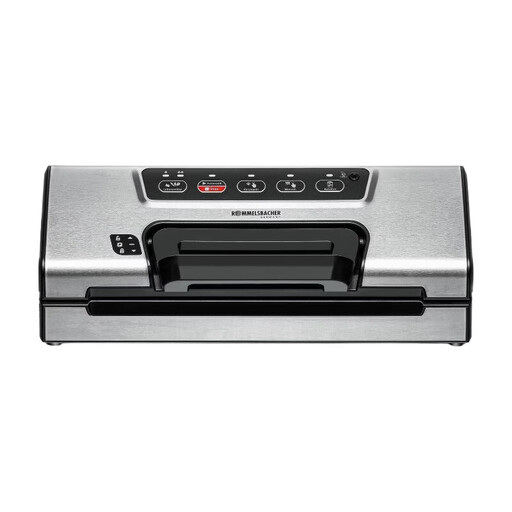
The VAC 385 is an external machine with settings for moist or delicate foods and manual controls.
The VT3120 is an external machine with separate settings for different moisture levels.
The VC 10 is a more compact external machine for anyone who mainly wants to vacuum-seal individual bags.
For home use with an external vacuum sealer and fish portions where control over vacuum and bag size matters.
 No image available
A good fit if you want control over vacuum sealing and bag size for your portions.
Rommelsbacher lists a maximum bag width of 30 cm and a removable vacuum chamber insert for the VAC 385.
When handling liquids, follow the product instructions and use the hose and collection tray. Don’t draw liquids directly into the chamber.
No. Vacuum sealing doesn’t replace chilling or freezing. The Netherlands Nutrition Centre (Voedingscentrum) recommends keeping your freezer at −18 °C or below and your fridge at 4 °C. Keep perishable fish chilled and avoid breaking the cold chain.
The Netherlands Nutrition Centre (Voedingscentrum) recommends around six months for lean fish and three months for oily fish. These are storage recommendations, not extra shelf life guaranteed by a vacuum sealer.
The Netherlands Nutrition Centre (Voedingscentrum) recommends defrosting fish in the fridge. Plan ahead and catch any liquid as it thaws. For vacuum-sealed fish, also follow the packaging instructions on whether to open the bag while defrosting.
Check that the bag is suitable for the intended food contact and use, and that it fits your machine. The Netherlands Food and Consumer Product Safety Authority (NVWA) explains that articles intended to come into contact with food must meet Dutch requirements.
No. Vacuum sealing doesn’t automatically make raw or smoked fish suitable for vulnerable people. The Netherlands Nutrition Centre (Voedingscentrum) advises pregnant women, young children, older people and those with a weakened immune system not to eat raw fish or ready-to-eat smoked fish without cooking it. The Netherlands Food and Consumer Product Safety Authority (NVWA) also identifies vacuum-packed smoked fish as a food that carries a risk of botulism.