Who is this for?

Do you portion hard cheese?

You’re dividing a larger piece of hard cheese into portions for future meals and looking for suitable packaging for the fridge or freezer. Follow the Netherlands Nutrition Centre’s storage advice for the cheese you’re using.

Do you work with fresh or soft cheese?

You want to portion cheese in advance, but first need to check which storage method is right for that type of cheese. FoodSaver advises against vacuum-sealing soft cheese, while the Netherlands Nutrition Centre gives its own storage advice for fresh cheese.

Do you make lots of small portions?

You’re packaging several portions one after another, so you’ll want to consider how easy the machine is to use and clean, how it seals, and whether suitable bags or rolls are available.

What should you look for when buying?

First, decide which type of cheese you’ll be packaging and how you’ll store it. Then compare the machine’s controls and packaging options with the size and number of portions you make.

What to consider What should you check? Who is this most important for?
Storage by type of cheese Check the storage advice for hard, fresh or soft cheese, and choose bags or containers suitable for food contact. I want to know which storage method is right for my type of cheese and avoid treating a vacuum bag as a substitute for refrigeration. Around 33% of consumers say storage by type of cheese is their main concern when buying.
Control over small portions Check whether the model has a stop or seal-only function, and check the maximum bag width. For small portions, I want to decide when the air extraction stops, so the contents aren’t compressed unnecessarily. Around 27% of consumers focus mainly on portion size and control over sealing.
Sealing lots of portions in a row Read the model-specific instructions on sealing bags one after another, and check whether the vacuum chamber is removable. When preparing a whole batch, I want to know what the sealing process involves and whether I’ll need to pause. Around 20% of consumers focus most on speed and maintenance when sealing repeatedly.
Bags, rolls and refills Check the bag type, width and quantity included, and whether the packaging is suitable for food contact. I want to know in advance which refills fit my machine and how much packaging I’ll need for individual portions. Around 20% of consumers focus mainly on compatible packaging and ongoing material use.

Common mistakes

  • Treating a vacuum bag as a substitute for refrigeration

    Vacuum sealing does not automatically make perishable cheese safe to store outside the fridge or freezer. The University of Maine Cooperative Extension stresses that vacuum sealing alone is not a preservation method that makes food safe to store at room temperature.

    First choose the right place to store the type of cheese you have, then follow the packaging instructions. The Netherlands Nutrition Centre recommends setting your fridge to 4 °C and your freezer to at least −18 °C.

  • Treating all cheese the same way

    The Netherlands Nutrition Centre gives different storage advice for hard, fresh and grated cheese. FoodSaver specifically advises against vacuum-sealing soft cheese.

    Check which type of cheese you’re dealing with for each batch, rather than simply applying storage advice for a different type.

  • Comparing the machine alone

    You’ll need packaging for every individual portion. Bag widths and compatibility can vary by machine and accessory.

    Before buying, check which bags or rolls fit the exact model, what’s included and whether the packaging is suitable for food contact. The Netherlands Food and Consumer Product Safety Authority explains the rules for materials that come into contact with food.

    Bear in mind that you’ll need suitable bags or rolls for future batches.

  • Confusing a manufacturer’s warranty with your statutory rights

    An extended warranty is not the same as your statutory rights if a product is faulty. According to the Dutch government, there is no fixed statutory warranty period in the Netherlands; if there’s a problem with a product, the retailer must provide a solution.

    Read the terms of any additional cover and check whether it offers anything beyond your existing rights.

    An extended warranty may come at an extra cost, so check the terms before deciding whether to buy one.

Brands to compare

Solis

The Vac Quick 576 is worth comparing if you want to weigh up an automatic vacuum function against a seal-only function.

  • Solis lists a maximum film width of 30 cm for the Vac Quick 576, as well as a seal-only function.
  • Check which bags or rolls suit your portions. These features alone don’t tell you how long cheese will keep.

FoodSaver

The V2860 has settings worth comparing if you want to adjust the air extraction to suit the task.

  • FoodSaver describes a Gentle setting for the V2860 and recommends letting the machine cool for 20 seconds between uses.
  • FoodSaver advises against vacuum-sealing soft cheese. The manufacturer’s guidance is not an independent comparison of storage performance.

Rommelsbacher

The VAC 385 is worth comparing if you’re looking for manual operation, a roll compartment and a removable vacuum chamber.

  • Rommelsbacher lists manual sealing, film up to 30 cm wide and a pump with a stated capacity of around 12 litres per minute.
  • The pump capacity is a manufacturer’s specification, not a measured performance figure for cheese. Also check which film is compatible and how much space the machine takes up.

DOMO

The DO327L is worth a look if you want to get started with a supply of bags included.

  • DOMO lists 20 bags included and sells bags and rolls separately.
  • Check which packaging suits your needs; don’t assume the model has adjustable air extraction unless this is confirmed for that model.

CASO

The VC 100 is worth comparing if you’re looking for a stop button and a connection for containers.

  • CASO lists a stop button, a removable vacuum chamber and a hose for containers included with the VC 100.
  • Check which container works with the machine. A general claim about keeping food fresher for longer doesn’t give a storage timeframe for cheese specifically.

Joybuy products

This Joybuy selection includes bag sealers for individual portions. Check the right storage method for your type of cheese and choose suitable bags designed for food contact.
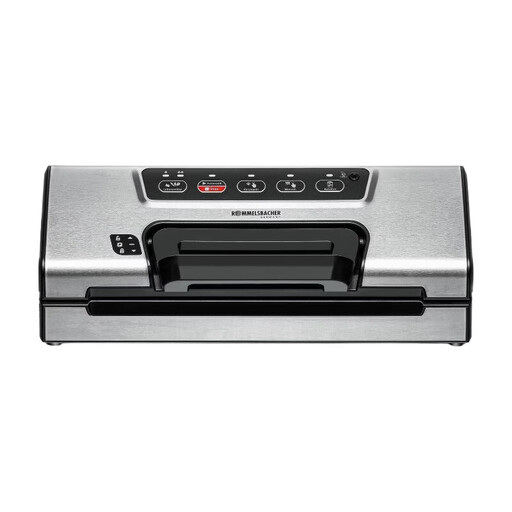
Rommelsbacher VAC 385 stainless steel vacuum sealer

Rommelsbacher VAC 385 stainless steel vacuum sealer

An option for individual portions if you want to choose between automatic and manual operation.

For film up to 30 cm wide, with an integrated roll compartment and cutter, plus a removable vacuum chamber.

The sealing area gets hot during and immediately after sealing, so don’t touch it with bare hands at those times. Don’t place liquids directly in the chamber; use the hose and a suitable container instead.

View at Joybuy
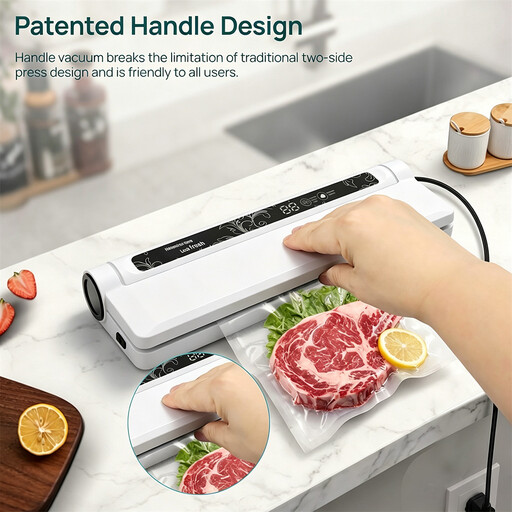
Huacan household vacuum sealer with 20 bags measuring 17 × 25 cm

Huacan household vacuum sealer with 20 bags measuring 17 × 25 cm

The product description mentions vacuum-sealing cheese and preparing meals in advance.

The product name specifies that 20 bags measuring 17 × 25 cm are included.

View at Joybuy

Frequently asked questions

Can I vacuum-seal soft or fresh cheese too?

Don’t base your decision on general claims about vacuum sealing: FoodSaver advises against vacuum-sealing soft cheese because of the risk of anaerobic bacteria. For opened fresh light cheese, the Netherlands Nutrition Centre recommends four days in the fridge and says freezing is less suitable. Check the advice for the specific type of cheese you’re using.

Do vacuum-sealed cheese portions still need to go in the fridge or freezer?

Yes. Follow the appropriate storage advice for the cheese; vacuum sealing alone doesn’t make perishable food safe to store without refrigeration. The Netherlands Nutrition Centre recommends setting your fridge to 4 °C and your freezer to at least −18 °C.

How can I avoid problems when sealing lots of bags in a row?

Follow the instructions for the exact model, keep the sealing area clean and check that every bag is sealed properly. For the V2860 specifically, FoodSaver recommends a 20-second cooling break after use; this guidance doesn’t automatically apply to other machines.

What should I look for in cheese bags and warranties in the Netherlands?

Choose packaging designed for food contact; the Netherlands Food and Consumer Product Safety Authority explains the rules that apply to these materials. If a machine is faulty, the retailer must provide a solution, according to the Dutch government. There is no fixed statutory warranty period in the Netherlands; any manufacturer’s warranty is separate from your statutory rights.
