What should you look for when buying?
First, choose between individually sealed bags, a reusable storage container or standard sealed packaging. Then compare how each option works, what packaging it needs and how much storage space you have.
Bar sealer with bags
Choose this option if: you regularly divide a larger piece of firm cheese into separate, sealed portions.
Trade-off: you’ll need suitable packaging for each portion and space for the appliance and any rolls.
Pump with a compatible storage container
Choose this option if: you want to open and reseal small amounts of cheese regularly.
Trade-off: according to ZWILLING, the Fresh & Save pump works with compatible valve containers and bags, rather than sealing ordinary bags; a container takes up space in the fridge.
Standard sealed packaging
Choose this option if: you buy a small amount of cheese at a time or usually eat it quickly, so individual vacuum-packed portions won’t offer much benefit.
Trade-off: you won’t need an appliance or special vacuum packaging, but you won’t be vacuum-sealing individual portions. The Voedingscentrum recommends using cheese paper or reusable cling film, among other options, to prevent cheese from sweating.
| What to consider |
What to look for |
Who should pay particular attention? |
| Individual portions |
Check that the bags or rolls suit the portion size and that the seal is intact all the way round. |
If I want to make several portions from one larger piece, I don’t want to keep opening the rest. Around 33% of consumers say portioning food individually is their main concern when buying. |
| Delicate cheese |
Check the exact model for a pulse function, vacuum stop or manual control, and follow the storage advice for the type of cheese. |
With soft cheese, I want to be able to stop before the suction squashes it. Around 20% of consumers put keeping delicate cheese in good condition first. |
| Packaging and ongoing use |
Check which bags or containers are compatible and suitable for food contact, and compare the packaging you’ll need for each portion. |
I want to know in advance which packaging works with the system and what I’ll need to buy again. Around 27% of consumers say packaging compatibility and ongoing costs are their main concern when buying. |
| Storage space |
Measure the space for the appliance and filled packaging, then decide whether you want to seal portions or reopen a container. |
If my kitchen and fridge have limited space, I want a solution that’s easy to store and reuse. Around 20% of consumers put compact storage first. |
Store cheese according to the advice for that particular type. The Voedingscentrum gives 4 °C as the ideal fridge temperature; vacuum-packing isn’t a reason to leave cheese that needs refrigeration out of the fridge.
Joybuy product selection
This Joybuy selection focuses on vacuum storage containers for cheese portions.
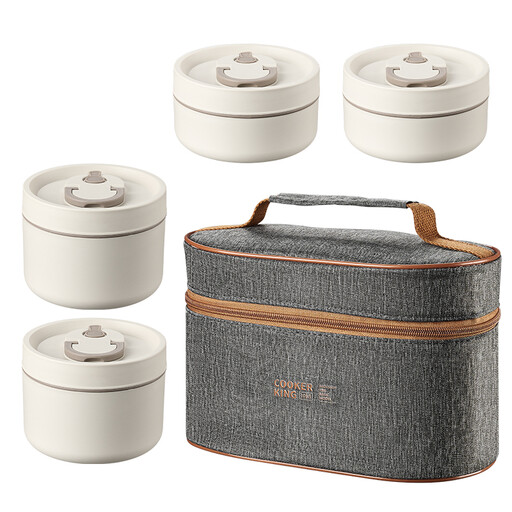 Image unavailable
COOKER KING 304 stainless steel vacuum storage containers, set of 5
An option if you want to seal portions of cheese in storage containers rather than using individual vacuum bags.
The set contains five food storage containers made from 304 stainless steel, with lids featuring a built-in pump and one-way valve. According to the product description, the containers are dishwasher-safe; this applies to the containers, not necessarily the lids or seals.
Before use, check that the containers, lids and silicone seals are suitable for direct contact with food.
Joybuy
Frequently asked questions
Does vacuum-packed cheese still need to go in the fridge?
Yes. Follow the label and the storage advice for that type of cheese. The Voedingscentrum gives 4 °C as the ideal fridge temperature; vacuum-packing isn’t a reason to leave cheese that needs refrigerating out of the fridge.
Can I assume that all types of cheese will keep for the same extra length of time after vacuum-packing them at home?
No. Don’t treat a general claim about staying fresh for longer as a new safe use-by date for cheese you’ve packaged at home. Follow the advice for the specific type of cheese and the instructions on the label.
How should I package a portion of soft cheese?
First, check the storage advice for that cheese. If you use a vacuum-packing appliance, a pulse function or vacuum stop can help you control the suction; a compatible storage container is an alternative to a tightly drawn bag. Use packaging designed for food contact.
What should I look for in the bag or container that comes into contact with the cheese?
In the Netherlands, materials that come into contact with food must meet the relevant Dutch and European requirements. The NVWA explains these requirements for food contact materials; check that the specific bag, container, lid and seal are designed for this use.
What should I do if my vacuum sealer breaks, and do online purchases come with a cooling-off period?
If there’s a fault, contact the seller to find a solution under the legal guarantee. According to the Dutch government, online purchases from a business come with a 14-day cooling-off period in many cases; check the terms and whether an exception applies.


