Vandaag of morgen in huis

Kwaliteit gegarandeerd

Welkomstaanbiedingen ontgrendelen: GRATIS bezorging | Tot 80% korting | Gratis 30 dagen JoyPlus-proefperiode
Download de app
Choosing the right tool isn't a luxury—it's a necessity. The wrong purchase not only leads to frustration but can also damage valuable materials or, worse, compromise job site safety. An unreliable vacuum lifter that loses its grip is a risk no professional or serious DIY enthusiast can afford to take. This guide will help you make an informed decision based on factual specifications, ensuring you invest in a tool that makes your work more efficient and secure.
The market offers a wide range of options. To make the right choice, it's crucial to base your selection on specific parameters that align with your work requirements.
The maximum load capacity is the most critical specification. Determine the weight of the heaviest materials you'll be lifting (e.g., large-format tiles, glass panes, natural stone) and select a model with a capacity well above that figure. A 200 kg vacuum lifter is a common standard for many applications, but models with higher capacities are available for heavier materials. Always work with a safety margin.
The choice between a manual and an electric vacuum lifter depends on your frequency of use and required efficiency.
A vacuum lifter only works on smooth, clean, and non-porous surfaces. Verify that the model is suitable for the materials you work with. Most lifters function as a glass lifter, tile lifter, and are compatible with metal, plastic, and laminated wood. A high-quality vacuum suction cup for tiles will have a flexible rubber seal to ensure a perfect airtight grip.
A reliable vacuum lifter is equipped with a clear indicator that displays the vacuum status. On manual models, this is often a red line on the pump plunger. For electric versions, a digital manometer (pressure gauge) is standard. These features allow you to constantly monitor the security of the seal.
Based on the criteria above, we have selected two models that stand out for their specifications and application versatility.
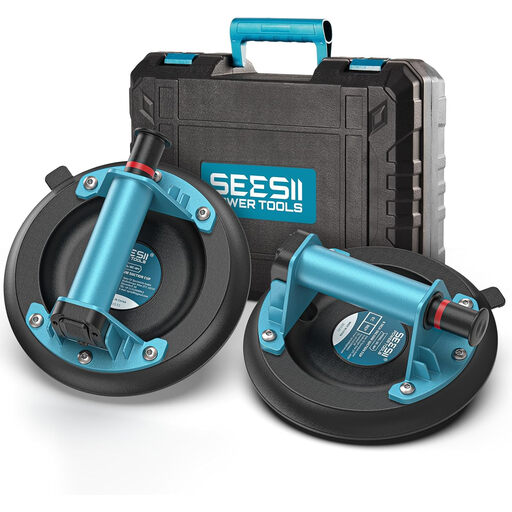
Why We Chose It: This set of two manual vacuum lifters offers a practical and reliable solution for a wide range of lifting tasks. The design focuses on simplicity and durability, with no reliance on electronics. Being supplied as a set makes it a cost-effective choice for professionals who often work in pairs or require multiple lifting points for large panels.
Pros:
Who Is It For? This is an excellent choice for tilers, glaziers, and installers looking for a robust, no-nonsense glass lifter or tile lifter. The set is ideal for projects where reliability and simplicity are paramount and where a power source is unavailable.
View the SEESII Manual Vacuum Lifter on Joybuy.nl
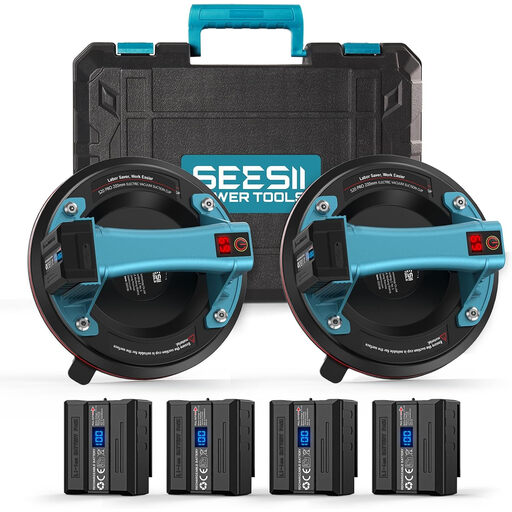
Why We Chose It: This electric vacuum lifter from Seesii is engineered for maximum efficiency and safety. Its automatic pumping function, combined with a digital display, eliminates guesswork and ensures a constant, secure vacuum. The high load capacity and included swappable batteries make this model suitable for the most demanding and long-duration projects.
Pros:
Who Is It For? This battery-powered vacuum lifter is aimed at professionals working with large-format and heavy materials, such as kitchen installers (natural stone countertops), glaziers (large panes of glass), and general contractors. The combination of power, automation, and safety features justifies the investment for those who prioritise efficiency and risk mitigation.
View the Seesii Electric Vacuum Lifter on Joybuy.nl
The vacuum lifters mentioned above provide solutions for common scenarios. However, every project is unique and may require different specialised tools. If you are looking for alternative lifting solutions, different capacities, or additional equipment for your job, you can find a wider selection in our main category.
Explore Our Full Range of Building Materials
1. How long can a vacuum lifter safely hold an object? The holding time of a vacuum lifter varies by model, the quality of the suction cup, the weight of the load, and the condition of the surface. High-quality manual models can hold a vacuum for several hours. Electric models with an automatic pumping function can theoretically maintain the vacuum indefinitely, as long as the battery provides power. Always check the pressure gauge or indicator before and during a lift.
2. Can I use a vacuum lifter on rough or porous materials like untreated wood or brick? No, a vacuum lifter is not suitable for this purpose. The principle relies on creating an airtight seal. A stable vacuum cannot be formed on rough, textured, or porous surfaces, making the lifter unreliable and dangerous. Use the device exclusively on smooth, clean, and non-porous materials.
3. What is the main difference in application between a manual and an electric vacuum lifter? A manual lifter is ideal for controlled, occasional lifting and placement tasks where reliability and independence from a power source are essential. An electric lifter excels in high-volume situations where speed, ease of use, and automated safety checks boost productivity, such as on large-scale tile or glass installation projects.
Written by: Joybuy Product Recommendation Officer