
Vandaag of morgen in huis

Kwaliteit gegarandeerd

Welkomstaanbiedingen ontgrendelen: GRATIS bezorging | Tot 80% korting | Gratis 30 dagen JoyPlus-proefperiode
Download de app
Buying a new vacuum cleaner sounds simple, until you have to choose between a cordless vacuum cleaner, stick vacuum, robot vacuum or wet and dry vacuum cleaner. Marketing terms such as “extreme suction power”, “smart cleaning” and “completely maintenance-free” do not always tell you enough about everyday use.
The right choice depends mainly on your home, floors, pets and how much maintenance you are prepared to accept. Also look out for these common pitfalls.
A high value in kPa or Pa sounds impressive, but it does not tell you everything about the results on your floor. The floor head, airflow, brush and seals also play a role. A model with powerful suction may perform well on carpet, but run out of charge more quickly on the highest setting.
Use suction power as a point of comparison, not as your only deciding factor. Also check whether the vacuum cleaner is suitable for carpets and hard floors.
With a cordless vacuum cleaner, the stated runtime often applies to a low-power setting and without a motorised brush. Battery life can be noticeably shorter in turbo mode. So look at:
For a small home, 30 to 45 minutes may be sufficient. In a large house or one with several floors, an additional battery is more practical.
A vacuum cleaner with a dust container needs to be emptied regularly. An anti-tangle brush reduces hair wrapping around the roller, but does not eliminate the need for manual cleaning. With a self-emptying vacuum cleaner, you also need to allow for a base station and any dust bags.
A wet and dry vacuum cleaner requires different maintenance: after use, the tank must be emptied and cleaned. With a vacuum cleaner with a mopping function, the clean- and dirty-water tanks, mop pads and brushes need to be looked after in good time.
Motor power in watts is not the same as suction power. A higher wattage does not automatically mean that more dirt will be picked up. Pay particular attention to the combination of suction power, brush design and adjustable settings.
For pet owners, an anti-tangle brush, a motorised floor brush and a crevice nozzle are useful. Check whether the brush is suitable for both hard floors and carpets. According to the product description, a V-shaped brush may help prevent hair from wrapping around the roller as quickly; the actual experience depends on the amount and type of hair.
A HEPA filter is a technical filter designation, but always check exactly what the manufacturer states about the filtration system. Look at:
Brand claims such as a stated percentage for capturing fine particles should be read as claims from the product information. According to Monsga/MonsgaClean’s own stated information, a multi-stage filtration system can filter fine particles; this is not a general guarantee for every home or user.
A large dust container or tank means less frequent emptying, but can make the appliance heavier. A compact vacuum cleaner is easy to store, while a model with a long cord reach may be suitable for several rooms.
For cars and furniture, a handheld vacuum cleaner or a stick vacuum that converts into a handheld model is useful. For garages, cellars or workshops, a sturdy tank, wet-vacuuming function, blow function and, where applicable, a power-tool connection are more important than low weight.
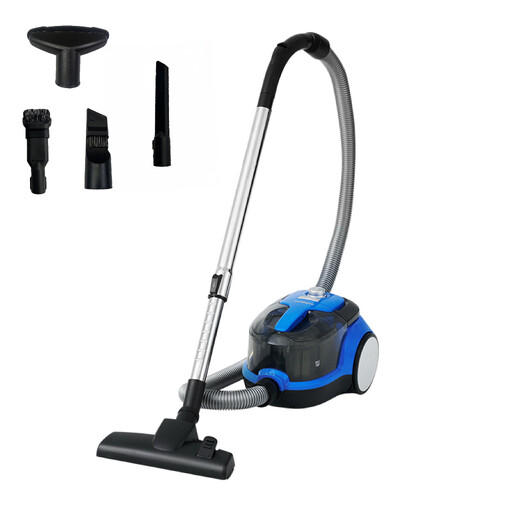
Why it suits this profile: A straightforward corded model for everyday cleaning in a flat or smaller home, without relying on a battery.
The stated 17.5 kPa suction power is combined with a fixed mains connection. You therefore do not need to estimate maximum battery life.
800 W motor, 1.1-litre dust container, automatic cord rewind and washable filter.
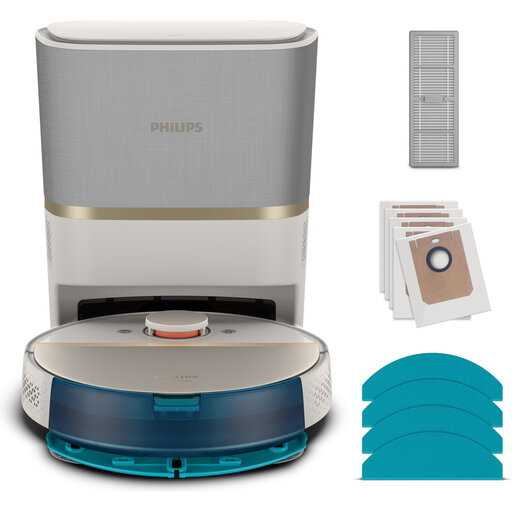
Why it suits this profile: Suitable for households that want to combine automated vacuuming and mopping with app control and a station.
The product information lists LiDAR navigation, object recognition and an automatic emptying station. Check beforehand that the app and Wi-Fi requirements suit your home.
Up to 5,000 Pa according to the product information, up to 180 minutes of use, mopping function and automatic emptying.
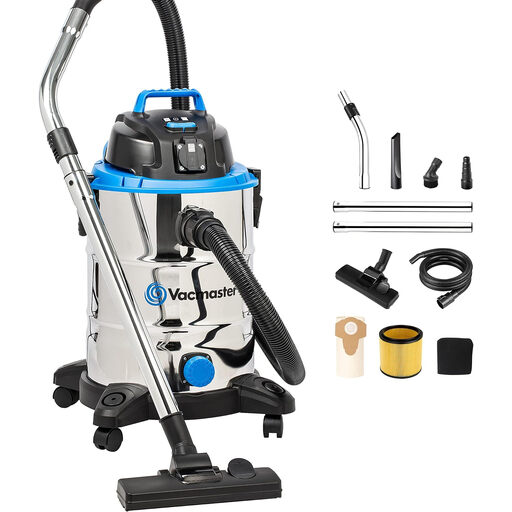
Why it suits this profile: For garages, cars, cellars, workshops and larger cleaning jobs involving dry dirt, liquids and sawdust.
The filters for dry and wet use are listed separately. This makes it clearer which filter you need for each task, although maintenance is still necessary.
1,500 W, 30-litre stainless-steel tank, blow function and 240 V power-tool connection.
We have put together a complete, up-to-date list of products that fully meet these strict selection criteria and the applicable European safety regulations.
The lifespan depends on usage, maintenance and the availability of filters, brushes and batteries. Clean the filters according to the manual, prevent the airflow from becoming blocked and empty the dust container or tank in good time. With a cordless model, the battery is often a key wear component.
The electricity used for charging is usually lower than the continuous consumption of an appliance with a high-powered motor, but the exact cost depends on charging frequency, battery capacity and your electricity tariff. Using turbo mode for longer requires more energy. Charge the battery according to the instructions and do not leave the appliance in a damp room.
Only if it is clearly a wet and dry vacuum cleaner and the manual permits this. An ordinary stick vacuum, handheld vacuum or robot vacuum is generally intended for dry surfaces only. Check that you are using the correct filter before use, and clean the tank after wet vacuuming.
