
Vandaag of morgen in huis

Kwaliteit gegarandeerd

Welkomstaanbiedingen ontgrendelen: GRATIS bezorging | Tot 80% korting | Gratis 30 dagen JoyPlus-proefperiode
Download de app
Buying a vacuum cleaner might seem straightforward, until you have to choose between a robot vacuum, stick vacuum, cordless vacuum or wet and dry vacuum. Marketing often focuses on high suction power, smart features or long run times. But those figures don’t tell the whole story.
Three common pitfalls are worth watching out for:
The right choice starts with your home and cleaning routine.
A powerful vacuum cleaner for pet owners should ideally have a motorised brush, an anti-tangle roller and an easy-to-maintain filter. Also check the dust container capacity: a small container needs emptying more often when dealing with lots of hair and dirt.
Always check the run time for each setting. For example, the Philips XC8055/01 has a maximum run time of 80 minutes on the low setting and around 30 minutes in Turbo mode with the motorised nozzle. The battery is removable, but the product specifications state that a full charge takes around 6.5 hours.
A second battery can be useful for a large home. For a flat, a shorter run time is often enough, as long as the appliance is ready to use quickly and doesn’t feel too heavy.
A HEPA filter or multi-stage filtration system can filter fine dust from the exhaust air. However, check exactly what the product description says. According to its product specifications, the Philips 2000 Series XD2142/12 has a HEPA filter system and uses S-bags. The Philips XC8055/01 has five-stage filtration, but is explicitly not described as a HEPA model.
Washable filters reduce repeat purchase costs, but must be completely dry before you put them back. A clogged filter can reduce airflow and performance.
A floor nozzle with separate settings for hard floors and carpets means you won’t need a different vacuum for every room. For pet owners, a mini turbo brush, anti-tangle brush and crevice tool are useful additions.
Also consider the capacity:
For robot vacuums, the position of the dock, the water tanks and the option to set no-go zones are also important. Leave enough clear space around the station if your robot has an all-in-one dock.
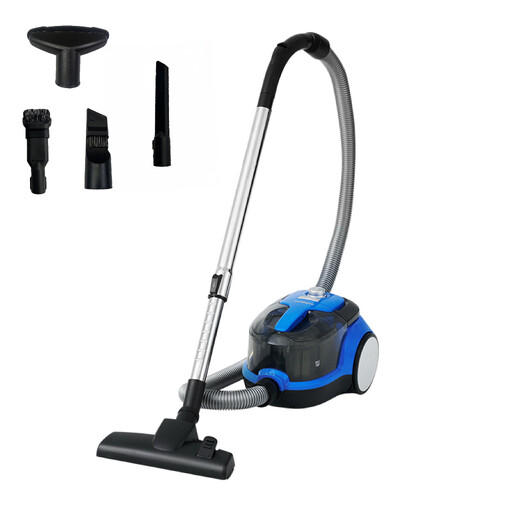
Why it suits this type of buyer: A corded model is simple to use and doesn’t need charging. This vacuum has a 1.1-litre dust container and comes with several attachments for hard floors, carpets and furniture.
The product specifications confirm that it has a power cord, so there’s no maximum battery life to interpret. The washable filter can be cleaned and reused.
800 W motor, approximately 17.5 kPa suction power, automatic cord rewind and a 1.1-litre bagless container.
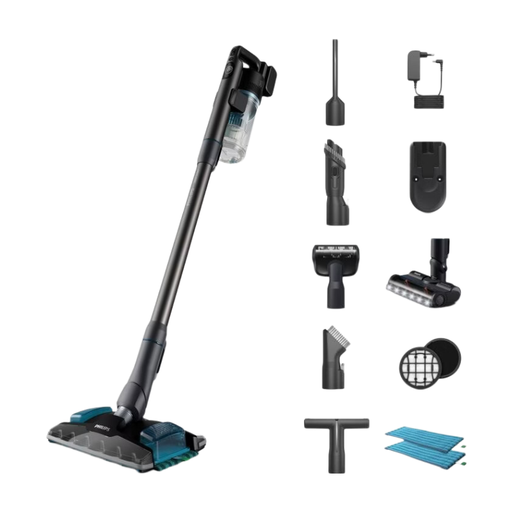
Why it suits this type of buyer: This cordless stick vacuum combines vacuuming with light mopping on hard floors. The detachable handheld unit is useful for stairs, furniture and the car.
The product specifications distinguish between the run time on the low setting and in Turbo mode. They also state that this model doesn’t have a HEPA filter.
Up to 80 minutes’ run time on the low setting, 0.6-litre container, five-stage filtration, LED lights and a mopping function.
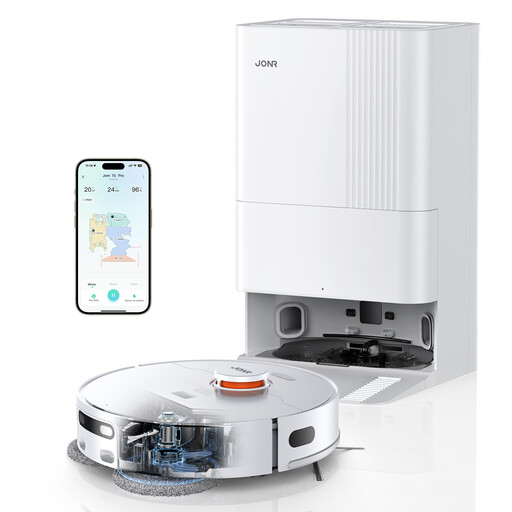
Why it suits this type of buyer: The robot uses LiDAR navigation, lets you schedule cleaning and can be controlled via an app. The mopping function and all-in-one dock mean less day-to-day effort.
The product information mentions obstacle avoidance, no-go zones and anti-tangle side brushes. For the best results, remove loose items before the first clean and let the robot complete its map.
8150 Pa according to the product listing, LiDAR mapping and navigation, hot-air drying and control via the mobile app.
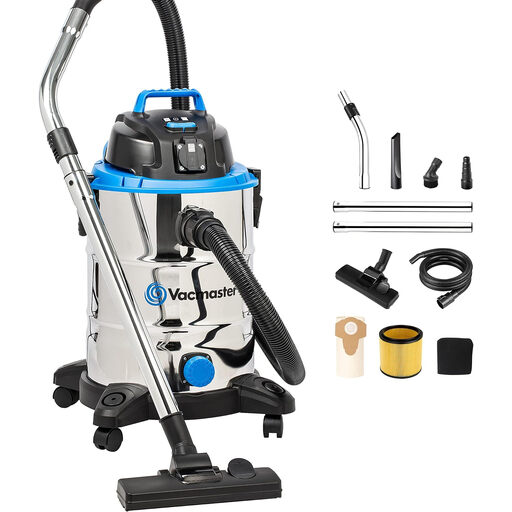
Why it suits this type of buyer: This model is designed for garages, workshops, cars and bigger cleaning jobs. The stainless steel tank has a 30-litre capacity, and the appliance can also be used as a blower.
The description distinguishes between dry vacuuming with a cartridge filter or dust bag and wet vacuuming with a foam filter. This makes it clear which filter to use for each task.
1500 W motor, 30-litre tank, wet and dry functions, blower function and an integrated EU power socket for power tools.
We’ve put together a complete, up-to-date list of products that meet these strict selection criteria and the applicable European safety regulations.
Its lifespan depends on the motor, battery, filters, brushes and how often you use it. Regularly emptying the container, cleaning the filters and removing hair from the brush can help reduce wear. For a cordless vacuum, the battery is an important consideration; check whether it can be replaced.
A corded model uses electricity while you clean. A cordless vacuum uses power when charging and may need a replacement battery over time. A bagged vacuum comes with ongoing costs for replacement bags, while a bagless model mainly requires filter maintenance. So compare more than just the purchase price: factor in consumables and maintenance too.
A robot vacuum is suitable for regular floor maintenance, but it may not be able to clean stairs, sofas, high skirting boards or carpets deeply. Many households use a robot for everyday dust and a stick vacuum or regular vacuum for targeted cleaning.
