
Vandaag of morgen in huis

Kwaliteit gegarandeerd

Welkomstaanbiedingen ontgrendelen: GRATIS bezorging | Tot 80% korting | Gratis 30 dagen JoyPlus-proefperiode
Download de app
Buying a vacuum cleaner seems straightforward, until you have to choose between a cordless vacuum cleaner, stick vacuum, robot vacuum with a mopping function or wet and dry vacuum cleaner. Marketing terms such as “extreme suction power” and “professional filtration” do not always tell you how well a device performs in a UK household.
So focus first on how you clean. Do you mainly have hard floors, carpets, pets, a car or regular liquid spills? The right choice depends on the combination of flooring, dirt and frequency of use.
A high figure in Pa or kPa sounds appealing, but it does not tell the whole story. Suction power is also affected by the floor brush, airflow, filters and any blockages. A powerful vacuum cleaner may perform well on carpet, but be unnecessarily heavy or loud for everyday use on hard floors.
So look at the complete system: suction settings, brush design, dust container, filter maintenance and runtime.
With a cordless vacuum cleaner, the stated battery life often applies to the lowest setting and without the additional resistance of a motorised brush. On the highest setting, the runtime may be considerably shorter.
So check:
A standard cordless vacuum cleaner is generally intended for dry use. Vacuuming up water can damage the motor and filters. A wet and dry vacuum cleaner is designed for this purpose, but it does require the correct filter and additional cleaning after use.
Always check the warnings in the product information. A carpet cleaner with a washing function is a different type of appliance from a standard vacuum cleaner: it uses water and cleaning solution and is mainly intended for textiles, upholstery and stains.
For hard floors, a brush that effectively loosens dust and hair is important. On carpet, it also matters how well the brush picks up deeper-set dirt. A V-shaped anti-tangle brush can be practical for households with dog or cat hair, as hair is less likely to become wrapped around the roller.
An LED light on the floor nozzle helps make dust under furniture more visible. This is particularly useful with dark floors or limited light beneath sofas and cupboards.
If you are looking for a vacuum cleaner with a HEPA filter, do not rely on the label alone. Check how many filter layers there are, whether the filters are washable and how often they need to be dried or replaced.
According to Daynee’s product description, the N850 filter captures up to 99.98% of particles under the stated test conditions, based on the brand’s own information. Treat this as a manufacturer’s product specification, not a guarantee of a particular health effect. A filter must be fitted correctly, undamaged and completely dry.
Regular maintenance is still essential:
A small dust container is suitable for quick daily cleaning, but less practical in homes with pets or larger households. A self-emptying vacuum cleaner reduces the number of times you need to empty it manually, but the base station usually uses dust bags that need replacing over time.
Also consider weight, manoeuvrability and noise level. A stated figure, such as 58 or 60 dB, may vary depending on the suction setting. Check too whether the vacuum cleaner can stand upright on its own, needs to be wall-mounted or requires space for a charging station.
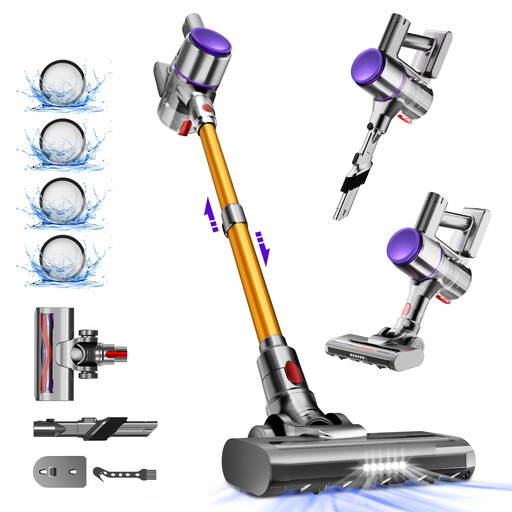
Why it suits this profile: This stick vacuum combines two suction settings with a 1.6-litre dust container and is designed for hard floors, carpets and pet hair.
The product information states separate runtimes for each suction setting, rather than giving only one maximum battery life figure. The model is intended for dry use and has four washable HEPA filters.
Up to 50 minutes according to the product specification, LED lighting on the floor brush, telescopic tube and a V-shaped anti-tangle brush.
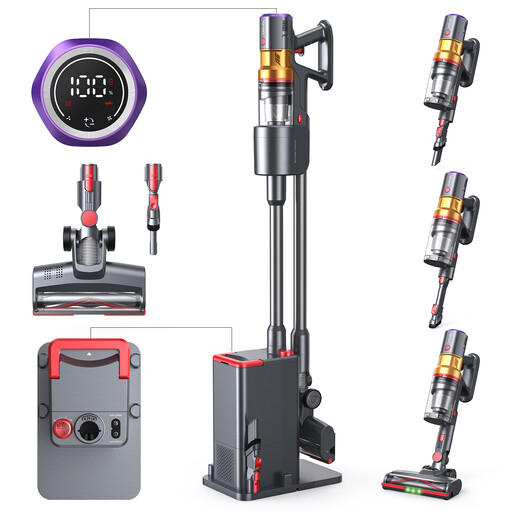
Why it suits this profile: The combination of a charging station, automatic emptying and a freestanding design is ideal for users who want to minimise the number of tasks involved in everyday cleaning.
Automatic emptying reduces direct contact with the dust container. However, remember that the bag in the base station must be replaced in good time and that the appliance is intended for dry dirt only.
27 kPa according to the product specification, anti-tangle brush, multi-stage HEPA filtration and green LED lighting to make dust easier to see on hard floors.
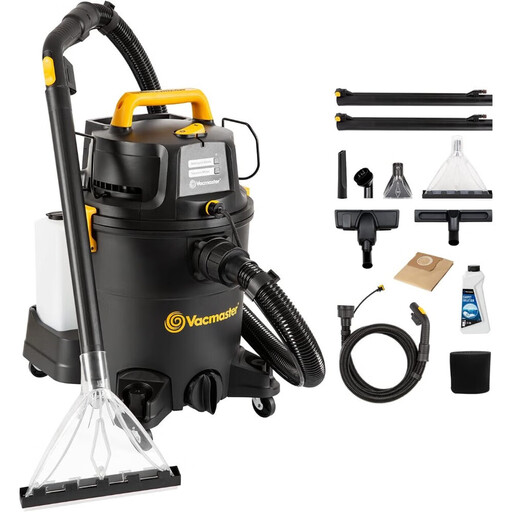
Why it suits this profile: This model is designed for carpets, furniture, stairs and car interiors, combining dry vacuuming, wet vacuuming and cleaning with solution.
The different filters for dry vacuuming, wet collection and washing make it clear that the operating mode must be adjusted. This helps prevent the incorrect use of a standard dry vacuum cleaner.
1300 W, 23-litre collection tank, 6-litre cleaning solution tank, HEPA exhaust filter for dry vacuuming, and accessories for textiles and cars.
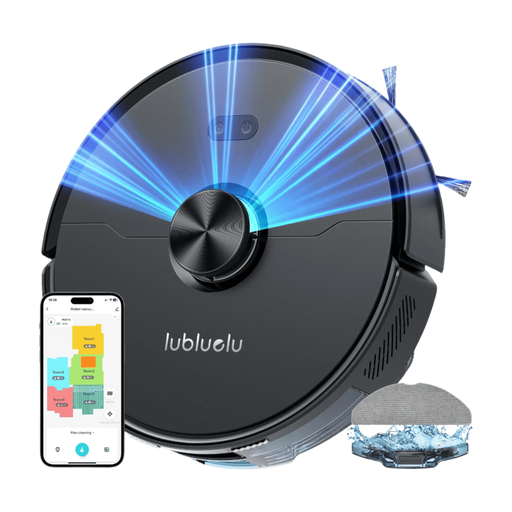
Why it suits this profile: This robot vacuum with a mopping function is suitable for users who want to schedule automatic cleaning of hard floors via an app.
Laser navigation and mapping help with scheduled cleaning, but thresholds, cables and carpet edges should be checked beforehand. Mopping does not replace targeted stain cleaning.
Up to 180 minutes according to the product specification, 4000 Pa maximum suction power, app control, mopping function and a base station with separate clean- and dirty-water tanks.
We have put together a complete, up-to-date list of products that fully meet these strict selection criteria and the applicable European safety regulations.
Its lifespan depends on battery use, filter maintenance, charging method and brush wear. Use the supplied or original charger, allow a wet-washed filter to dry completely and remove hair promptly. A removable battery can make long-term maintenance more practical, but check whether a replacement battery is available.
Hard floors benefit most from the mopping function. A robot can usually vacuum carpets, but mopping must be disabled or the carpet must be excluded from the map. Also check the maximum threshold height and the clearance beneath furniture.
With a cordless vacuum cleaner, running costs mainly consist of electricity, filter components and, potentially, a replacement battery. A self-emptying vacuum cleaner also needs bags for its base station. Wet and dry models may involve additional costs for cleaning solution, filters and extra maintenance. So do not compare only the purchase price; also consider the parts you need to replace regularly.
