
Vandaag of morgen in huis

Kwaliteit gegarandeerd

Welkomstaanbiedingen ontgrendelen: GRATIS bezorging | Tot 80% korting | Gratis 30 dagen JoyPlus-proefperiode
Download de app
Buying a new vacuum cleaner seems straightforward, until you have to choose between a cordless stick vacuum, robot vacuum, handheld vacuum or wet and dry vacuum. Manufacturers highlight strong suction, long battery life and smart features, but those figures don’t always tell you how well an appliance will work in your home.
Focus instead on what the specifications mean in practice. A model with a long maximum run time, for example, may run for much less time in turbo mode. A mopping function is useful for light dirt, but it doesn’t automatically make an appliance suitable for spilled liquids. And a vacuum cleaner with a HEPA filter needs regular maintenance to keep the filter working effectively.
A high wattage mainly tells you about the motor’s power; it doesn’t directly indicate how much dirt the vacuum picks up. A stated kPa rating also isn’t directly comparable between brands. The brush, air channels, seals and floor surface all play a part.
So look at the combination of:
A vacuum cleaner for carpets and hard floors should ideally have a floorhead with different settings. For homes with pets, an anti-tangle brush or mini turbo brush is useful, but check whether that accessory is actually included.
For a cordless stick vacuum, the stated run time usually applies to the lowest setting and without all motorised accessories. The Philips XC8055/01, for example, offers up to 80 minutes on the low setting, while turbo mode with a motorised floorhead lasts up to 30 minutes. The product specifications give a charging time of 6.5 hours.
Before you buy, check:
A stick vacuum with a mopping function is designed to wipe hard floors with a little moisture while or after you vacuum. That’s different from a wet and dry vacuum, which is designed to pick up liquids.
Don’t use a mopping attachment for large amounts of water, cleaning products or other liquids unless the instructions say you can. Also check whether the microfibre pads need rinsing and drying thoroughly after use. This helps prevent unpleasant odours and unnecessary wear.
A bagless vacuum cleaner doesn’t need replacement dust bags, but you’ll need to empty its dust container regularly. Check the capacity: 0.6 litres is suitable for everyday cleaning, while a larger container needs emptying less often.
If you’re considering a vacuum cleaner with a HEPA filter, check whether it really has a HEPA filter or a general multi-layer filtration system. The Monsga ME03 lists a washable HEPA filter and five-stage filtration. The Philips XC8055/01 lists a five-stage filtration system, but its product specifications explicitly state that this model doesn’t have a HEPA filter. So don’t compare these terms without reading the product details.
For pet hair, useful features include an anti-tangle or anti-wrap brush and a mini turbo brush. A low-profile tube, swivel floorhead and lights on the brush can help you clean under low furniture.
Also check the weight in use. The weight of the motor unit alone doesn’t always tell you how heavy the appliance will feel with the tube and floorhead attached.
A stated noise level, for example 65 to 80 dB, gives you an indication, but it can vary by suction setting. Also look for:
A handheld vacuum cleaner for the car often has a small dust container and a short run time. That’s normal: this type of model is designed for crumbs, sand and dirt in seats, mats and narrow spaces, not for cleaning the whole house.
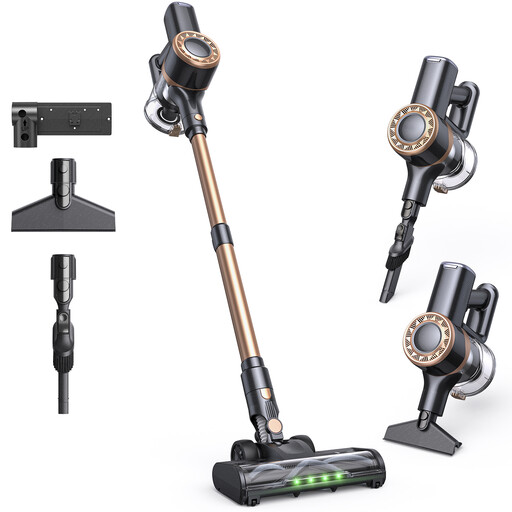
Why it suits this type of user: A cordless model that stands up on its own is handy for everyday vacuuming without having to fit a wall mount.
The product specifications list three settings, an anti-tangle brush and a dust container with a capacity of around 0.8 to 1.0 litres. Check which variant and run time apply to your order before buying.
Self-standing design, green lighting and a multi-layer filtration system, according to the product description.
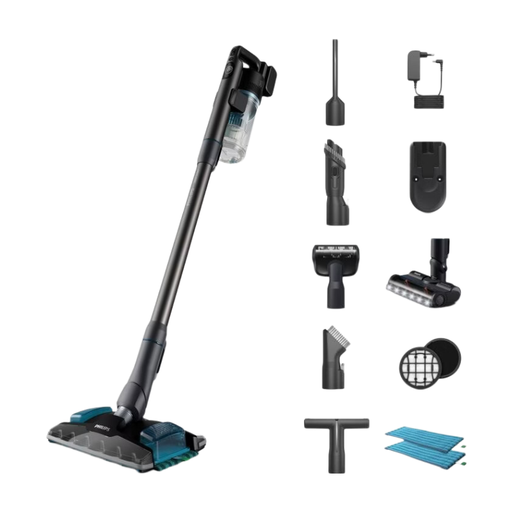
Why it suits this type of user: A good choice for households looking to combine vacuuming and light mopping in one appliance.
Run times are given for each setting: up to 80 minutes on low and up to 30 minutes in turbo mode. The mopping function uses a separate water tank and two microfibre pads.
2-in-1 stick and handheld design, LED lighting, a 0.6-litre dust container and PowerCyclone 12, according to the product information.
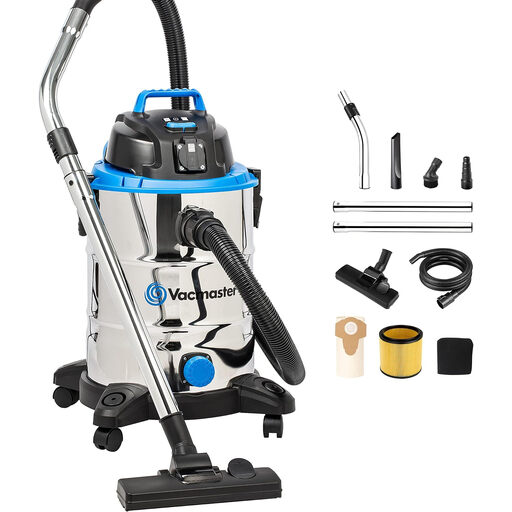
Why it suits this type of user: Ideal for garages, workshops and households where you need to deal with dry dirt, liquids and sawdust.
This is a wet and dry vacuum with separate filters for dry and wet cleaning. Use the correct filter and empty the stainless steel tank after use.
1500 watts, a 30-litre tank, a blower function and an EU socket for power tools, according to the product specifications.
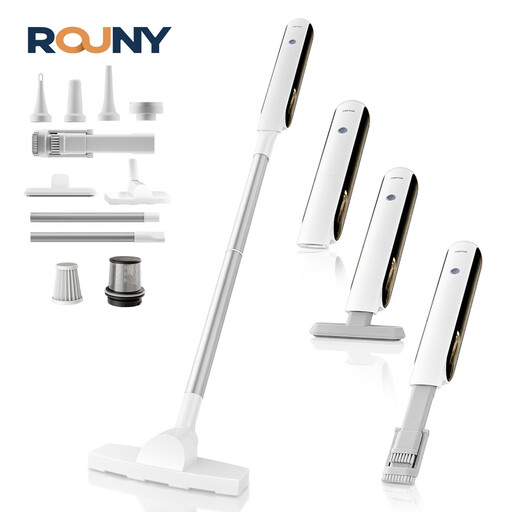
Why it suits this type of user: A compact choice for car interiors, keyboards, furniture and small cleaning jobs.
The stated run time is 15 minutes on the high setting and 30 minutes on the low setting. This makes its limitations clear if you’re looking to clean an entire home.
LED lighting, a blower function, seven attachments and a washable HEPA filter, according to the product description.
We’ve put together a complete, up-to-date list of products that meet these strict selection criteria and the applicable European safety regulations.
Its lifespan depends on charging cycles, maintenance and how intensively you use it. Clean the filter regularly, remove hair from the brush and use only the charger supplied or one approved for the model. A removable battery can be handy if you may be able to replace it later.
With a cordless model, your main costs are electricity, filters, brushes and possibly a new battery. With a bagged vacuum cleaner, you’ll also need to buy replacement bags. A model with washable filters can help keep ongoing costs down, but always check that replacement parts are available.
A robot vacuum with a mopping function works best on clear, level floors. Thresholds, thick carpets, cables and toys left lying around can restrict its route. You’ll still need a handheld or stick vacuum for stairs, furniture and targeted cleaning.
