
Clearing leaves by the front door
This user wants to vacuum up dry leaves rather than move them elsewhere. The Consumers’ Association recommends using a wet-and-dry or multi-purpose vacuum suitable for coarse debris.


If you want to vacuum up dry leaves by an entrance, choose a model only if it’s confirmed as suitable for dry, coarse debris. An ordinary household cylinder vacuum isn’t automatically suitable for the job. Then compare its weight and storage size, along with the reach of the cable and hose. Only use a blower function if moving the leaves elsewhere is appropriate for that spot.
This user wants to vacuum up dry leaves rather than move them elsewhere. The Consumers’ Association recommends using a wet-and-dry or multi-purpose vacuum suitable for coarse debris.
This user needs to carry the appliance upstairs and find somewhere to store it afterwards. So, alongside its suitability for the task, consider its weight, accessories and size. The Consumers’ Association points out that compact vacuum cleaners are easier to carry and store.
This user wants to be considerate about noise and avoid blowing leaves into a shared passageway. The Dutch government states that noise from neighbours may be covered by local municipal by-laws in many municipalities.
Choose this option if: you want to remove everyday household dust and small bits of debris.
Bear in mind: a crevice tool doesn’t prove that the model is suitable for dry, coarse leaves. The Consumers’ Association advises against using ordinary vacuum cleaners for coarse debris.
Choose this option if: the manufacturer lists dry, coarse debris as suitable for the exact model, and you want to collect the leaves in its container.
Bear in mind: the container, hose and accessories all need storage space. Manufacturer information doesn’t prove how well the vacuum will pick up every type of leaf in your entrance.
Choose this option if: you can gather the leaves in a suitable place without moving them towards your neighbours or into a shared passageway.
Bear in mind: a blower won’t collect leaves in a container. Bosch mentions leaves in connection with the UniversalVac 15’s blower function; this doesn’t prove that its vacuum function can pick up leaves.
| What to consider | What should you check? | Who is this most relevant to? |
|---|---|---|
| Vacuuming up dry leaves | Check whether the exact model is explicitly approved for dry, coarse debris, and read the instructions for the nozzle and filter. | If I want to vacuum up leaves, I need to know the model can handle dry, coarse debris; about 36% of consumers put this suitability first. |
| Carrying, reach and storage | Compare the weight on a like-for-like basis, along with the dimensions, handle, cable and hose length, against your stairs, cupboard and socket. | If I need to carry the appliance upstairs and have little space, ease of handling and reach matter; about 29% of consumers put these points first. |
| Noise and moving leaves | Check how the noise level is specified and consider where leaves will end up after blowing; check local rules for shared spaces. | At a shared entrance, I want to be considerate of neighbours and avoid blowing leaves into the passageway; about 21% of consumers prioritise quiet and considerate use. |
| Filters, bags and maintenance | Follow the instructions for dry vacuuming and check which filters or bags fit the exact model. | If I use the appliance regularly, I want to know how to maintain its collection system and filters; about 14% of consumers name this as their first consideration. |
For leaves, the key question is whether the exact model can handle dry, coarse debris. The category label alone doesn’t tell you how it will handle leaves.
Before choosing, check the model specifications and manual for information about dry, coarse debris.
Bosch mentions using the Bosch UniversalVac 15 to blow leaves away outdoors. This doesn’t confirm that its vacuum function can collect leaves.
Decide in advance what you want to do with the leaves after use. If you want to collect them in a container, choose a model confirmed as suitable for picking them up.
Container capacity alone doesn’t tell you how easy it is to carry the complete appliance, including its accessories, upstairs. Manufacturers may also measure weight on different bases.
Check the dimensions, carry handle and how the hose and tubes are stored. Compare weight figures only when they’re measured on the same basis.
The WD range includes wet-and-dry vacuum cleaners. Kärcher lists dry, coarse debris as suitable for the WD 2 Plus V-12/4/18.
Einhell says the TC-VC 1820 S can vacuum up coarse, fine, dry and wet debris.
Bosch mentions a blower function for leaves outdoors on the UniversalVac 15.
Nilfisk describes the Buddy II 12 as a compact wet-and-dry vacuum cleaner for cleaning indoors and outdoors.
This selection includes several types of vacuum cleaner and one leaf blower/vacuum. Check whether each model is suitable for dry leaves and fits your available storage space. The Greenworks is described as a leaf blower and vacuum, not a cylinder vacuum cleaner.
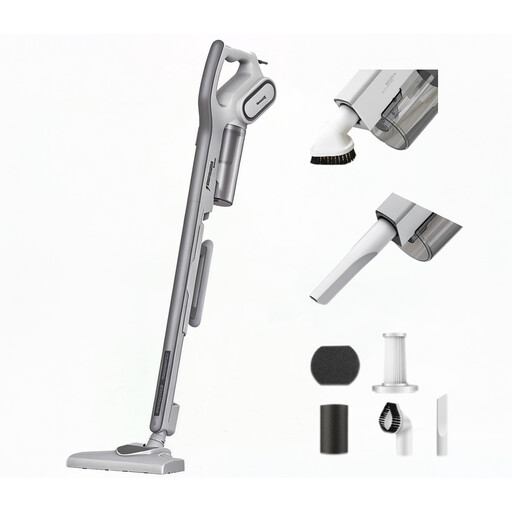 No image available
This is a handheld vacuum cleaner, not a cylinder vacuum cleaner; its suitability for dry, coarse leaves hasn’t been confirmed.
The product name specifies a 4,5 m cable and a 0,8 l dust capacity.
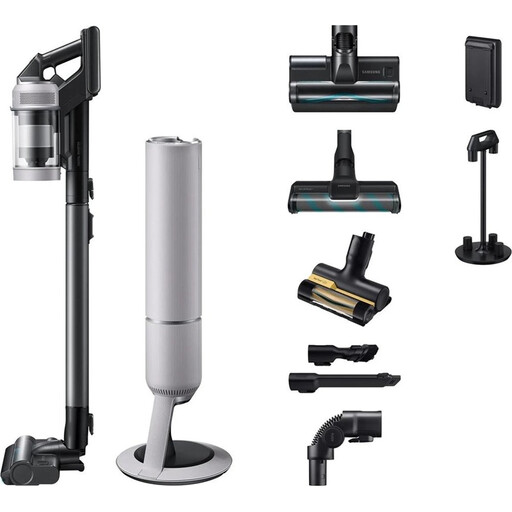 No image available
This is a stick vacuum cleaner; the product information in the title doesn’t confirm that it’s suitable for dry, coarse leaves.
The product name specifies a Clean Station and a runtime of up to 60 minutes.
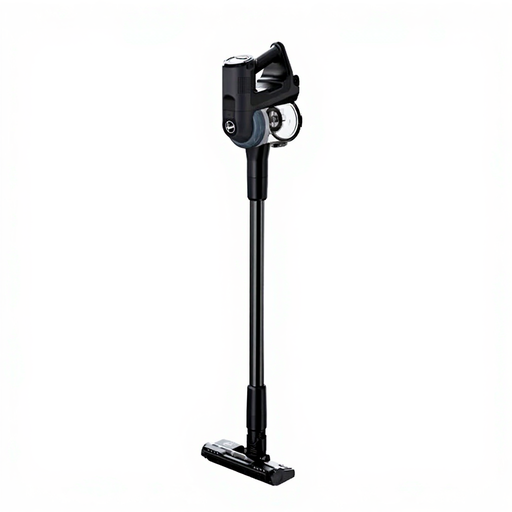 No image available
This is a cordless vacuum cleaner; check the instructions for the exact model before choosing it for dry, coarse leaves.
The product name specifies a bagless design.
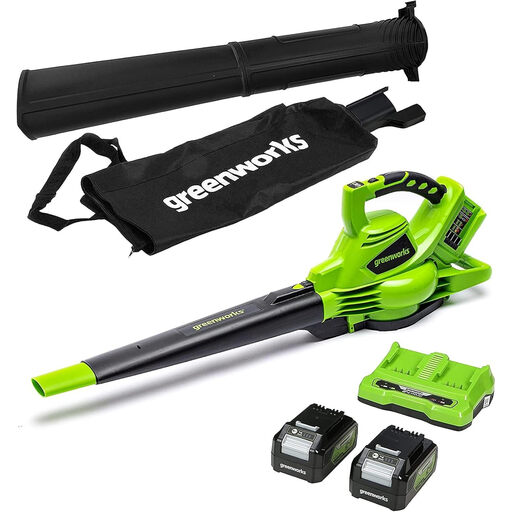 No image available
The product information describes a vacuum function that shreds and collects dry leaves. This is a leaf blower/vacuum, not a cylinder vacuum cleaner.
The product name specifies two 24 V 4 Ah batteries, a twin charger and a 45 l collection bag. According to the product information, this model isn’t intended for wet leaves, water, stones or metal objects.
 No image available
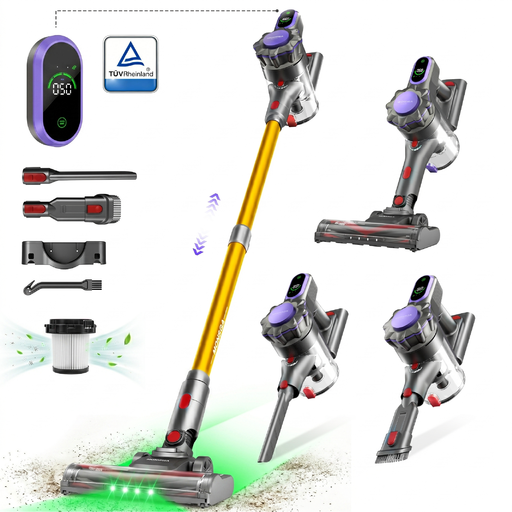
This is a stick vacuum cleaner; check whether the instructions for the exact model allow dry, coarse debris before choosing it for leaves.
The product name specifies a runtime of 50 minutes.
Don’t assume it’s suitable: the Consumers’ Association advises against using ordinary household vacuum cleaners for coarse debris. Check the instructions for the exact model, and only choose a vacuum for leaves if it’s confirmed as suitable for dry, coarse debris.
Check whether you can carry and store the complete appliance with its accessories, and whether the cable and hose can reach from the socket to where you’ll use the nozzle. Manufacturers may specify weight on different bases, so only compare like for like.
The rules may vary by location: according to the Dutch government, noise from neighbours may be covered by local municipal by-laws in many municipalities. Check the rules set by the relevant municipality, along with any agreements for the shared entrance.
When vacuuming dry debris, follow the instructions for the filter and bag for the exact model, and check that replacement bags fit its model number. If you use a cable reel, unwind it fully in line with the fire service’s safety advice.
According to ACM ConsuWijzer, online purchases generally come with a statutory cooling-off period of up to 14 days after delivery, with some exceptions. Your statutory guarantee is separate from any manufacturer’s warranty. If a product doesn’t do what you could reasonably expect during normal use, you can contact the seller.