
Cleaner of a small property
Wants to reach low corners and skirting boards without having to move a large appliance for every clean. First, check whether the version you choose includes the right nozzle.


Start with the nozzle: for cobwebs in low corners, a suitable crevice tool or, for delicate finishes, a soft brush matters more than the standard floor head alone. Then compare the reach, how the dust is emptied and whether suitable dust bags are available. A domestic model may suit a single small property; a professional model is worth considering mainly if you clean several rooms or properties in succession.
Wants to reach low corners and skirting boards without having to move a large appliance for every clean. First, check whether the version you choose includes the right nozzle.
Considers reach, capacity and the availability of attachments when the same vacuum cleaner is used more often or in several rooms.
Checks how the dust container is emptied and how filters are maintained. A dust bag limits contact with vacuumed dust when you dispose of it, but it needs replacing.
First, check that the exact version includes the right nozzle and that it can reach the low spot. Then compare how the dust is collected and emptied, and the working range you need between plug sockets.
| Key consideration | What should you check? | Who is this important for? |
|---|---|---|
| Low corners and skirting boards | Check whether the exact version includes a crevice tool and whether it fits under the piece of furniture in question. A soft brush may be useful for delicate finishes. | If I want to remove cobwebs from narrow corners and along skirting boards, I focus on having the right nozzle; around 36% of consumers prioritise reaching low corners. |
| Quick cleaning | Compare the stated reach with the distance to plug sockets, and check where the attachments are stored. | When cleaning repeatedly between guest changeovers, I want fewer interruptions and quick access to the attachments; around 29% of consumers prioritise working quickly. |
| Dust collection and maintenance | Choose between a bag and a dust container, and check which type of bag fits. Follow the instructions for emptying and filter maintenance. | If I want to minimise contact with dust when emptying the vacuum, I weigh up using a dust bag against the ongoing cost of replacements; around 21% of consumers prioritise low-dust emptying. |
| Other floor types | Check which floor attachment is included with the version if you want to clean hard floors or carpets as well as corners. | When I need the same vacuum cleaner for other floor types too, I want to know which floor attachment is included; around 14% of consumers prioritise this versatility. |
A general description of floor cleaning doesn’t tell you whether the right nozzle can reach the low corners in your property.
Compare the accessories listed for the exact version and check how much clearance there is beneath the furniture.
The fact that an accessory kit is compatible with a model doesn’t prove that it’s included with every version sold.
Before buying, check the kit number and the attachments listed for the version you’ve chosen.
You may need to buy a crevice tool or brush separately if one is missing.
The Consumers’ Association points out that the bag’s size and fitting matter; a poorly fitting bag can leak.
Make a note of the vacuum cleaner’s model number and check that the bag is compatible.
If you choose a bagged model, you’ll need to keep buying suitable replacement bags.
Bosch lists an integrated crevice tool and an 11 m operating radius for the BGL41BA3H.
Numatic positions the NVR160-11 and PPR170-11 as professional models. Their stated cable lengths are 10 m and 12.5 m respectively.
Miele offers the SFD 20 as a flexible crevice tool for Miele cylinder vacuum cleaners.
Philips describes the XD1101/10 as a compact bagged cylinder vacuum cleaner.
These products include bagged and bagless vacuum cleaners for targeted cleaning of corners. Check which nozzles are included with each version and whether they can reach your low corners.
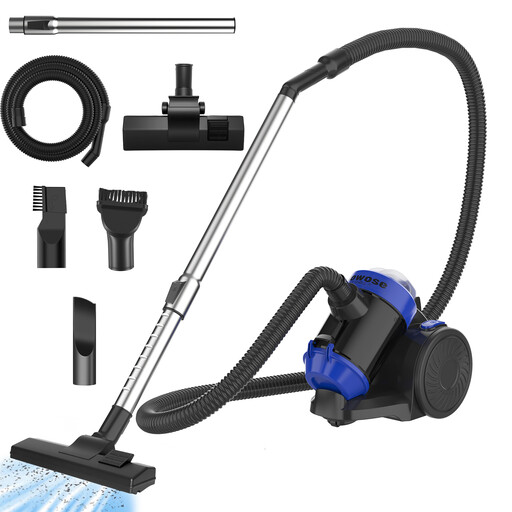 No image available
The product description lists a crevice tool and brush nozzle for hard-to-reach places.
Dust container: 1.5 l. Cable: 4 m.
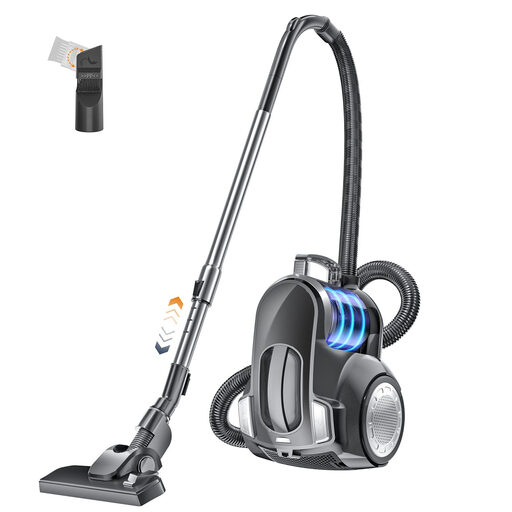 No image available
The product description lists an integrated 2-in-1 crevice tool for corners and areas beneath furniture.
Dust container: 2.5 l. Cable: 5.5 m. Stated working range: 14 m.
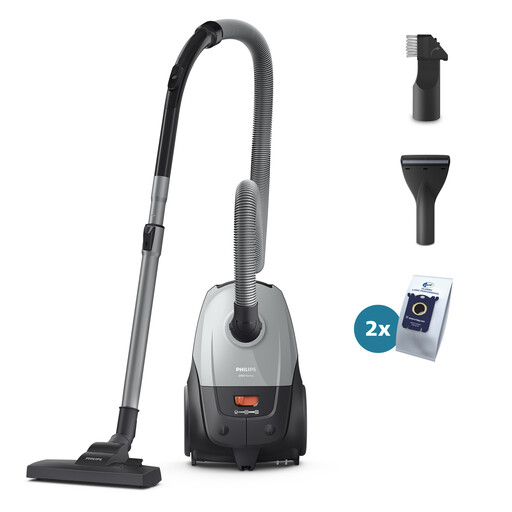 No image available
The product description lists an integrated 2-in-1 crevice tool for narrow spaces and dust collection in a bag.
Power: 800 W. Stated reach: 9 m. Two S-Bags listed as included.
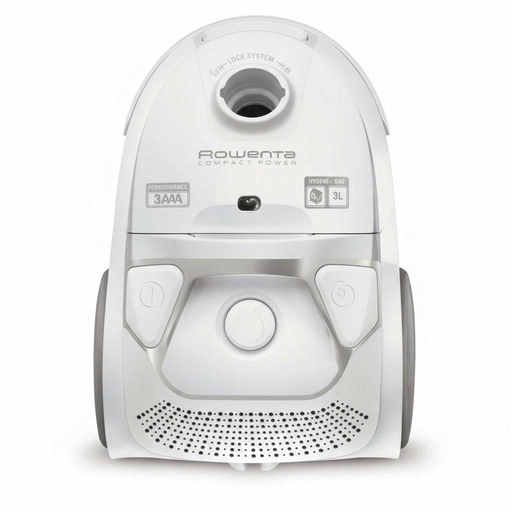 No image available
The listed box contents include a crevice nozzle for narrow corners.
Power: 750 W. Dust bag: 3 l. The product description lists a telescopic tube and automatic cord rewind.
 No image available
The product description lists a flexible XL crevice tool for deep crevices and narrow spaces.
Stated working range: 10 m. Dust bag: 3.5 l. Power: 890 W.
Start with a crevice tool for a narrow corner; consider a soft brush if you want to take care around the finish. Check which attachments are included with the exact version and whether the nozzle fits beneath the piece of furniture in question.
Follow the model’s instructions and replace a full dust bag or empty the dust container in good time. Also check the filters and clear any blockages from the nozzle or hose; a full container or clogged filter can reduce performance.
No. Check which bags and filters fit the exact model number and are available. According to the Dutch government, a manufacturer’s warranty for a private purchase is in addition to your statutory rights; the Netherlands has no fixed general statutory warranty period. Check which rights apply if you’re buying on behalf of a holiday rental business.
According to the Dutch Business.gov portal, electrical appliances placed on the market in the Netherlands must meet the applicable European requirements. Once the required assessment has been completed, the manufacturer affixes a CE mark and draws up an EU declaration of conformity. This general rule does not in itself confirm that a specific model meets the requirements.