
Vandaag of morgen in huis

Kwaliteit gegarandeerd

Welkomstaanbiedingen ontgrendelen: GRATIS bezorging | Tot 80% korting | Gratis 30 dagen JoyPlus-proefperiode
Download de app
Choosing a new vacuum cleaner seems straightforward until you have to compare stick vacuums, cordless vacuum cleaners, bagged models and bagless options. Marketing terms such as “extra powerful”, “smart detection” and “allergy filter” sound appealing, but they do not always tell you enough about everyday use.
Instead, focus on the flooring in your home, the desired running time, maintenance and the accessories included. This helps you avoid buying a machine that has too little reach after a few months, clogs quickly or is difficult to store.
A higher motor power does not automatically mean that a vacuum cleaner will clean every type of floor better. The floor head, brush roll, airflow and seals also play a part. A powerful vacuum cleaner with an unsuitable floor brush may be less practical on carpets than a model with a well-designed motorised brush.
So check whether the vacuum cleaner is suitable for hard floors and carpets. Also see whether it comes with a separate upholstery, crevice or carpet brush.
With a cordless vacuum cleaner, the stated battery life often applies to the most economical setting. In turbo mode, the running time can be considerably shorter. This is important for larger homes or households with pets.
Compare the standard running time with the time available in the most powerful mode. Also check the charging time, whether a second battery is available and whether replacement filters or batteries are readily obtainable.
A vacuum cleaner with a HEPA filter can, according to the product description, filter fine particles from the exhaust air. This does not mean that the appliance prevents allergies or treats medical conditions. Also check whether the filter is washable, replaceable and easy to source.
A good filtration system only works when it is fitted correctly and maintained regularly. A full dust container, blocked brush or dirty filter can reduce airflow.
A cordless vacuum cleaner is quick to grab and convenient for stairs, furniture and smaller homes. You do not need to change sockets, but the running time is limited. A corded model generally provides a continuous power supply and is suitable for a long cleaning session.
A cord length of 4.5 to 7 metres is practical for one room. For cylinder models, also look at the total operating range. According to the product details, the Philips 2000 Series has a range of up to 12 metres, while the Rowenta Green Force lists a 6.2-metre cord and a 9-metre range.
A bagless vacuum cleaner saves you from buying dust bags and often has a transparent dust container. However, when emptying it, you may come into direct contact with the collected dust. A bagged vacuum cleaner keeps the dirt more enclosed when the bag is replaced, but requires compatible bags.
Pay attention to the capacity:
For example, the Shark IZ400EUT has a 0.85-litre dust container. The Siemens iQ300 VSC3320 uses a 4-litre dust bag.
A 2-in-1 vacuum cleaner that converts into a handheld vacuum is suitable for furniture, skirting boards, car interiors and hard-to-reach places. For pet hair, a motorised brush or specialist pet-hair brush is more relevant than a high wattage alone.
Also check the weight of the part of the appliance you actually hold while vacuuming. A compact model is not automatically light when the motor and dust container are positioned high up in the tube. A flexible tube, swivel floor brush and low profile make it easier to clean underneath sofas and cupboards.
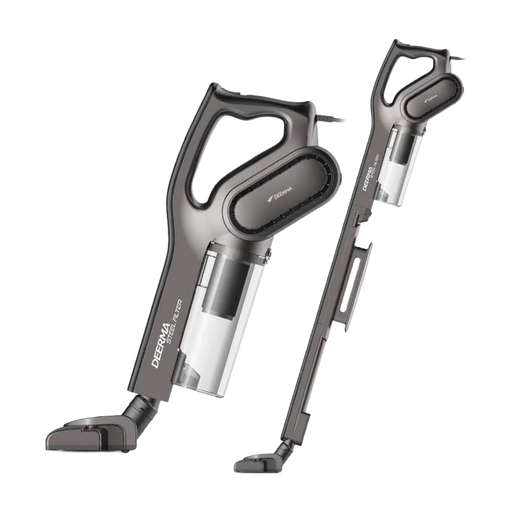
Why it suits this profile: A simple, compact corded vacuum cleaner for everyday cleaning in a flat or smaller home.
The product specifications state 15 kPa suction power, a 4.5-metre cord and a visible 0.8-litre reservoir. This makes the key usage information clear.
600 W motor, HEPA filter according to the product details, swivel floor brush and upright storage.
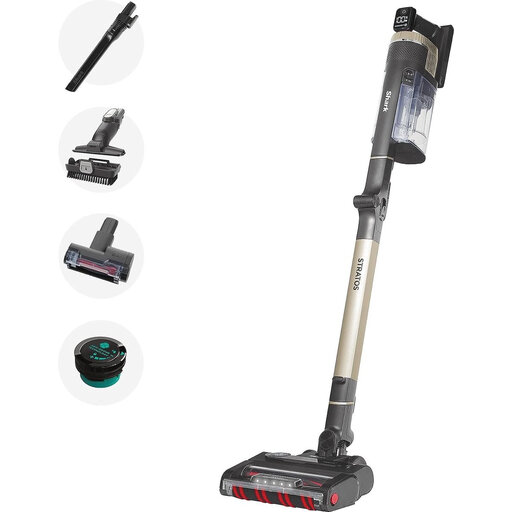
Why it suits this profile: For households that want to clean without a cord and regularly switch between floors, furniture and pet hair.
The three settings—Eco, Deep Clean and Boost—make the difference between longer running time and extra power clear. According to Shark’s product description, the stated claim of 50% more suction power comes from a brand comparison.
0.85-litre dust container, integrated handheld vacuum, Flexology tube and TruePet accessory.
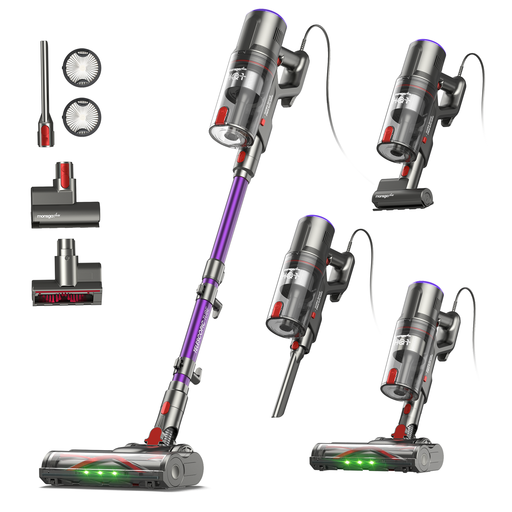
Why it suits this profile: A corded model for larger homes, carpets, pet hair and longer cleaning sessions without needing to recharge.
The 7-metre cord removes reliance on a battery. Its suitability for carpets and pet hair is linked to the motorised brushes listed.
1.8-litre dust container, motorised floor and mattress brush, stated weight of 1.3 kg and seven-stage filtration according to the product information.

Why it suits this profile: For anyone who prefers using a dust bag and wants to clean several rooms without frequently changing sockets.
The 3-litre dust bag and stated 12-metre range reduce interruptions during cleaning. However, check the cost and availability of S-Bags.
HEPA filtration system according to the product details, adjustable suction power, multifunction floor nozzle and two dust bags included.
We have put together a complete, up-to-date list of products that fully meet these strict selection criteria and the applicable European safety regulations.
A mattress vacuum cleaner is an addition to a standard vacuum cleaner, not a complete replacement. Models such as the ochama Mattress Vacuum Cleaner and Hoover MBC500UV are designed for mattresses, sofas and cushions. Claims about UV-C, bacteria or dust mites should be understood as statements from the brand’s product information. Use UV-C appliances in accordance with the safety instructions and never look directly into a UV-C lamp.
An LED light on the floor brush helps make dirt under furniture visible. Automatic suction control can be useful, but check whether you can also adjust the setting manually. For smaller homes, a compact vacuum cleaner or 2-in-1 model is often more practical than a heavy cylinder model.
Its lifespan depends on usage, maintenance and the availability of spare parts. Clean the filters and brushes according to the manual, empty the dust container in good time and avoid vacuuming up hard or damp materials. With a cordless model, battery condition and replaceability are particularly important.
With a corded model, your main costs are electricity, filters and, where applicable, dust bags. With a cordless vacuum cleaner, you also need to take the battery and charging costs into account. A model with a larger dust container or dust bag may work out more economical if it means you need to replace bags or filters less often.
Not for every household. A HEPA filter may be worthwhile if you want to filter fine dust particles more effectively, but always check the exact filter class, the appliance’s seals and the maintenance instructions. A filter that is fitted incorrectly or cleaned too late will not perform as intended.
