
Vandaag of morgen in huis

Kwaliteit gegarandeerd

Welkomstaanbiedingen ontgrendelen: GRATIS bezorging | Tot 80% korting | Gratis 30 dagen JoyPlus-proefperiode
Download de app
Buying a vacuum cleaner sounds straightforward—until you have to choose between a robot vacuum, cordless stick vacuum, handheld vacuum or carpet cleaner. Manufacturers often highlight one impressive figure, even though other specifications can be just as important. High suction power, for example, does not automatically indicate runtime, noise levels or performance on your particular flooring.
For households in the Netherlands, three pitfalls are particularly relevant:
Looking only at Pa or kPa
A high suction-power figure may sound appealing, but results also depend on the brush, airflow, filter and selected mode. Check whether the stated value applies to the maximum setting. This setting generally uses more energy and can drain the battery faster.
Confusing a mopping function with a wet cleaner
A robot vacuum with a mopping function is intended for light, damp maintenance on suitable floors. It is not designed to pick up spilled liquids. For stains on a sofa, carpet or car seat, you need a separate spot cleaner or carpet cleaner.
Overlooking maintenance and accessories
A vacuum cleaner with a self-cleaning charging station reduces certain chores, but dust bags, filters, brushes and water tanks still require maintenance. Check the availability of replacement parts in advance, as well as how much space the charging station occupies.
For a vacuum cleaner for carpets and hard floors, multiple power settings are useful. A lower setting is often sufficient for everyday dust on tiles, laminate or wood. A higher setting can be helpful on carpets, doormats and areas affected by pet hair.
Also look for:
With robot models, navigation and obstacle recognition are at least as important as suction power. LiDAR navigation can help create systematic routes across multiple rooms, while no-go zones prevent the robot from reaching cables, toys or delicate areas.
With a cordless stick vacuum, always consider runtime together with the suction setting. The quoted maximum runtime usually applies to the lowest setting without a motorised brush. For an average home, a removable battery, clear charging indicator and second battery are practical advantages.
The Monsga ME03, for example, claims up to 55 minutes of use in hard-floor mode. The Laresar X11 lists three settings: 15, 28 and 55 kPa, with the highest setting consuming more power according to the product information. So do not focus solely on the maximum number of minutes; also check the runtime when cleaning carpets or carrying out more intensive tasks.
A corded model, such as the ochama 2-in-1 stick vacuum, offers a constant power supply instead. However, its 4.5-metre cable limits freedom of movement.
A vacuum cleaner with a HEPA filter may be an appealing choice if you want to filter fine dust particles more effectively. Check exactly what is stated: “HEPA filter” and “multi-stage filtration” are product specifications, while particle-capture percentages should be treated as information provided in the brand’s product description.
Pay attention to the dustbin capacity. A 0.5- to 0.7-litre bin is compact, but households with pets or several occupants will need to empty it more frequently. A self-emptying charging station reduces daily emptying, but uses dust bags that must be replaced on time.
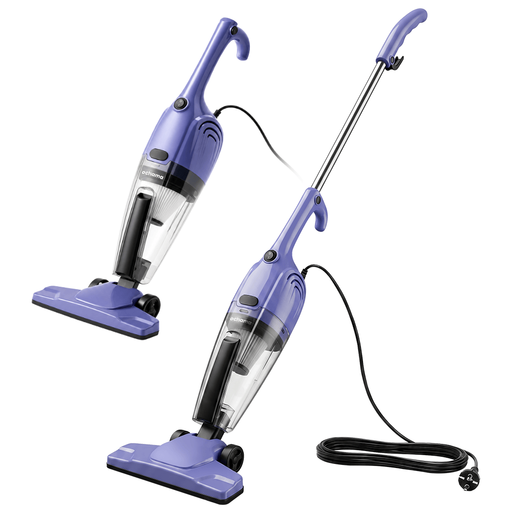
Why This Fits Their Persona: A practical choice for smaller homes, student rooms or households that prefer not to charge a battery. The vacuum can be used as both a stick vacuum and a handheld vacuum.
The corded design avoids surprises caused by limited battery life. The filter is washable according to the product information.
550 W motor, visible 0.5-litre dustbin and multiple cleaning modes.
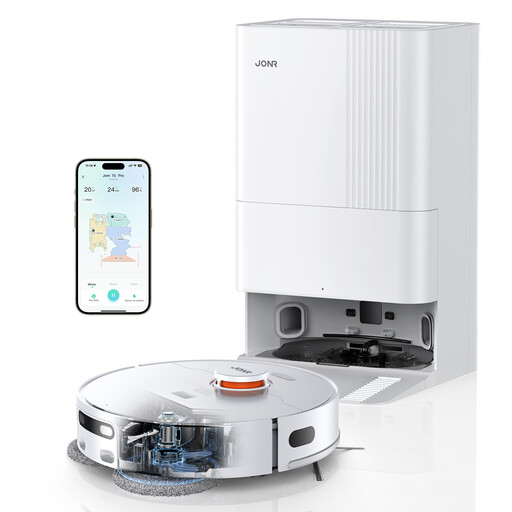
Why This Fits Their Persona: Ideal for households that want to automate daily maintenance and primarily have hard floors. The app supports schedules and virtual zones.
The product information lists LiDAR navigation, obstacle avoidance and an anti-tangle side brush. The charging station dries the mop with warm air, but the water tank and dust bag still require maintenance.
Claimed suction power of up to 8,150 Pa, mopping function, app control and automatic warm-air drying.
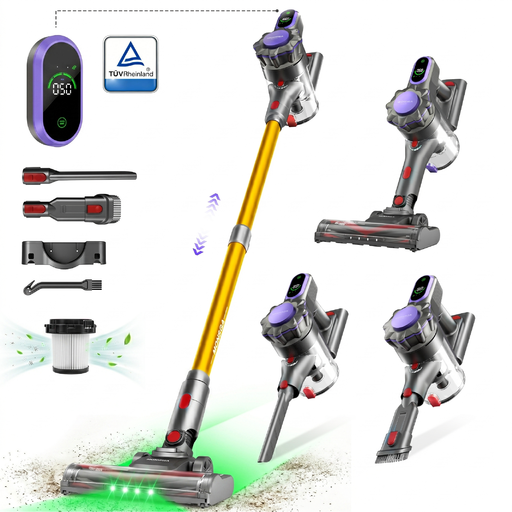
Why This Fits Their Persona: Well suited to quick cleaning sessions in homes with carpets, hard floors, furniture and pet hair. The removable battery is convenient for longer cleaning sessions.
According to the product description, the brush is designed to reduce hair tangling. Nevertheless, check the roller brush regularly, particularly if you have long hair or pets.
550 W power, claimed runtime of up to 55 minutes and multi-stage filtration with a washable HEPA filter.
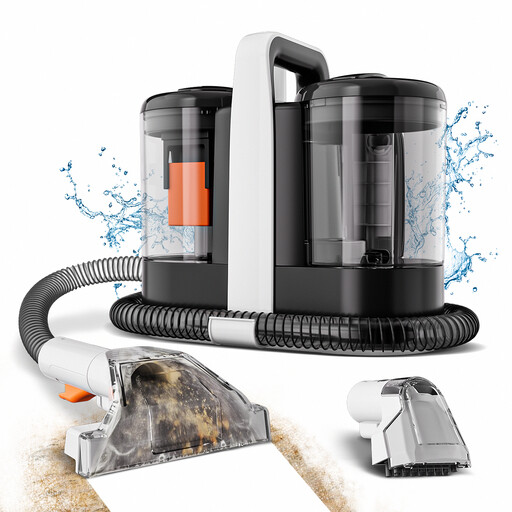
Why This Fits Their Persona: A targeted solution for families, pet owners and motorists who want to clean sofas, rugs, mattresses or car seats locally.
This is not a standard dry vacuum: the appliance uses separate tanks for clean and dirty water. That makes it better suited to stains than a robot or stick vacuum.
600 W power, claimed suction power of 15 kPa, 1.5-litre clean-water tank and 0.8-litre dirty-water tank.
Explore a current selection of household cleaning appliances with different features, formats and use cases.
Not always. Check the manufacturer’s recommendations for wood, laminate, tiles and carpets. Do not use a robot to pick up puddles or spilled liquids. For homes with both carpets and hard floors, carpet detection, adjustable water dispensing and virtual zones are useful features.
In addition to the purchase price, electricity, filters, brushes and, where applicable, a replacement battery are the main ongoing costs. Longer battery life can be convenient, but the maximum runtime usually applies to the lowest setting. A corded model requires no battery maintenance, but consumes power during every use and offers less freedom of movement.
Empty the dustbin before it is completely full, clean the filters according to the manual and remove hair from the floor brush. Allow washed components to dry completely before reinstalling them. Never use a dry vacuum cleaner for liquids, and regularly check the sensors, wheels, mop pads and water tanks on robot models.
