
Vandaag of morgen in huis

Kwaliteit gegarandeerd

Welkomstaanbiedingen ontgrendelen: GRATIS bezorging | Tot 80% korting | Gratis 30 dagen JoyPlus-proefperiode
Download de app
A new vacuum cleaner may seem easy to choose at first glance. Yet terms such as “hurricane suction”, long battery life and “smart” filtration can regularly create unrealistic expectations. A cordless vacuum cleaner may be convenient for everyday use, for example, but less suitable for a large home with thick carpeting. A wet and dry vacuum can handle a great deal, but requires more maintenance after each use than a standard stick vacuum.
As a Joybuy Product Recommendation Officer, I filter the most important information down to practical considerations. This way, you can see which specifications are verifiable and which type of vacuum cleaner best suits your floors, pets, car or workshop.
Brands sometimes list figures such as 16,000 Pa, 27 kPa or 55 kPa. These are useful technical specifications, but they do not tell the whole story. Actual cleaning performance also depends on:
A high figure does not automatically mean that every carpet or pet-hair problem will be solved effortlessly. Also check whether the manufacturer distinguishes between maximum power and normal operating mode.
A stated runtime of 45, 55 or 65 minutes often applies to an energy-efficient mode and a lightweight surface. On carpet or in turbo mode, the actual runtime may be significantly lower. Pay attention to:
For a small apartment, a compact cordless vacuum is often sufficient. For homes across several floors, a model with a replaceable battery may be more practical.
A HEPA vacuum cleaner may filter fine dust according to the product description, but this is not a guarantee of an allergy-free home. Claims about filter efficiency should be regarded as the manufacturer’s product specifications. Also check whether the filter is washable, how long it needs to dry and whether replacement filters are available.
For a vacuum cleaner suitable for carpets and hard floors, a motorised floor brush is useful. A soft brush is often gentler on delicate hard floors, while a brush with rubber strips and an anti-tangle design can be well suited to pet hair.
A vacuum cleaner for dog and cat hair needs more than sufficient suction power. Pay particular attention to:
A bagless vacuum cleaner eliminates the need to buy dust bags, but emptying it may result in more contact with dust. A bagged model is often more straightforward when disposing of debris, while a self-emptying vacuum cleaner can automatically empty its dust container into a base station. In that case, check the price and availability of bags for the station.
Capacity varies considerably. A 0.5- to 0.7-litre container is suitable for everyday maintenance, but may fill up faster in homes with several pets. A traditional Philips bagged vacuum cleaner has a 3-litre capacity according to the product information and comes with two S-Bags.
Only use a standard stick vacuum or handheld vacuum on dry surfaces unless the manual explicitly permits wet use. A wet and dry vacuum generally uses different filters for liquids and dry debris.
According to the product description, the Vacmaster VQ1530SFDC has a 1500-watt motor, a 30-litre stainless-steel tank, a blower function and an EU power socket for electric tools. This makes this type of vacuum interesting for a workshop, but less convenient as an everyday living-room vacuum cleaner.
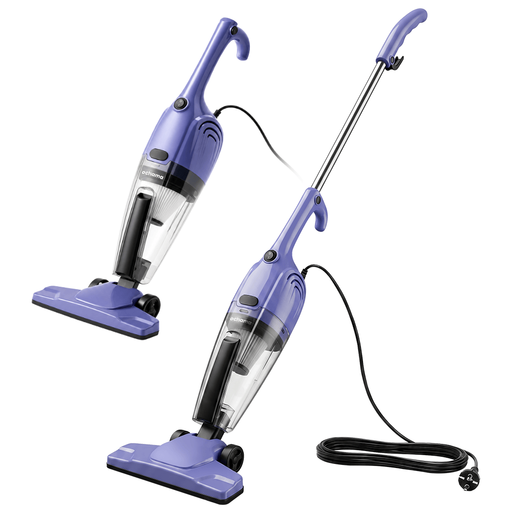
Why it’s a good fit: A cord provides consistent power and is practical in smaller homes, student accommodation or apartments.
There is no need to estimate battery life or charging time. The cord is 4.5 metres long, and the model can be used as either a stick or handheld vacuum.
550-watt motor, multiple modes and a washable filter according to the product description.
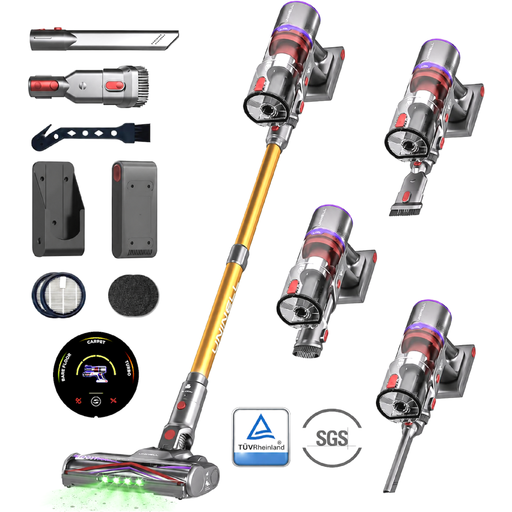
Why it’s a good fit: Designed for everyday cleaning of hard floors, carpets, furniture and areas where pet hair collects.
The product description mentions an anti-tangle brush, helping to prevent hair from wrapping around the roller brush. Even so, check and clean the brush regularly.
According to the manufacturer: up to 65 minutes of runtime, a seven-stage filtration system and conversion to a handheld vacuum.
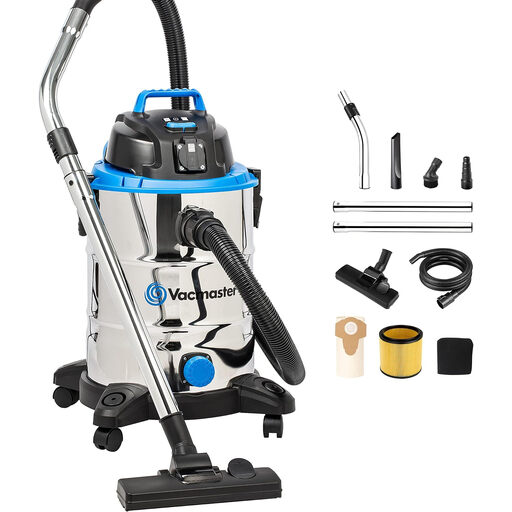
Why it’s a good fit: For garages, workshops and households that need to vacuum dry debris, liquids and dust from tools.
This is not a lightweight everyday stick vacuum, but a model with separate filters for dry and wet use. That makes its intended applications clearer.
1500 watts, a 30-litre stainless-steel tank, blower function and a 240-volt socket for electric tools according to the product information.
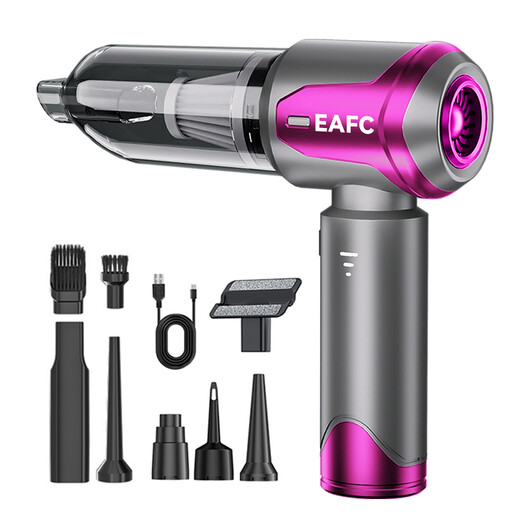
Why it’s a good fit: A compact car vacuum and handheld vacuum for crumbs, keyboards, furniture and small cleaning jobs.
The product description clearly states that it has a compact design and four functions. It should therefore not be expected to replace a full-size floor vacuum.
According to the product information: 6000mAh battery, USB-C charging, vacuuming, blowing, inflating and extracting air from bags.
Browse our current selection of models that meet these practical criteria, together with the relevant safety information for use in the Netherlands.
A vacuum cleaner will only continue to perform well when its airflow and filters remain unobstructed. Empty the container before it is completely full and check the brush for hair, threads and larger pieces of debris. Washable filters must be completely dry before being refitted. Some models recommend a drying time of at least 24 hours.
After vacuuming liquids with a wet and dry vacuum, follow the instructions in the manual: empty the dirty-water tank, rinse the appropriate components and allow them to dry. Never use a dry stick vacuum, HEPA vacuum or bagless vacuum for liquids unless this is explicitly permitted.
That depends on the floor area and the selected mode. Compare the stated runtime with your cleaning routine. A removable battery or spare battery can be useful for homes across several floors. Also check the charging time; some models require around four hours.
Follow the instructions for the specific model. Washable filters must dry completely and should never be refitted while damp. A damaged or saturated filter can reduce airflow. Check in advance whether replacement filters are available separately.
A corded vacuum uses electricity while cleaning, whereas a cordless model requires energy for charging. Actual consumption depends on motor power, runtime and the selected power mode. Do not choose based on wattage alone; also consider the required cleaning time and the type of floor.
