
Vandaag of morgen in huis

Kwaliteit gegarandeerd

Welkomstaanbiedingen ontgrendelen: GRATIS bezorging | Tot 80% korting | Gratis 30 dagen JoyPlus-proefperiode
Download de app
Buying a vacuum cleaner might seem straightforward, until you have to choose between a cordless vacuum, stick vacuum, robot vacuum, handheld vacuum or a wet-dry vacuum. Marketing often focuses on high pascal ratings, long battery life or smart features. Yet one isolated specification doesn't tell you how well a device will actually perform in a British household.
Pay particular attention to these three common pitfalls:
Confusing peak suction power with everyday results
A high value in kPa or Pa is usually measured under specific conditions. The floor head, airflow, filter and selected setting all affect the cleaning outcome.
Expecting the maximum battery life as standard
The stated runtime often applies to the eco setting. On carpet or with stubborn dirt, you may need a higher setting, which means a cordless vacuum will run for less time.
Seeing mopping, UV light or self-emptying as maintenance-free features
A robot vacuum with a mopping function still requires cleaning work. Brushes, filters, water tanks and sensors need regular maintenance. Even a self-emptying vacuum has a bag or collection bin that must be replaced or emptied.
For a vacuum cleaner for hard floors, a soft floor brush is important to pick up dust, crumbs and hair without unnecessarily damaging the floor. On carpet, you'll often benefit more from a motorised brush that loosens dirt from the fibres.
A rating such as 27 kPa or 55 kPa gives information about the maximum suction pressure, but not the complete cleaning result. So also check:
According to the product description, the Lubluelu X1000 has a maximum suction power of 27 kPa, an anti-tangle brush and green detection lighting. The Monsga ME03 claims up to 55 kPa in carpet mode, according to the manufacturer. These values are product specifications and not a guarantee of the same result in every home.
A stick vacuum is handy for daily maintenance, but the battery life determines whether you can do an entire floor in one go. Pay attention to the difference between:
A removable battery can be practical for larger homes. For a compact handheld vacuum, a short usage time is often sufficient for crumbs, furniture or the car interior. Also look at the dust bin capacity. A 0.7-litre bin offers more space for longer cleaning sessions than a 0.4-litre model, but it can make the appliance heavier.
If you want to minimise fine dust, it's worth checking the filter construction. Look for a multi-stage filtration system and check whether filters are washable or replaceable. A HEPA filter may be part of the filtration system, but always check exactly what the manufacturer states.
Maintenance remains essential:
A standard dry vacuum cleaner is not suitable for liquids. For upholstery, sofas and rugs, a carpet cleaner with separate clean and dirty water tanks is a different product category from a standard vacuum cleaner.
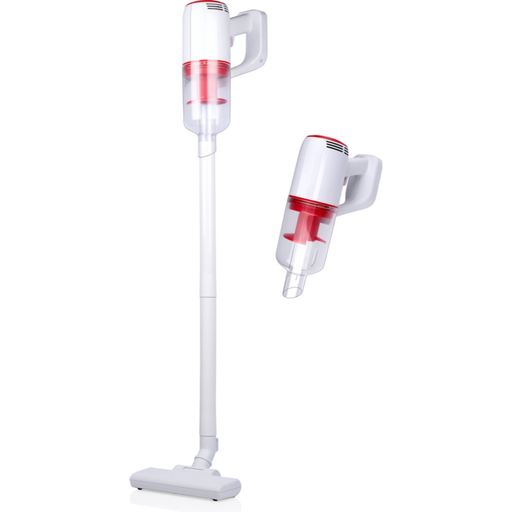
Why this fits the profile: This model combines a stick vacuum with a handheld vacuum and is suitable for smaller daily cleaning tasks.
The product description states both the eco and highest setting, with a runtime of 25 and 15 minutes respectively. This allows you to estimate the battery life more realistically.
1.3 kg, 0.5-litre dust bin, two suction settings and a maximum stated suction power of 6000 Pa.
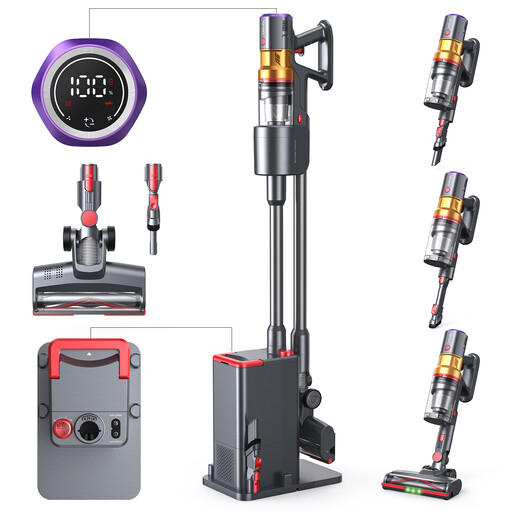
Why this fits the profile: Suitable for households looking for a cordless vacuum for pet hair, carpet and hard floors, with less manual emptying.
The self-emptying base reduces direct contact with dust, while the anti-tangle brush is designed to tackle hair build-up. The base does not eliminate maintenance entirely.
According to the product description: 27 kPa, multi-stage HEPA filtration, three settings, freestanding design and green lighting on the floor brush.
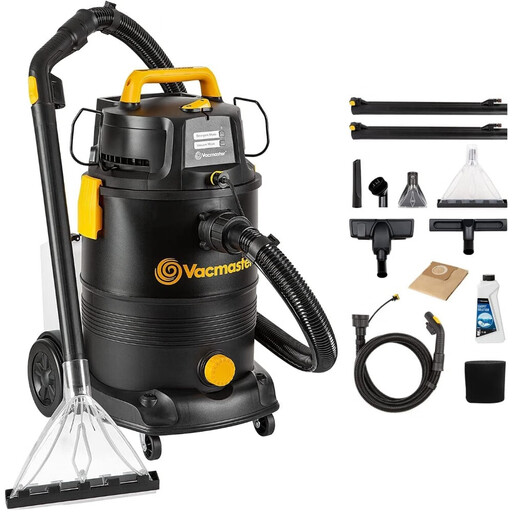
Why this fits the profile: A choice for those who want to tackle not only dry dirt but also carpet, furniture, car interiors or spilled liquids.
The separate filters and tanks make it clear that wet and dry use require different preparations. Tanks and filters must be emptied and cleaned after use.
1300 W, 30-litre collection capacity, a 6-litre tank for cleaning solution and functions for wet, dry and carpet cleaning.
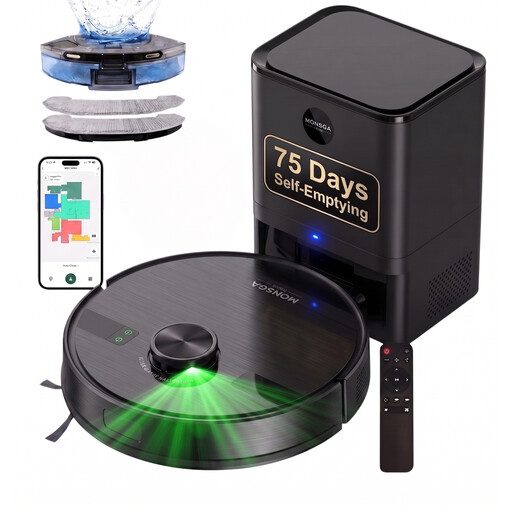
Why this fits the profile: Handy for those who want floors maintained on a schedule and prefer control via app, remote control or voice commands.
The instructions warn you to remove cables and loose objects and not to use the robot in wet areas. Preparation therefore remains part of the usage.
According to the product name: 9000 Pa, LiDAR navigation, a station with 4-litre self-emptying and a stated operating time of up to 180 minutes.
We've put together a full, up-to-date list of products that fully meet these strict selection criteria and comply with current European safety regulations.
That depends on the battery life, the number of floors and the suction setting you choose. Check whether the stated runtime applies to eco, standard or maximum suction power. A model with a removable battery can be more practical for larger homes.
The lifespan depends on usage, maintenance and the availability of filters, brushes and batteries. Clean filters according to the manual, avoid a blocked brush and store a cordless vacuum in a dry place. With a robot vacuum, the sensors, side brushes and charging station are also part of the maintenance.
With a corded model, you mainly pay for electricity and any dust bags. A cordless version also has a battery that may need replacing over time. A self-emptying vacuum often uses special bags for the station. So don't just compare the purchase price, but also filters, brushes, bags and cleaning solution when using a carpet cleaner.
