
Vandaag of morgen in huis

Kwaliteit gegarandeerd

Welkomstaanbiedingen ontgrendelen: GRATIS bezorging | Tot 80% korting | Gratis 30 dagen JoyPlus-proefperiode
Download de app
Buying a new vacuum cleaner seems simple, until you have to choose between a robot vacuum, a cordless stick vacuum, a cordless vacuum or a model with a mopping function. Marketing often focuses on a high suction-power figure, a smart app or a long runtime. But one specification rarely tells you enough about how a vacuum will perform day to day.
For UK households, there are three common pitfalls to watch out for:
Don’t just look at Pa, kPa or AW. Check whether the vacuum has a motorised floor brush, a soft roller for hard floors or an anti-tangle brush. For homes with pets, an anti-tangle brush and an easy-to-remove brush roll can be practical. They won’t eliminate all maintenance, but they can make removing hair easier.
Ideally, a vacuum for hard floors and carpets should have several modes. A lower setting is suitable for everyday dust on tiles or laminate; a higher setting can be useful for carpets, crevices and pet hair. According to Laresar’s product information, the X11, for example, has three settings ranging from 15 to 55 kPa. The manufacturer notes that the highest setting uses more power and is mainly intended for targeted cleaning.
With a cordless vacuum, three details are worth checking:
A quoted runtime of 60 minutes usually doesn’t guarantee 60 minutes at maximum suction power. The Dyson V12 Detect Slim Absolute, for example, lists 60 minutes on its lowest setting and 10 minutes on its highest. That difference matters if you have a large home or lots of carpet.
A larger dust container means you’ll need to empty it less often, but it can also make the appliance heavier. For a quick daily clean, a compact model may be more convenient than a larger one with greater capacity.
The layout of your home and the amount of clutter on the floor affect how easy a robot vacuum is to use. LiDAR navigation usually maps the room and supports features such as selecting rooms, setting cleaning times and creating no-go zones. Also check:
A self-emptying robot vacuum means less manual emptying, but the station still needs maintenance. Some systems require you to replace dust bags; with bagless models, the container needs to be emptied and cleaned.
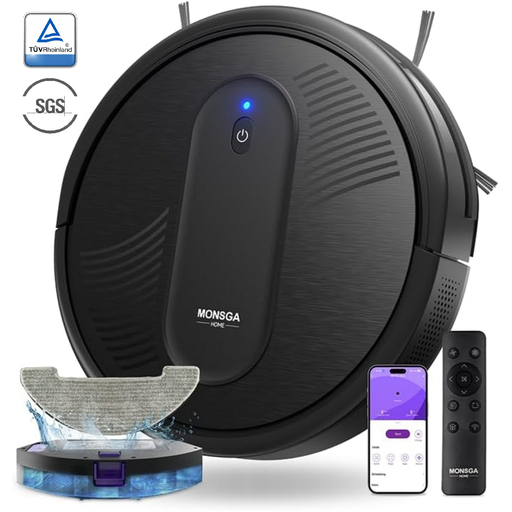
Why it suits this household: This model is designed for automatic daily vacuuming on hard floors and low-pile carpets. According to the product information, it can be controlled using the remote, an app or a voice assistant.
The specifications list a low-profile design of 3.2 inches and a scheduled cleaning function. Be sure to check that your furniture has enough clearance.
According to the product listing: 4,000 Pa suction power, up to 140 minutes of runtime and control via app or remote.
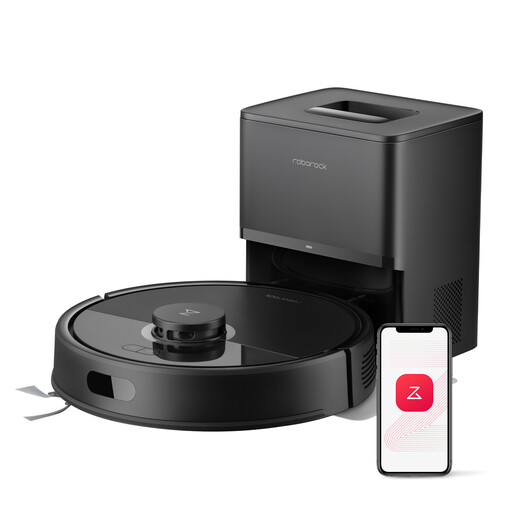
Why it suits this household: A good choice if you want automatic navigation, mopping, app control and less frequent emptying in a single robot vacuum.
The product name lists an automatic emptying station, LiDAR navigation and an anti-tangle system. Before buying, check which consumables are available.
According to the product listing: 8,000 Pa suction power, LiDAR navigation, a mopping function and app control.
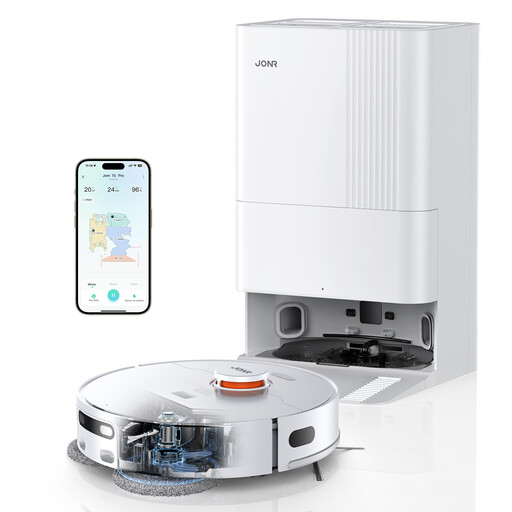
Why it suits this household: Suitable for households looking to combine automatic cleaning, obstacle detection and maintenance via an all-in-one station.
The product information lists an anti-tangle side brush and LiDAR navigation. The manufacturer also notes that the water tank and dust bag need regular maintenance.
According to the product listing: 8,150 Pa suction power, hot-air drying, obstacle detection and an all-in-one dock.
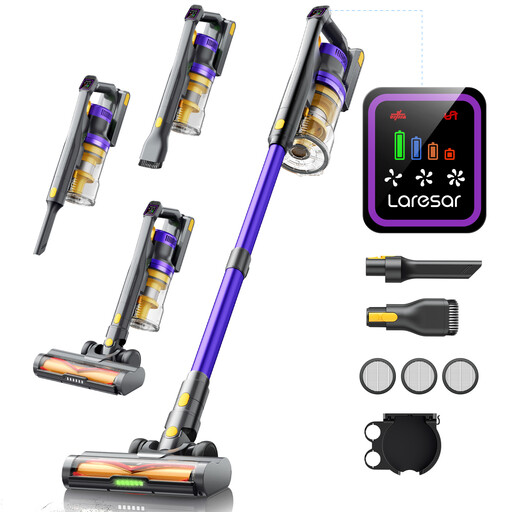
Why it suits this household: A stick vacuum is ready to use straight away for pet hair, crumbs, furniture, stairs and the car. It’s a practical option when you don’t want to wait for a robot to finish a cleaning run.
The listed V-shaped brush roll is designed to reduce hair tangles. The filters and brush still need regular cleaning, following the instructions.
According to the product information: 550 W motor, three modes, green floor-light function and a quoted runtime of up to 60 minutes.
We’ve put together a complete, up-to-date list of products that meet these strict selection criteria and the applicable European safety regulations.
It depends on the pile height, the brush and how the robot recognises carpets. Check whether the mop lifts automatically when a carpet is detected. For deep-pile carpets, a cordless stick vacuum may give you more control.
Runtime per charge varies depending on the mode and accessory. The battery is also a wear-and-tear component. So check whether a replacement battery is available, how long charging takes and whether filters and brushes can be ordered separately.
As well as the purchase price, dust bags, mop pads, filters, brushes and cleaning fluid can all add to the cost. A bagless station avoids the cost of dust bags, but needs to be emptied and cleaned by hand more often. Work out the ongoing costs before choosing a model based solely on the convenience of automatic emptying.
Look for a motorised brush, an anti-tangle design, a well-sealed filtration system and a dust container that’s easy to empty. A robot vacuum can take care of everyday cleaning, while a stick vacuum is more convenient for sofas, crevices, stairs and areas where hair tends to collect.
