
Vandaag of morgen in huis

Kwaliteit gegarandeerd

Welkomstaanbiedingen ontgrendelen: GRATIS bezorging | Tot 80% korting | Gratis 30 dagen JoyPlus-proefperiode
Download de app
Buying a new vacuum cleaner sounds simple, until you have to choose between a robot vacuum, upright vacuum, cordless vacuum, handheld vacuum or wet and dry vacuum. Manufacturers often highlight one eye-catching figure, such as the wattage or suction power in Pa. However, that number does not tell you everything about everyday use.
Instead, focus on the combination of suction power, brush, filter, capacity, battery life and maintenance. This will help you avoid finding after a few months that the appliance is inconvenient for carpets, pet hair or small spaces.
A high wattage mainly tells you something about the motor’s electrical power. With a robot vacuum, suction power is often stated in Pa. This figure can be useful for comparing products within the same category, but it is not directly comparable with the power of a traditional vacuum cleaner.
The floor head, airflow, brush and sealing all affect how effectively dirt is collected. So also check the included floor brush and whether it is suitable for carpets and hard floors.
A vacuum cleaner with a mopping function is usually intended for damp cleaning of hard floors. That does not automatically mean the appliance can suck up spilled liquids. A robot with a mopping module or a compact floor cleaner often has separate clean- and dirty-water tanks.
A wet and dry vacuum for the garage, car or workshop is designed differently for this purpose. Always check whether the product is suitable for wet use and which filters are required.
A robot vacuum with an all-in-one station requires fewer daily tasks, but it does need space around the charging station. For the JONR T5 Pro, for example, at least 0.5 metres on both sides and 1.5 metres in front is recommended. A dust bag, mop pad, filter or battery may also need replacing over time.
With a cordless vacuum cleaner, you should also check the battery life in the mode you plan to use. The stated maximum runtime often applies to an energy-saving setting, not maximum suction power.
A good floor nozzle is important for crumbs and dust on hard floors. On carpets and when dealing with pet hair, a motorised brush with an anti-tangle design is helpful. Products offering, for example, 45,000, 55,000 or 60,000 Pa are marketed as powerful vacuum cleaners, but you should only compare these figures between models with a similar construction.
Look out for:
A vacuum cleaner with a HEPA filter can be a practical choice if you want to filter fine dust. Check whether the filter is washable, how it needs to dry and whether replacement filters are available. A filter must be completely dry and correctly fitted before you use the appliance.
A larger container means less frequent emptying. The ochama multifunctional vacuum cleaner, for example, has a 1.1-litre dust container, while compact handheld vacuum cleaners often hold around 0.4 litres. That is sufficient for a car or quick clean, but a larger container may be more convenient for an entire home.
With an upright vacuum cleaner, battery life depends on the mode. The Laresar X11, for example, lists different settings from 15 to 55 kPa, with the maximum setting using energy more quickly. The Monsga X UNINELLHOME UV5 states a runtime of up to 65 minutes and has a removable battery.
With a robot vacuum, you should also consider:
According to the product description, the ECOVACS Deebot T30C OMNI Gen2 features automatic dust emptying, mop washing with 75 °C water, hot-air drying and a 4-litre clean-water tank. These are verifiable features, but they do not completely eliminate the need for regular maintenance.
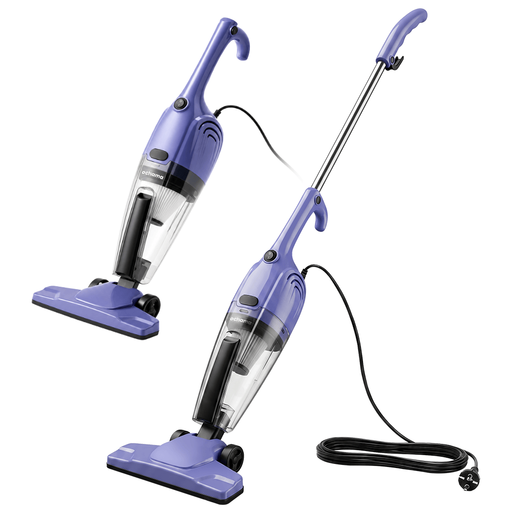
Why it suits this profile: This corded 2-in-1 model is suitable for small homes, student rooms and households that do not want to charge a battery. The cable is 4.5 metres long.
A constant power supply removes any uncertainty about battery life. The washable filter reduces the need for disposable filters.
550 W motor, visible 0.5-litre dust container, handheld mode and suitable for dry use.

Why it suits this profile: For households that want to automate most of their daily floor cleaning. The combination of navigation, mopping and maintenance features is well suited to larger homes with hard floors and carpets.
The product description lists automatic dust emptying, mop washing and drying. This means fewer manual steps are needed than with a basic robot.
Stated suction power of 20,000 Pa, TrueMapping 2.0, 75 °C mop washing, 45 °C drying and anti-tangle brushes.
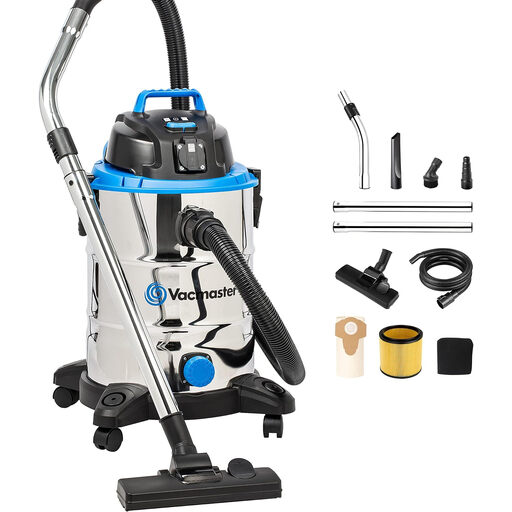
Why it suits this profile: This model is designed for garages, workshops, cars and heavier cleaning tasks where dry dirt, liquids or dust from power tools may be present.
The product specifies separate filters for dry and wet vacuuming. Always check that the correct filter is fitted before use.
1500 W motor, 30-litre stainless-steel tank, blower function and 240 V connection for power tools.
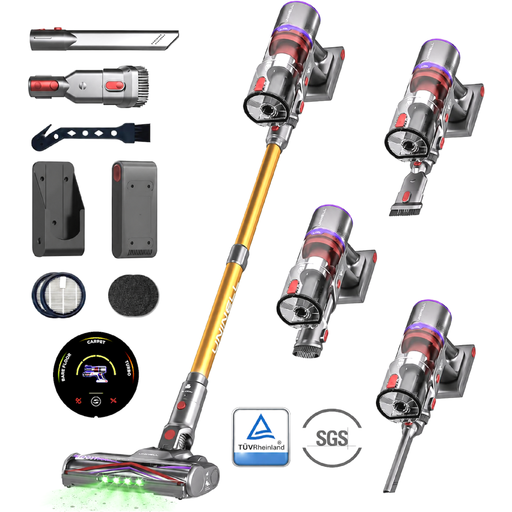
Why it suits this profile: The combination of a cordless design, anti-tangle brush, handheld mode and accessories is practical for removing pet hair from floors, sofas, stairs and cars.
The removable battery and maintenance alerts make it easier to plan use and upkeep. The brush is designed to reduce hair tangling.
Stated peak suction power of 60 kPa, runtime of up to 65 minutes, 0.7-litre dust container and 7-stage filtration.
We have put together a complete, up-to-date list of products that fully meet these strict selection criteria and the applicable European safety regulations.
Choose a model with an adjustable suction setting and a floor brush for different surfaces. On carpets, a motorised brush and an anti-tangle function are useful. A robot vacuum with carpet detection can automatically use a different cleaning mode, but check whether it lifts the mop when it also carries out wet cleaning.
Its lifespan depends on usage, charging habits, filter maintenance and whether the battery can be replaced. Use the maximum setting only when necessary, and clean the filters and brushes according to the instructions. A removable battery can make maintenance more practical in the long term. Also check the stated warranty and the availability of spare parts.
In addition to the purchase price, you may need to pay for filters, brushes, mop pads, dust bags and, where applicable, cleaning fluid. A bagless emptying station can save on disposable bags, while a station with automatic mop cleaning contains more parts that need to be cleaned. So do not compare only the purchase price; also consider maintenance frequency and the parts specified by the manufacturer.
