
Vandaag of morgen in huis

Kwaliteit gegarandeerd

Welkomstaanbiedingen ontgrendelen: GRATIS bezorging | Tot 80% korting | Gratis 30 dagen JoyPlus-proefperiode
Download de app
Buying a new vacuum cleaner seems simple, until you have to choose between a cordless vacuum cleaner, stick vacuum, handheld vacuum, bagless vacuum or a corded model. Marketing terms such as “extra powerful”, “smart detection” and “suitable for all floors” don’t always tell you how practical a machine will be in your home.
Look out for these three common pitfalls:
Below, you’ll find practical points to consider and a selection based on verifiable product specifications.
Cordless vacuum cleaners often list suction values in Pa or kPa, while other models mainly state their motor power in watts. These figures aren’t directly comparable. So a 600 W vacuum cleaner isn’t automatically more powerful than a 215 W model.
For everyday use, these points are particularly relevant:
A model with a long battery life is handy for cleaning several rooms, but a cordless appliance needs regular charging. A corded vacuum cleaner, on the other hand, provides a constant power supply.
A vacuum cleaner with a HEPA filter may be a good choice if you want to trap more fine dust particles. Check exactly what the product information says, though: the number of filter layers, whether the filter is washable and how often it needs maintaining. Claims about filter efficiency come from the product description or the brand; don’t automatically treat them as a guarantee for a particular living environment.
Also look for:
A full dust container or blocked filter can affect performance. With a bagless vacuum cleaner, you’ll need to empty the dust container regularly. This keeps running costs down, but emptying it may release more dust than a sealed dust bag.
For hard floors, a soft floor brush and an easy-to-manoeuvre nozzle are useful. A motorised brush is usually more important for carpets. Pet owners may want to look for a turbo brush, an anti-tangle feature and a separate upholstery or pet hair brush.
Capacity determines how often you’ll need to empty the cleaner:
A wet and dry vacuum cleaner isn’t the same as a regular vacuum cleaner. Always check whether the model is suitable for liquids and whether you need to use a special foam filter. A standard stick vacuum cleaner generally shouldn’t be used to pick up water.
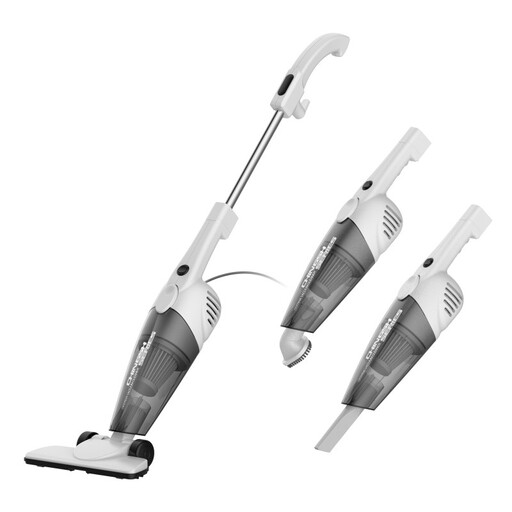
Why it suits this household: This corded model has a transparent 1.2-litre dust container and can be used as either a stick or handheld vacuum cleaner. That makes it a good fit for small homes, student rooms and everyday cleaning.
The 5-metre cable means you don’t have to rely on a battery. The product description also lists a HEPA filter, a sponge filter and a 1.2-litre dust container.
600 W motor power, 15 kPa vacuum pressure according to the product specifications, 3-in-1 use and upright storage.
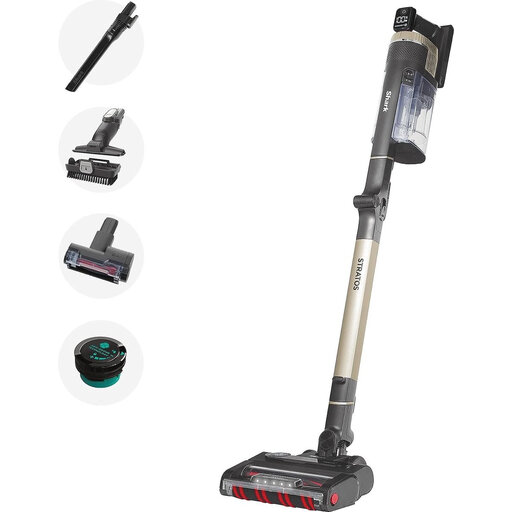
Why it suits this household: This cordless stick vacuum is designed for homes with hard floors, carpets and pets. It converts into a handheld vacuum cleaner for furniture, stairs and higher-up areas.
The stated run time is broken down by setting: Eco, Deep Clean and Boost. This lets you match battery use and cleaning intensity to the floor.
0.85-litre dust container, TruePet accessory, three settings and a flexible wand, according to the product information.
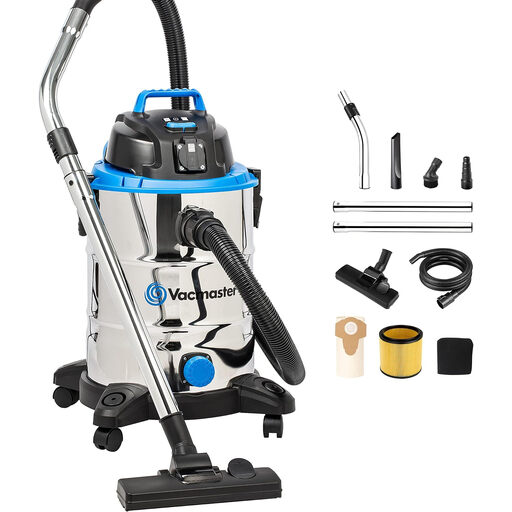
Why it suits this household: This model is aimed at DIY enthusiasts, garages and bigger cleaning jobs. According to the product description, it can vacuum wet and dry mess, blow air and extract dust while you use power tools.
The 30-litre tank means fewer interruptions during bigger jobs. Wet and dry cleaning require different filters, so you’ll need to choose the right one before use.
1500 W motor, 30-litre stainless steel tank, blower function and integrated 240 V socket, according to the product specifications.
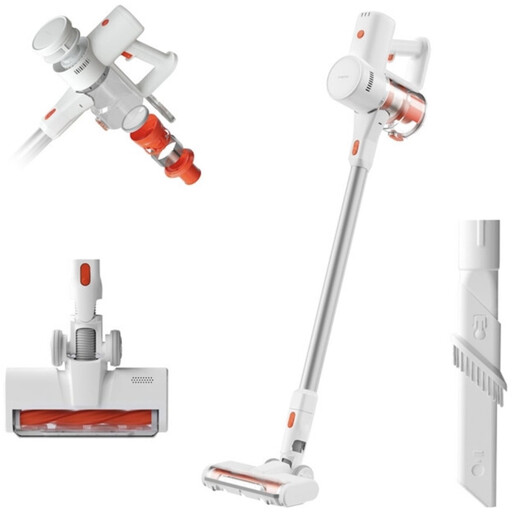
Why it suits this household: A compact cordless vacuum cleaner for everyday use across different floor types, with a light on the brush and accessories for crevices, furniture and upholstery.
The product specifications give separate run times for standard use and turbo mode: up to 45 and 15 minutes. This makes it easier to assess the battery life.
18,000 Pa maximum suction power according to the product information, 0.55-litre dust container, five-stage filtration with HEPA filter and LED lighting.
We’ve put together a complete, up-to-date list of products that meet these strict selection criteria and the applicable European safety regulations.
Its lifespan depends on the motor, battery, filters, brush and maintenance. Empty the dust container promptly, remove hair from the brush and let washed filters dry completely. The battery is also a wear-and-tear part of a cordless vacuum cleaner. So check whether replacement filters, brushes or batteries are available.
It can be, but don’t look only at the maximum battery life. The stated run time often applies to the lowest setting. For a large home with lots of carpet, a model with two batteries, a long run time or a cord may be more practical. A lightweight stick vacuum is particularly handy for quick, everyday cleaning.
A bagless vacuum cleaner has no ongoing cost for dust bags, but filters may need replacing from time to time. A bagged model can be more hygienic to empty and often has a sealed system, but you’ll need to buy the right bags. So compare more than just the purchase price: factor in filter costs, accessories and any battery maintenance.
