
Vandaag of morgen in huis

Kwaliteit gegarandeerd

Welkomstaanbiedingen ontgrendelen: GRATIS bezorging | Tot 80% korting | Gratis 30 dagen JoyPlus-proefperiode
Download de app
Buying a vacuum cleaner seems simple, until you have to choose between a cordless vacuum cleaner, stick vacuum, handheld vacuum or wet and dry vacuum cleaner. Marketing copy often focuses on high suction power, long battery life or smart features. But it’s the details that determine whether a machine remains easy to use.
Look out for these three common pitfalls:
For hard floors, a soft brush and good manoeuvrability are important. On carpets, what matters most is how well the floor brush lifts dirt from the fibres. So don’t just look at the wattage or kPa rating. Also check:
If you’re choosing a vacuum cleaner for pets, a brush designed to limit hair build-up can be useful. According to product information from various brands, including Lubluelu and MONSGA, some brushes are designed to reduce hair tangles. This is a manufacturer’s product claim, not a guarantee that no maintenance will be needed.
A cordless vacuum cleaner gives you plenty of freedom to move around, but always check how the run time was measured. The stated maximum often applies in eco mode without a motorised brush. Also check:
A compact stick vacuum with a smaller dust bin is ideal for quick daily cleans. For a larger home or multiple floors, a removable battery can offer more flexibility.
According to the product description, a HEPA filter vacuum cleaner can help trap fine particles. Exact filtration performance varies by model and how it’s used. Check whether the filter is washable or replaceable, and allow a washed filter to dry completely before putting it back.
A larger dust bin means less frequent emptying, but it can make the machine heavier. For crumbs in the car or on the sofa, a handheld vacuum with a dust bin of around 500 ml is often more practical than a full-size stick vacuum.
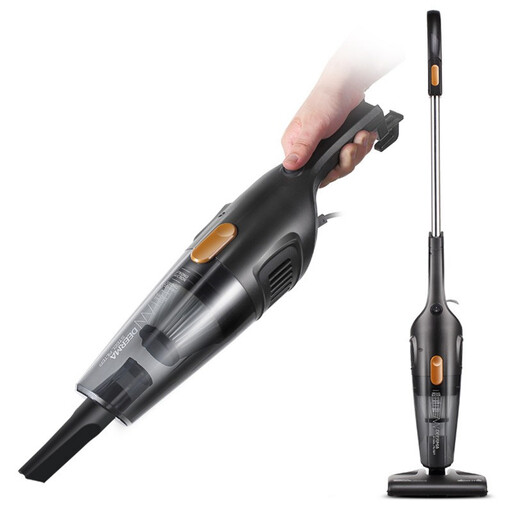
Why it suits this profile: This model plugs into the mains, making it a good choice if you don’t want to charge a battery. The stick can be converted into a handheld vacuum for furniture and hard-to-reach gaps.
You don’t have to rely on a stated maximum battery life. The product specifications list a 5-metre cable and a 1.2-litre dust container.
600 watts of power according to the product information, a stated vacuum pressure of 15 kPa, HEPA and sponge filtration, and upright storage.
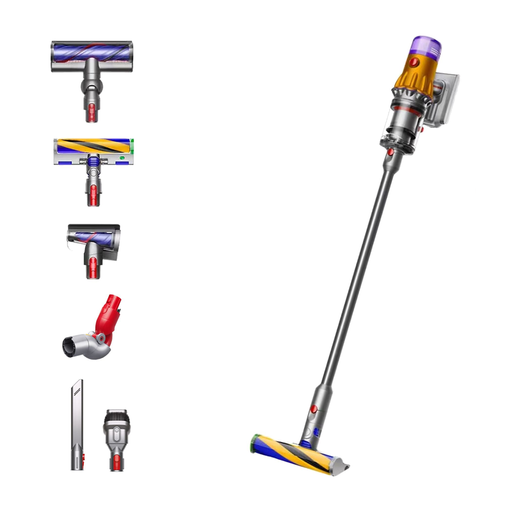
Why it suits this profile: This model may appeal to households looking for a slim design, a choice of cleaning modes and detailed information on the display.
The stated run time is broken down by setting: up to 60 minutes on the lowest setting, with less time on the highest setting according to the product information. This makes it easier to compare.
A stated suction power of 150 AW, three cleaning modes, a 0.35-litre dust container and a stated noise level of 73 dB.
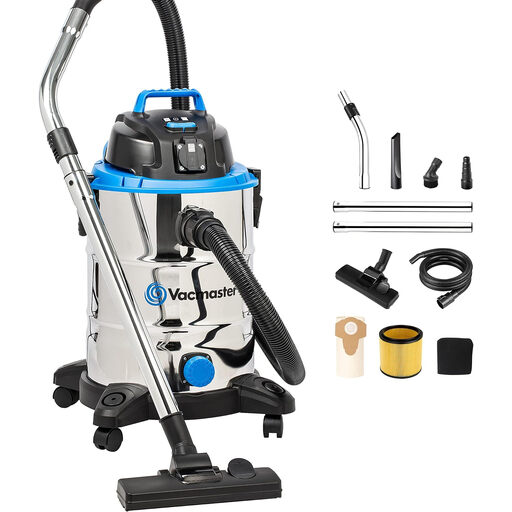
Why it suits this profile: For workshops, small businesses and renovation projects, a wet and dry vacuum cleaner is more practical than a standard household vacuum cleaner.
You won’t accidentally use a dry-only model for liquids: this appliance has separate filters for dry and wet vacuuming. Check that the correct filter configuration is in place before each use.
A 1500-watt motor, a 30-litre stainless steel tank, a blower function and a built-in 240V EU socket for compatible power tools.
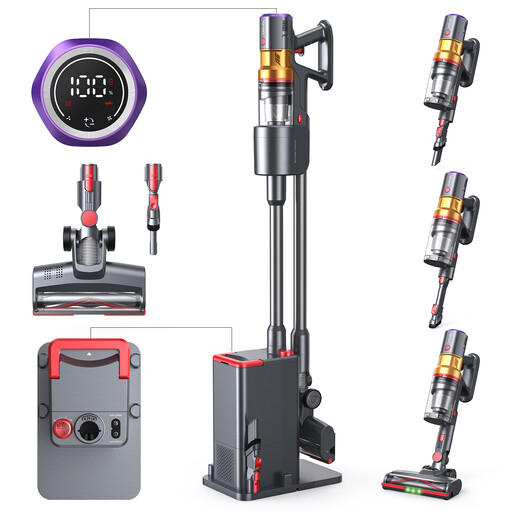
Why it suits this profile: Its cordless design, self-emptying charging station and brush that’s designed to help reduce hair tangles, according to the product description, make it a good fit for regular cleaning in homes with pets.
According to the product information, the charging station empties the dust bin into a sealed bag. This means you won’t need to empty the small dust bin by hand as often, although the filter and brush will still need checking.
Up to 27 kPa according to the product specifications, multi-stage HEPA filtration, freestanding storage and a green LED light on the floor head.
We’ve put together a complete, up-to-date list of products that meet these strict selection criteria and current European safety regulations.
Its lifespan depends on how it’s used and maintained, as well as the availability of filters, brushes and batteries. Empty the dust bin promptly, keep air vents clear and clean the filters according to the manual. For a cordless vacuum cleaner, the battery is an important component to check beforehand: a replaceable battery can make the appliance more practical in the long term.
A cordless vacuum cleaner doesn’t need disposable bags if it’s bagless, but its battery will eventually lose capacity. A corded model doesn’t need charging or battery replacement, but the cable limits how freely you can move around. So compare more than just the purchase price: remember to factor in filters, dust bags, batteries and any base station bags.
No. Only use a wet and dry vacuum cleaner that’s designed for the job according to the product information. A standard handheld vacuum, stick vacuum or dry-use HEPA filter vacuum must not be used to pick up liquids. Don’t vacuum hot ashes, flammable substances or sharp objects either. For small dry spills, a dustpan and brush are a simple and safe alternative.
