
Vandaag of morgen in huis

Kwaliteit gegarandeerd

Welkomstaanbiedingen ontgrendelen: GRATIS bezorging | Tot 80% korting | Gratis 30 dagen JoyPlus-proefperiode
Download de app
Buying a vacuum cleaner sounds simple, until you have to choose between a cordless vacuum cleaner, stick vacuum, handheld vacuum or robot vacuum. Marketing terms such as “powerful suction” and “professional filtration” also do not always tell you enough about everyday use.
The most important question is therefore not which model makes the biggest promises, but what you use the vacuum cleaner for, how long you clean for at a time and how much maintenance you are prepared to accept.
A higher wattage does not automatically mean that a vacuum cleaner will work better on every type of floor. With cordless models, maximum suction power is often stated in Pa or kPa. This is a technical value, but your actual experience also depends on the brush, airflow, filters and flooring.
For example, a stick vacuum with an anti-tangle brush may be more practical for dog hair than a model with a higher stated suction power but a brush that allows hair to become trapped.
Manufacturers often state battery life for the lowest setting. In turbo mode, the operating time can be considerably shorter. Always check:
For a small flat, a short operating time may be sufficient. For a larger home, several floors or a household with pets, longer battery life is more practical.
A vacuum cleaner with a HEPA filter may, according to the product specifications, filter fine particles from the airflow. This does not automatically mean that the appliance provides medical or health benefits. Pay particular attention to the filter type, maintenance instructions and availability of replacement filters.
A washable filter may reduce replacement costs, but it must be completely dry before being put back. A blocked filter can reduce airflow and suction performance.
Look at the combination of motor power, stated suction power and floor brush. A soft or adjustable brush is useful for hard floors. For carpets and pet hair, a motorised brush and anti-tangle technology are often more relevant.
A car vacuum cleaner or compact handheld vacuum does not need a large floor brush. A crevice tool, upholstery brush and, where applicable, a blowing nozzle are more important.
A cordless vacuum cleaner gives you freedom of movement, but you depend on the battery. A model weighing approximately 1.2 to 1.3 kg when used as a handheld is generally easier to use on stairs, furniture and ceilings. Also check whether the stated weight includes the battery and accessories.
A corded vacuum cleaner does not need charging time and may be suitable for extended cleaning sessions. According to the product information, the Philips 2000 Series has a 3-litre dust bag capacity and a reach of up to 12 metres. The trade-off is that you need to replace the dust bags.
A bagless vacuum cleaner saves you the cost of buying dust bags, but requires regular maintenance of the dust container, filters and cyclone components. A bagged model may be cleaner to empty, but it involves ongoing costs.
Also check whether the parts can be removed and washed. With a wet and dry vacuum cleaner, the dirty-water tanks, filters and brushes generally need to be emptied and cleaned after use. This prevents residue from being left inside the appliance.
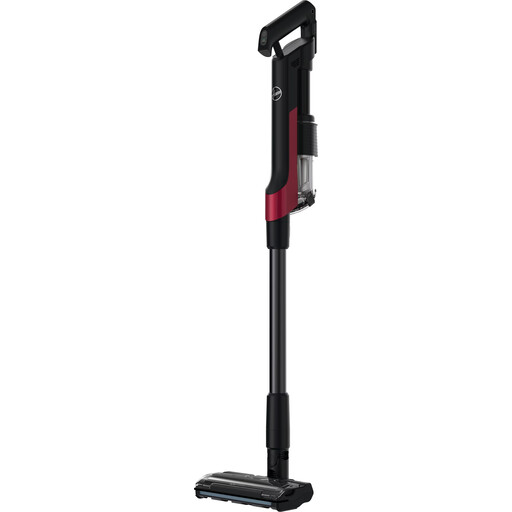
Why it suits this profile: This compact cordless handheld vacuum cleaner is designed for crumbs, furniture, car interiors and small cleaning jobs without the need for a larger appliance.
The product information clearly states that this is a compact, bagless and rechargeable model. This makes its intended use clear: quick supplementary cleaning rather than vacuuming an entire home for an extended period.
Cordless, compact and suitable for cars, upholstery and crevices. The dust container is bagless and easy to empty.
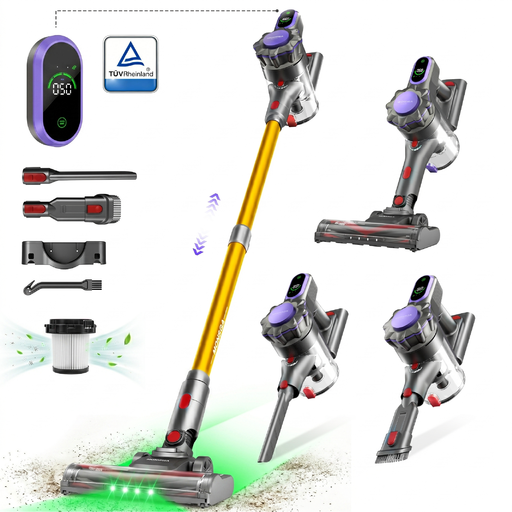
Why it suits this profile: With stated suction power of up to 55 kPa, up to 55 minutes of use in floor mode and a removable battery, this model is well suited to larger households and everyday floor care.
Battery life is specified for each usage situation. The display also indicates an anti-tangle brush, 0.7-litre dust container and maintenance warnings.
550 W brushless motor, removable battery, five-stage filtration and a weight of approximately 1.2 kg.
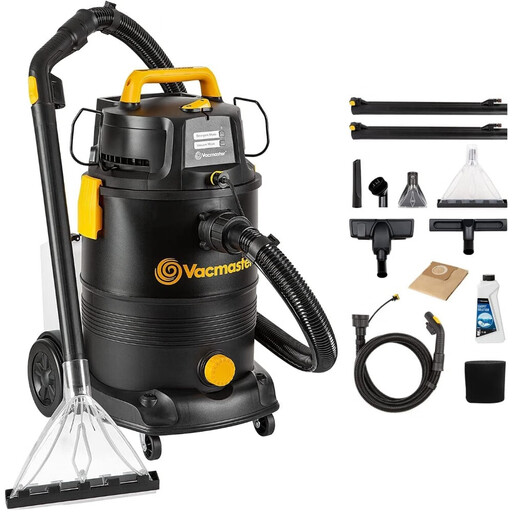
Why it suits this profile: This model is designed for wet cleaning, dry vacuuming and carpet cleaning. That makes it relevant for larger cleaning jobs, car owners and households with lots of textiles or pets.
Its use is not limited to dry vacuuming: the product specifications list separate filters for dry and wet use, as well as separate tanks for cleaning solution and collection.
1300 W motor, 30-litre collection tank, 6-litre cleaning solution tank and HEPA material in the exhaust filter for dry use.
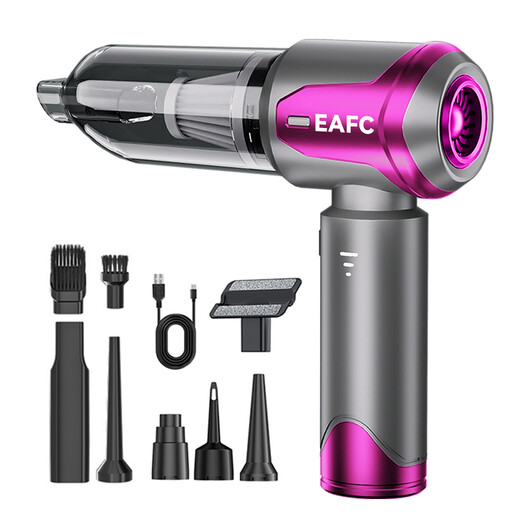
Why it suits this profile: According to the product description, this compact model is intended for cars, offices, keyboards, sofas and small crevices. Its USB-C connection is well suited to mobile use.
The product information clearly identifies its four functions: vacuuming, blowing, inflating and extracting air. The claims regarding 16,000 Pa and motor speed come from the brand and product description.
Cordless, USB-C rechargeable, three speeds and a washable HEPA filter. According to the description, the battery has a capacity of 6000 mAh.
We have put together a complete, up-to-date list of products that fully meet these strict selection criteria and the applicable European safety regulations.
The electricity costs of charging a cordless vacuum cleaner are usually limited. The total cost mainly depends on the battery’s lifespan, the price of replacement filters and any spare parts. So do not just check the purchase price; also check whether the battery and filters are available separately.
Lifespan varies depending on the model and how intensively it is used. Emptying the dust container regularly, cleaning the filters and removing hair from the brush can help prevent blockages. Allow washable parts to dry completely and do not use the vacuum cleaner on liquids unless this is explicitly permitted.
Not always. For a compact appliance in the car, a simple washable filter may be sufficient. If you want to capture a large amount of fine dust, you may wish to consider a vacuum cleaner with a HEPA filter. However, check the exact filter information and replacement options; the term alone does not indicate how much maintenance the appliance requires.
