
Vandaag of morgen in huis

Kwaliteit gegarandeerd

Welkomstaanbiedingen ontgrendelen: GRATIS bezorging | Tot 80% korting | Gratis 30 dagen JoyPlus-proefperiode
Download de app
Buying a new vacuum cleaner seems straightforward until you have to choose between a cordless vacuum cleaner, stick vacuum, handheld vacuum, wet and dry vacuum cleaner or traditional corded model. Marketing often focuses on high suction power, long battery life and impressive filtration percentages. However, those figures don’t tell the whole story.
Look out for these three common pitfalls:
A suitable vacuum cleaner for UK households should therefore match your floor types, cleaning routine and available storage space. Here are the main things to check.
For a home with mainly tiles, laminate or parquet flooring, a lightweight stick vacuum or handheld vacuum can be practical. A motorised floor brush with lights helps you clean dust from under furniture and in dark corners.
If you have lots of carpet or pets, look for:
A vacuum cleaner for carpets and hard floors should handle both surfaces without the brush feeling too stiff. So check whether the manufacturer specifically recommends the model for both floor types.
A wet and dry vacuum cleaner is a different product category. These models are generally designed for hard floors and can combine vacuuming and mopping. Don’t assume that you can use one on carpets or untreated wood. Check the product instructions to find out which surfaces are suitable.
Manufacturers may state suction power in Pa or kPa. A higher figure can indicate a powerful motor setting, but it doesn’t fully predict cleaning performance. Also check:
With a cordless vacuum cleaner, it’s important to strike a balance: higher power can drain the battery faster. A model with two settings may use less energy for everyday dust on hard floors, while offering extra power for carpets or pet hair.
A vacuum cleaner with a HEPA filter can help filter fine dust particles from the exhaust air. Check which type of filter is specified, whether it’s washable and how often it needs replacing. Claims about filtration efficiency come from the product information or the brand’s own testing; actual performance also depends on correct use and maintenance.
A large dust container is useful in larger homes and for pet owners. A smaller container makes a compact model lighter, but it needs emptying more often. A click mechanism or one-click emptying can mean you don’t have to handle the dust container as much.
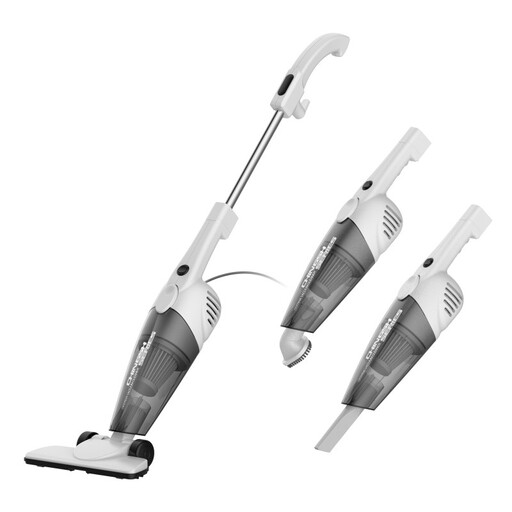
Why it suits this profile: This corded model means you don’t have to rely on a battery while cleaning. It can be used as a stick vacuum or handheld vacuum to clean floors, furniture and crevices.
There’s no need to interpret a maximum battery life. The cable provides a constant power supply while you clean. However, this model is less suitable if you want maximum freedom of movement.
600 W motor, stated suction power of 15 kPa, 1.2-litre dust container and three attachments.
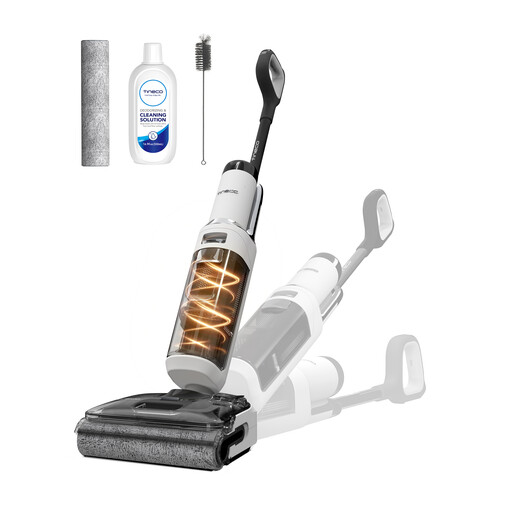
Why it suits this profile: This wet and dry vacuum cleaner is designed for households with hard floors that want to vacuum and mop in one go. Its low-profile design is made for cleaning under low furniture.
The product information clearly states that the appliance is designed for indoor hard floors, such as tiles, vinyl and sealed wood. It’s therefore not a universal choice for carpets.
180° flat design, 13 cm lying height, self-cleaning function and a stated run time of 40 minutes.
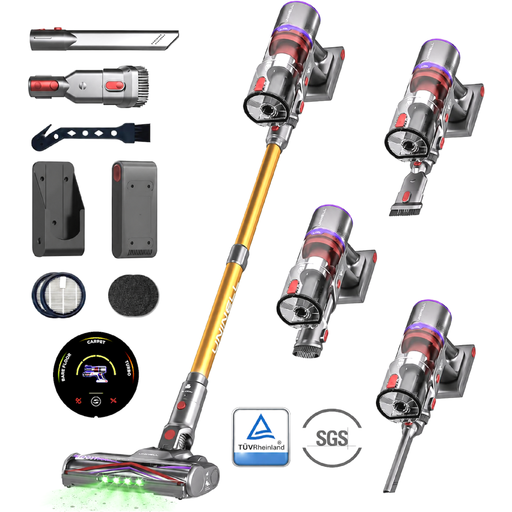
Why it suits this profile: This model is aimed at households with pets, carpets and several areas to clean. The removable battery and conversion to a handheld vacuum offer added flexibility.
The stated battery life comes with a removable battery. Bear in mind that the quoted 65 minutes is the manufacturer’s maximum figure and may vary depending on the setting.
According to the product description: up to 60 kPa suction power, up to 65 minutes of use, an anti-tangle brush and seven-stage filtration.
We’ve put together a complete, up-to-date list of products that meet these strict selection criteria and the applicable European safety regulations.
Even a powerful vacuum cleaner will only continue to work well with regular maintenance. Empty the dust container before it gets completely full, and remove hair from the floor brush. Washable filters must be left to air-dry completely before you put them back. With a cordless model, only use the charger supplied or specified by the manufacturer.
Don’t use a standard dry vacuum cleaner to pick up water, hot ash, burning materials or sharp objects. A wet and dry vacuum cleaner should only be used to pick up liquids if the product manual explicitly allows it.
Its lifespan depends on charging cycles, storage, maintenance and how often it’s used. A replaceable battery can be useful if the original battery loses capacity. Check in advance whether spare batteries and filters are available.
It depends on your preferences and household. A HEPA filter can capture fine particles, but it needs to be fitted and maintained correctly. Don’t just look at the label; check the replacement costs and cleaning instructions too.
Choose a model with a motorised brush, an anti-tangle design and an accessory for furniture. Also check the maximum battery life on the setting you’ll use for carpets. A rubber pet-hair brush can be a useful addition, but it doesn’t replace a good floor brush for everyday dust.
