
Vandaag of morgen in huis

Kwaliteit gegarandeerd

Welkomstaanbiedingen ontgrendelen: GRATIS bezorging | Tot 80% korting | Gratis 30 dagen JoyPlus-proefperiode
Download de app
Buying a vacuum cleaner seems simple, until you have to choose between a cordless vacuum, a stick vacuum, a robot vacuum or a traditional corded model. Marketing terms such as ‘powerful suction’, ‘long battery life’ and ‘HEPA filtration’ sound appealing, but they don’t always tell you enough about what a vacuum is like to use every day.
For homes in the Netherlands, three things matter most: your floor type, how much dirt and pet hair you have at home, and how much maintenance you’re prepared to do. Read on to find out which specifications really matter and which common pitfalls to avoid.
A high kPa or Pa figure may look impressive, but it doesn’t tell you everything about cleaning performance. The floor head, airflow, seals and filter all play a part too. A vacuum cleaner with a powerful turbo mode may also run out of battery sooner or make more noise.
So consider the whole picture: suction settings, brush design, battery life, and suitability for hard floors and carpets.
For a cordless vacuum cleaner, the maximum runtime is usually measured on the lowest setting. Runtime can be considerably shorter on the highest setting. So a vacuum cleaner with a long battery life isn’t necessarily suitable for a large home if you use the highest setting all the time.
Check whether the battery is removable too. A replaceable battery can be more practical if you want to clean several rooms in a row.
A HEPA vacuum cleaner is only useful in practice if the filter is fitted correctly, maintained and left to dry completely. A clogged filter or full dustbin can reduce airflow. A brush roll clogged with hair can also affect performance.
Check whether replacement filters are available, how the dustbin is emptied and whether the brush is easy to clean. A self-cleaning vacuum cleaner or automatic emptying station can reduce the work, but won’t eliminate the need for regular maintenance.
A motorised floor head is useful for a vacuum cleaner for carpets and hard floors. A V-shaped or anti-tangle brush can help prevent hair from wrapping around the roller. This is useful if you’re looking for a vacuum cleaner for dog and cat hair, but always check which brush and accessories are actually included.
Pa and kPa are measurements of suction pressure or suction power, but manufacturers use different testing methods. So don’t compare the figures alone. Also look at:
A cordless vacuum cleaner is handy for quick clean-ups and homes with multiple floors. Check whether the stated battery life applies to Eco, normal or maximum mode. A model with a removable battery gives you more flexibility.
For everyday use, a good mid setting is often more practical than using turbo mode all the time. Also check the charging time, battery price and whether you can buy a second battery.
A HEPA vacuum cleaner can filter fine particles from the air it expels, but exactly how well it works depends on the entire filtration system and its seals. Claims such as ‘99.99%’ come from the brand’s product description; don’t treat them as a guarantee for every home.
A larger dustbin means you’ll need to empty it less often. A capacity of 1 litre or more can be useful if you have pets. A compact dustbin is lighter, but needs emptying more often. Don’t use a vacuum cleaner on liquids, wet surfaces, hot ash or sharp objects unless the instructions explicitly say you can.
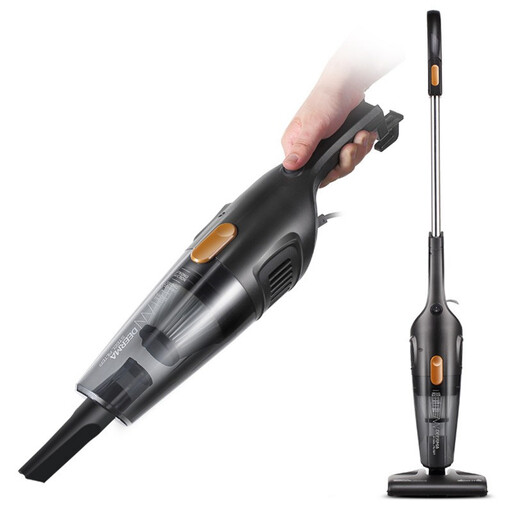
Why it suits this profile: This corded model is suited to smaller homes, student rooms and households that don’t want to charge a battery. According to the product information, it has a 1.2-litre dust container, a 5-metre cord, and a HEPA and sponge filter.
You don’t have to rely on a stated battery life. The cord provides a constant power supply while you clean, though you’ll need to keep its reach in mind.
3-in-1 use, a visible dust container, 1.2-litre capacity and a slim design for hard floors, tiles and carpets.

Why it suits this profile: This robot vacuum cleaner with a mopping function is designed for households that want to automate everyday floor cleaning. The product description lists LiDAR navigation, an OMNI station, automatic dust emptying and hot-water mop cleaning.
Its features go beyond a high suction figure, with navigation, mopping and automatic maintenance clearly listed. You’ll still need to check the water tank, dust bag and app.
20,000 Pa according to the product information, anti-tangle brushes, map management and a station with dust emptying, mop washing and drying.
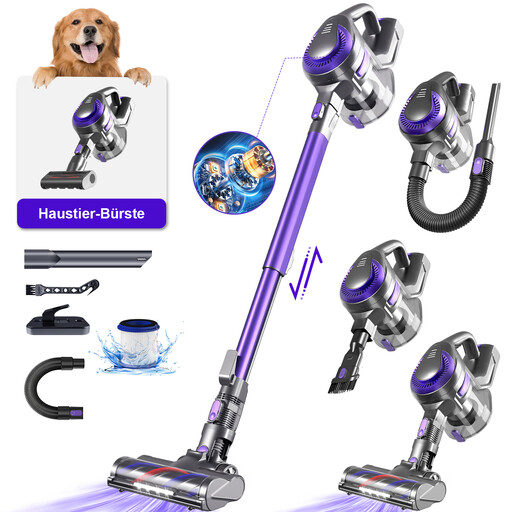
Why it suits this profile: According to the product description, this model is designed for homes with pets, carpets and hard floors. Its accessories include a pet brush, an extendable hose and a floor head with LED lights.
The stated runtime is given for different settings. The product information also lists a removable battery and several filters, making use and maintenance easier to plan.
Up to 55 minutes of use according to the product description, a 5-stage filtration system, a 1.6-litre dust container and a specialist brush for pet hair.
A stick vacuum is manoeuvrable and ready to use for crumbs, hair and everyday cleaning. A traditional corded vacuum cleaner is often a good choice if you want to clean for longer without stopping to recharge. A robot vacuum cleaner is mainly useful as an addition for regular daily cleaning; corners, stairs and furniture usually still need to be cleaned by hand.
A vacuum cleaner with a mopping function can be handy on hard floors, but don’t expect it to replace a thorough mop for stubborn stains. Also check whether the robot can cross thresholds, how large its station is and how much space it needs around it.
We’ve put together a complete, up-to-date list of products that meet these strict selection criteria and the applicable European safety regulations.
Its lifespan depends on battery use, charging habits, filter maintenance and the availability of replacement parts. Let the filter dry completely before putting it back, and use only the supplied or recommended charger.
As well as the purchase price, you’ll need to consider electricity use, filters, dust bags, brushes and any batteries. A cordless model doesn’t use electricity while it’s stored, but it does need to be charged regularly. A robot vacuum cleaner may involve extra costs for dust bags and mopping accessories.
A HEPA filter can filter fine particles according to the product specifications, but the results also depend on the seals, maintenance and correct use. Before buying, check the filter class, replacement filters and maintenance instructions.
