
Vandaag of morgen in huis

Kwaliteit gegarandeerd

Welkomstaanbiedingen ontgrendelen: GRATIS bezorging | Tot 80% korting | Gratis 30 dagen JoyPlus-proefperiode
Download de app
Choosing a vacuum cleaner seems straightforward until you have to decide between a bagless vacuum cleaner, a bagged vacuum cleaner, a cyclonic vacuum cleaner or a compact model. Marketing often focuses on wattage, “powerful suction” or high filtration percentages. But these terms don’t tell you everything about how a vacuum performs day to day.
Look out for these three common pitfalls:
The right choice depends on your floors, the size of your home, your storage space and how you want to dispose of dust.
A bagless vacuum cleaner has a dust container that you empty yourself. This saves you from buying dust bags and lets you see how full the container is. On the other hand, you’ll need to clean the container and filters regularly. A well-sealed container and an easy-to-use emptying button are important if you want to minimise contact with dust.
A cyclonic vacuum cleaner uses airflow to separate dust from the air. Its performance then depends on the design, filter maintenance and floorhead you choose. So don’t just look for the word “cyclonic”: check the capacity, filter type and operating radius too.
A bagged vacuum cleaner is a practical choice if you want to dispose of dust while keeping it sealed away as much as possible. You’ll need to replace the bag in good time, though, which is an ongoing cost. Models with larger bags are handy in bigger homes, as you won’t need to change them as often.
A bagged vacuum cleaner is often a sensible choice for households that value a clean and tidy way to dispose of dust. Check which bags you need and whether they’re readily available before you buy.
For hard floors, a vacuum cleaner with a parquet brush is useful, as a soft brush is generally better suited to delicate surfaces. For carpets, a floorhead that switches between floor types or a dedicated carpet brush is more practical. A model advertised as suitable for all floors won’t necessarily suit every floor: the accessories supplied make all the difference.
Also look for a crevice tool, upholstery brush and, if possible, an integrated soft brush. These help you reach skirting boards, radiators, sofas and narrow spaces without misplacing separate accessories.
A vacuum cleaner with a HEPA filter, or a vacuum cleaner with an allergy filter, may be worth considering if you want to filter out more fine dust particles. Check:
Brands may base filtration claims on their own measurements or specific test conditions. For example, Philips states that the H13 system in certain models captures more than 99.9% of fine dust particles. This is a claim from the brand’s product description, not a guarantee for every home or usage situation.
A long cable doesn’t necessarily mean a large operating radius. The operating radius usually includes the cable, hose and tube together. For a flat, around 7 to 9 metres can be practical; in a larger home, 10 metres often means you won’t need to change sockets.
Also consider the capacity:
A quiet vacuum cleaner often has a stated noise level of around 65 to 76 dB(A), but your actual experience will also depend on the floor surface and floorhead. Compare the official noise level rather than relying on words such as “quiet” or “comfortable”.
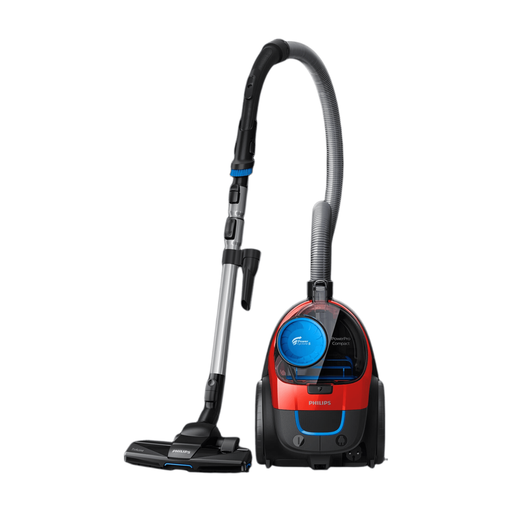
Why it suits this profile: This compact bagless vacuum cleaner has a 1.5-litre container, a 9-metre operating radius and an integrated soft brush. It’s a good fit for everyday use in a flat or smaller home.
The one-button emptying system helps minimise direct contact with dust. The product description also lists an H13 allergy filter and a fully sealed filtration system.
900 W motor, 1.5-litre container, 9-metre operating radius and a TriActive floorhead included, according to the product specifications.

Why it suits this profile: This model is designed for homes with lots of hard flooring. The Parquet Twister brush, 10-metre operating radius and 3.5-litre dust bag are practical for larger spaces.
Using a dust bag means you don’t have to empty an open dust container. Suction power can be adjusted across four settings, so you don’t have to use the same power on every floor surface.
3.5-litre dust bag, AirClean filter, Parquet Twister brush and 10-metre operating radius, according to the product details.
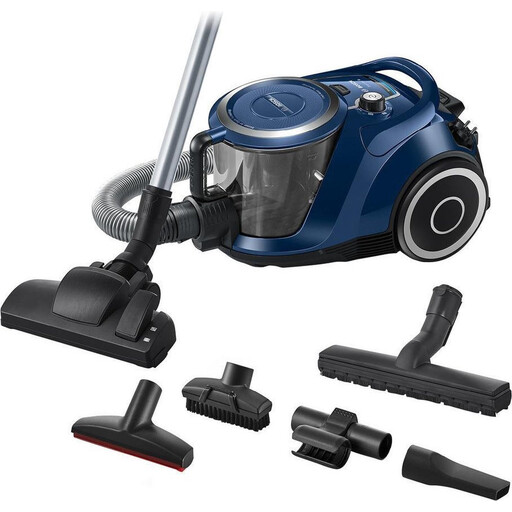
Why it suits this profile: Its large container, long cable and sensor assistance make this a good choice for households that vacuum often and want to stop less frequently.
The EasyClean system is designed to make the dust container easier to remove and clean. This helps with the regular maintenance needed for a bagless system.
2-litre dust container, 10-metre operating radius, UltraAllergy filter and XXL upholstery nozzle, according to the product information.
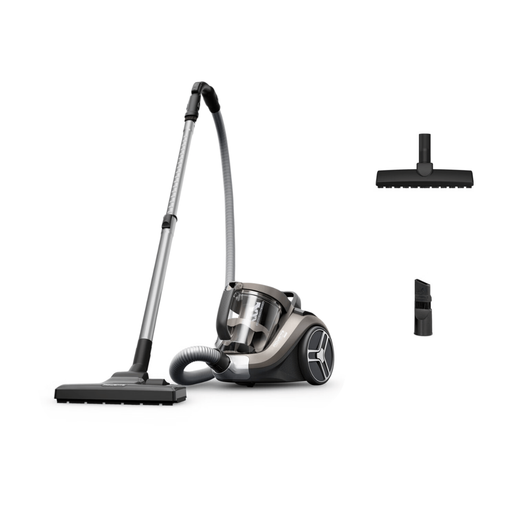
Why it suits this profile: The 2.5-litre container and 8.8-metre operating radius are practical when you’re cleaning several rooms in one go.
The large capacity means fewer interruptions. Remember to check the filters regularly, as a full container or dirty filter can restrict airflow.
2.5-litre container, parquet nozzle, automatic cord rewind and three filtration levels, according to the product specifications.
We’ve put together a complete, up-to-date list of products that meet these strict selection criteria and the applicable European safety regulations.
It depends on the model and how long you use it. You won’t need to buy dust bags, but you may need to clean or replace the filters. With a bagged vacuum cleaner, the ongoing costs are clearer. So compare not just the purchase price, but also the price and availability of bags and filters.
Its lifespan depends on how it’s used and maintained, as well as the parts it contains. Empty the container or replace the bag in good time, keep the filters clean and check the hose and floorhead for blockages. A manufacturer’s claim about lifespan, such as those made by some brands, remains a claim by the brand and isn’t a fixed guarantee for every household.
Choose a model with a floorhead that switches between floor types or several specialist brushes. A parquet brush is practical for hard floors, while a floorhead with a carpet setting is better suited to carpets. Also check whether the suction power is adjustable, so you can clean different materials comfortably.
