
Vandaag of morgen in huis

Kwaliteit gegarandeerd

Welkomstaanbiedingen ontgrendelen: GRATIS bezorging | Tot 80% korting | Gratis 30 dagen JoyPlus-proefperiode
Download de app
Buying a new vacuum cleaner sounds straightforward—until you have to choose between a robot vacuum, stick vacuum, cordless vacuum or traditional corded model. Marketing copy often highlights a high Pascal rating, extended battery life or smart features. However, those figures do not tell the whole story.
For households, the most important considerations are usually the type of flooring, available storage space, maintenance requirements and your cleaning routine. Below, you’ll find the specifications worth comparing in practical terms, the purchasing pitfalls to avoid and the models that suit different cleaning situations.
A higher figure in Pa, kPa or air watts may sound appealing, but measurement methods can vary between brands. What’s more, the floor head, air channels, filters and seals all affect how effectively dirt is actually collected.
A model with a high stated suction power is therefore not automatically suitable for every carpet or hard floor. Also consider:
For cordless vacuum cleaners, the maximum runtime is usually measured in a low-power or eco mode. In a higher-power mode, the runtime may be considerably shorter. Check whether the battery is removable and whether an additional battery is available.
A stick vacuum offering, for example, 40 to 55 minutes of runtime may be suitable for everyday maintenance, but that does not necessarily mean you can clean a large home for an extended period at the highest power setting.
A vacuum cleaner with a self-cleaning station, automatic dust emptying or mopping function requires fewer manual steps—but not none at all. Dust bags, filters, brushes, dirty-water tanks and mop pads still need to be checked.
A robot vacuum also needs sufficient clearance around its station. According to the product instructions, the JONR T5 Pro requires at least 0.5 metres of free space on both sides and 1.5 metres in front of the all-in-one station.
For hard floors, a soft floor head or adjustable combination brush is practical. For carpets, a motorised brush is often more relevant than a high motor rating alone. If you have pets, look for an anti-tangle brush or a brush that can be removed easily.
A pet vacuum should not only pick up hair effectively but also be easy to clean. Check whether hair wrapped around the roller is accessible and whether the components are washable, as stated in the product information.
A bagged vacuum cleaner provides an enclosed dust-collection system, but you will need to keep buying compatible bags. The Philips 2000 Series, for example, uses S-bags and has a 3-litre dust capacity according to the product specifications.
A bagless vacuum does not require replacement dust bags. The ochama multifunctional vacuum has a 1.1-litre container and a washable filter. However, emptying it may release more dust. A robot vacuum with a self-cleaning station transfers dirt to a larger dust bag in the station, although those bags are consumables.
According to the product description, a HEPA filter can remove fine particles from the exhaust air. Always check whether the filter is washable or replaceable. A washable filter must be allowed to dry completely before being reinstalled.
The Monsga ME03 product information specifies five-stage filtration and washable components. The ATSHARK A-016 is listed with a washable HEPA filter. These are product specifications; real-world performance also depends on correct maintenance and a properly sealed system.
A corded model provides a constant power supply and is suitable for longer cleaning sessions. A cordless vacuum offers greater flexibility, but has a limited runtime and requires recharging.
For corded models, check:
According to the product specifications, the Rowenta RO3927 has a 6.2-metre cord and an 8.8-metre operating radius. The Philips 2000 Series is listed with a reach of up to 9 or 12 metres, depending on the specification shown in the product listing. Always check the current product page before purchasing.
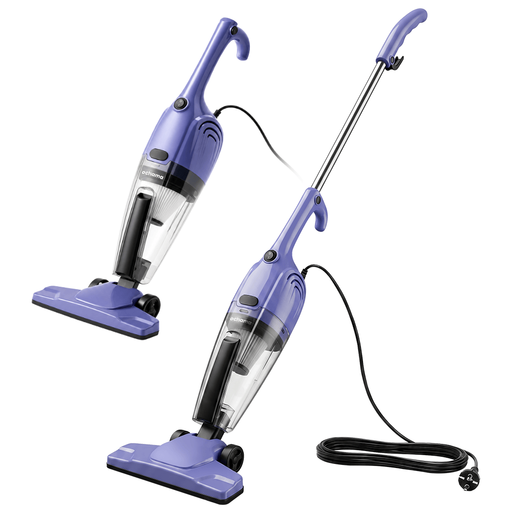
Why This Fits Their Persona: A corded model with 2-in-1 functionality is well suited to small homes, student accommodation and households that do not want to manage battery life. According to the product information, this model is designed for hard floors, compact spaces and homes with pets.
You are not dependent on a stated maximum battery runtime. The cord provides a constant power supply during use.
550 W motor, visible 0.5-litre dust container and washable filter. The model can be used as both a stick vacuum and a handheld vacuum.
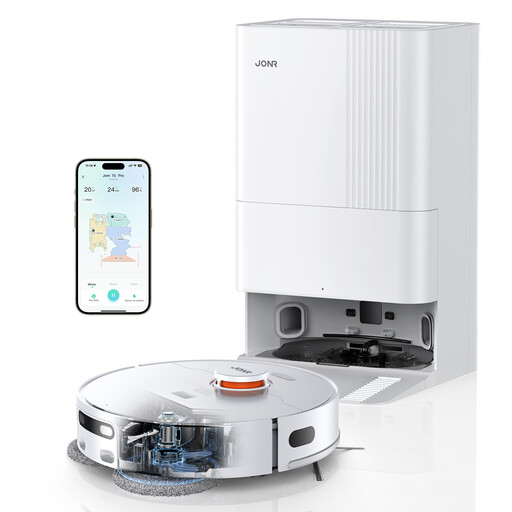
Why This Fits Their Persona: This model is a good fit for households that want to schedule vacuuming and mopping without having to move the machine manually each time.
The maintenance features should not be interpreted as fully automatic maintenance: according to the instructions, the dirty-water tank and dust bag still need to be emptied or replaced regularly.
The product information states 8150 Pa suction power, LiDAR navigation, obstacle avoidance, mopping and hot-air drying.
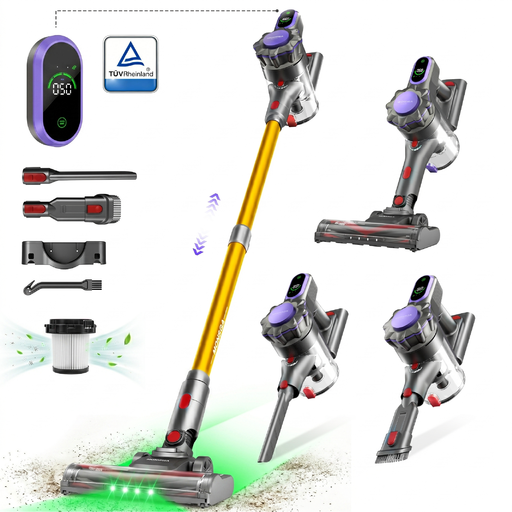
Why This Fits Their Persona: The combination of an anti-tangle brush, floor and carpet modes and a practical design makes it well suited to homes with pets, multiple floors and different types of flooring.
The maximum runtime of 55 minutes applies to a specific mode. For intensive cleaning, you should expect a shorter operating time.
According to the product information, the model has a 550 W motor, a 700 ml container, a removable battery and five-stage filtration.
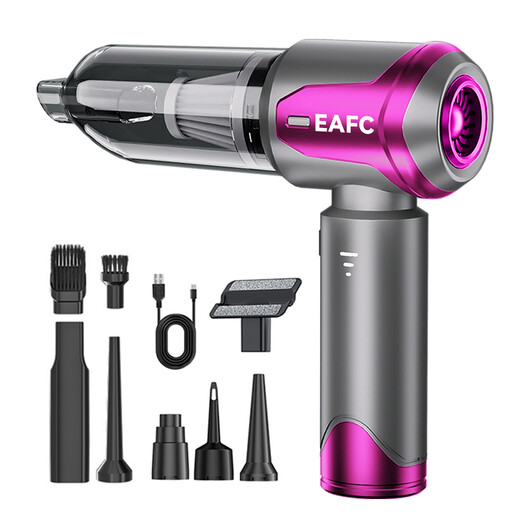
Why This Fits Their Persona: This compact handheld vacuum is designed for car interiors, furniture, crevices, keyboards and quick everyday cleaning jobs.
Its intended use is clearly defined. With a compact design and a charging time of up to approximately two hours, this is not a replacement for a full-size household vacuum cleaner.
The product information lists 16,000 Pa, USB-C charging, a washable HEPA filter and functions for vacuuming, blowing, inflating and vacuum sealing.
Explore a current selection of household vacuum cleaners and compare models by type, dust-collection system, filtration, battery life and accessories.
Service life depends on the motor, battery, filters, brushes and frequency of use. A corded model can remain useful for many years when the filters and dust bag are replaced on time. With a cordless vacuum, the battery is often a key consideration. Check whether it can be replaced and whether spare parts are available.
A robot vacuum with a mopping function is primarily designed for hard, water-resistant floors. Carpets, loose cables, thresholds and small objects can affect its performance. Use only the amount of water and cleaning solution specified in the manual or product information. Do not vacuum flammable liquids, hot ash or sharp objects.
In addition to the purchase price, you may need to pay for dust bags, filters, brushes, mop pads and robot-station supplies. A bagless vacuum avoids the cost of replacement bags, but its filters may still need replacing. With a robot vacuum featuring a self-cleaning station, dust bags and cleaning solution can create recurring costs. Compare not only the price of the appliance, but also the availability and cost of replacement parts.
