
Vandaag of morgen in huis

Kwaliteit gegarandeerd

Welkomstaanbiedingen ontgrendelen: GRATIS bezorging | Tot 80% korting | Gratis 30 dagen JoyPlus-proefperiode
Download de app
Choosing a new vacuum cleaner might seem straightforward at first. But headline suction claims, long battery life and an extensive list of accessories can give you the wrong impression. The right choice depends mainly on your floors, cleaning routine and how much dust, hair or liquid you need to clear up.
Manufacturers often quote a high figure in Pa or kPa. This tells you something about the maximum suction pressure, but it doesn’t automatically indicate how well the vacuum will clean your carpet or hard floors. The floorhead, brush roll, airflow and seal all play a part too.
A powerful vacuum cleaner with an awkward brush can be less practical than a model with a lower quoted figure but a floorhead that suits your needs. Always check whether the product is suitable for both carpets and hard floors.
With a cordless vacuum cleaner, the quoted running time usually applies to an energy-saving setting. The battery may run down much faster on the highest setting. Also check the charging time, whether the battery can be replaced and the capacity of the dust container.
A cordless stick vacuum with 45 or 65 minutes of running time may be suitable for several rooms, but only if you don’t use turbo mode constantly or need to empty the container along the way.
A HEPA vacuum cleaner or model with multi-layer filtration may be worth considering for homes with lots of fine dust or pets. However, regular maintenance is still essential. A clogged filter reduces airflow and can affect performance.
Check whether the filters are removable and washable, how often the manual recommends cleaning them, and whether replacement filters are available. Claims about trapping fine particles are product specifications provided by the brand, so don’t treat them as a medical guarantee.
For a home with laminate, tiles and rugs, an adjustable or motorised floorhead is practical. A soft brush helps reduce the risk of scratches on hard floors, while a rotating brush can lift dirt from carpets.
Have pets? Look for an anti-tangle brush or a roller that’s easy to remove. No design can necessarily prevent all hair from getting caught in the brush, but a specially designed roller can reduce the amount of maintenance needed.
A cordless model gives you freedom of movement and is handy for quick clean-ups. Check:
A corded model will keep working as long as there’s a socket available. A model with a long reach, such as the Philips 2000 Series with a quoted reach of up to 9 metres, may be suitable for several rooms without you having to change sockets often. Check the latest technical specifications on the product page, as details can vary between versions.
A bagless vacuum cleaner saves you from buying dust bags, but emptying the container may expose you to more dust. A bagged model generally keeps dirt more contained when you change the bag, but comes with ongoing costs.
A standard vacuum cleaner isn’t suitable for wet dirt. A wet and dry vacuum cleaner generally uses different filters for liquids and dry debris. Change these parts as instructed in the manual, and don’t use the appliance for flammable liquids, hot ash or sharp materials.
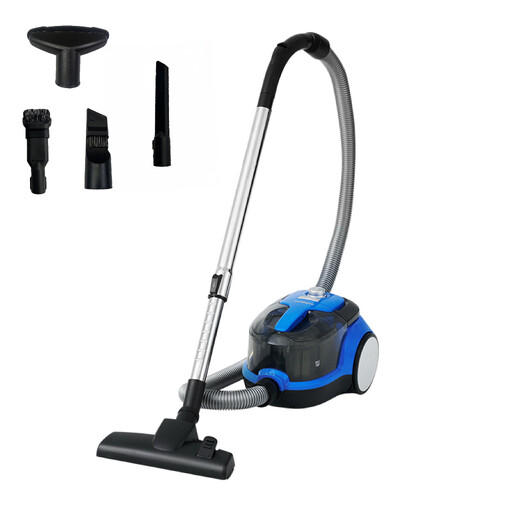
Why it suits this type of buyer: This corded model is designed for everyday cleaning of hard floors, carpets and furniture, without relying on a battery.
The 1.1-litre dust container and mains-powered design mean you don’t have to worry about short battery life or a small container every time you clean.
800 W motor, quoted suction power of approximately 17.5 kPa, automatic cord rewind and washable filter.
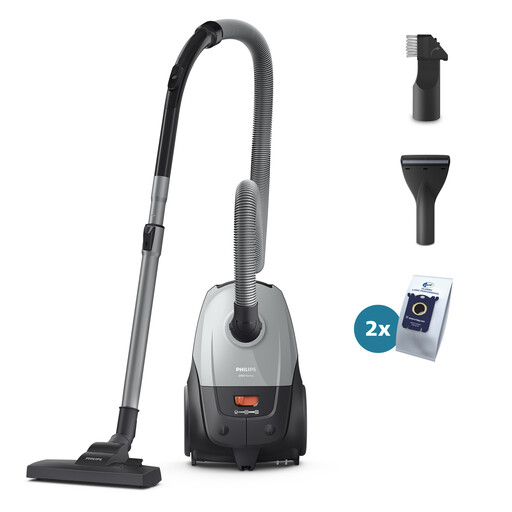
Why it suits this type of buyer: A traditional bagged vacuum cleaner is a good choice for households that value long cleaning sessions, a large capacity and a reliable mains power supply.
The dust bag makes emptying more straightforward than with an open dust container. Remember to budget for compatible S-bags and filters.
3-litre dust capacity, 800 W motor, multi-purpose nozzle and a HEPA filter system according to the product description.
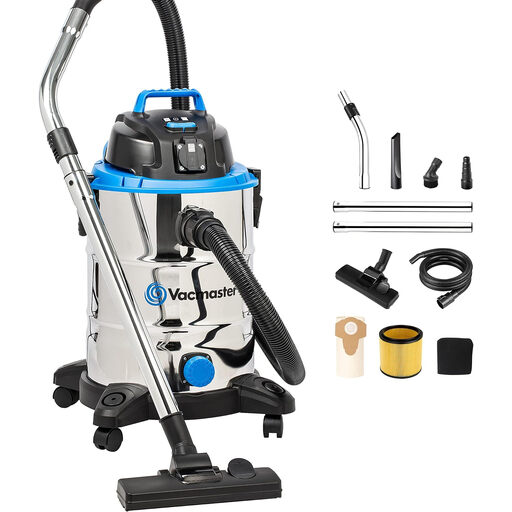
Why it suits this type of buyer: This model is a good fit for DIY enthusiasts, garages and households that need to vacuum dry debris, liquids and dust from power tools.
Separate filters for wet and dry use make it clear that you shouldn’t use one standard filter for every task. Follow the instructions for changing and maintaining them.
1500 W motor, 30-litre stainless steel tank, blower function and integrated 240 V EU socket for power tools.
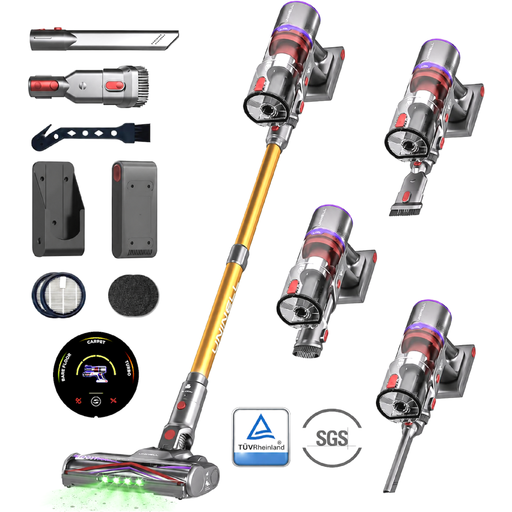
Why it suits this type of buyer: The cordless design, anti-tangle brush and handheld mode make it practical for carpets, hard floors, furniture and the car.
The telescopic tube, 180-degree flat-reclining design and anti-tangle brush are designed to improve reach and simplify maintenance. Performance figures are taken from the brand’s product information.
Up to 60 kPa peak suction power, up to 65 minutes of running time, an LED display and a seven-layer filtration system according to the product description.
We’ve put together a complete, up-to-date list of products that meet these strict selection criteria and the applicable European safety requirements.
Look for a motorised brush roll, a design that’s less likely to get clogged with hair, and a filter described as suitable for fine particles. A handheld vacuum is handy for furniture and the car, but a stick or conventional vacuum cleaner with a floorhead is more practical for cleaning an entire home.
Its lifespan depends on charging cycles, storage temperature, maintenance and the type of battery. Empty the container promptly, keep the filters clean and avoid leaving the battery fully discharged for a long time. Before you buy, check whether a replacement battery is available separately.
With a corded model, your main costs are electricity, filters and, where applicable, dust bags. For a cordless model, the battery and filters are the main components you may need to replace. A wet and dry vacuum cleaner may require extra filter maintenance. So compare not just the purchase price, but also the cost and availability of consumables.
