
Vandaag of morgen in huis

Kwaliteit gegarandeerd

Welkomstaanbiedingen ontgrendelen: GRATIS bezorging | Tot 80% korting | Gratis 30 dagen JoyPlus-proefperiode
Download de app
A vacuum cleaner should be a good match for your floors, living space, and cleaning routine. Yet, many people base their purchase on a high suction power figure or a catchy marketing term. This can lead to a device with a battery that drains too quickly, is difficult to maintain, or isn't suitable for carpets, furniture, or liquids.
In this buyer's guide, you'll learn the practical things to look for when choosing a vacuum cleaner, cordless vacuum cleaner, carpet cleaner, or specialised cleaning appliance.
A value like 60,000 Pa or 15,000 Pa sounds impressive, but it doesn't tell the whole story about cleaning performance. The brush, airflow, seals, filter, and the surface you're cleaning also play a role. As a result, a powerful vacuum cleaner can perform differently on a hard floor than on a deep-pile carpet.
Therefore, always check if the manufacturer states the appliance is suitable for hard floors, carpet, or both. Also, take a look at the included floorhead.
A stick or cordless vacuum cleaner is convenient for daily cleaning rounds. However, the stated battery life often applies to a low power setting. In turbo mode, the runtime can be significantly shorter.
Pay attention to:
A model with a maximum runtime of 65 minutes, such as the MONSGA X UNINELLHOME UV5, has a detachable battery and a charging time of about 4 hours, according to the product description. The actual runtime depends on the selected mode and the use of the motorised brush.
An anti-tangle vacuum cleaner can help reduce hair wrapping around the brush, but the brush still needs to be checked regularly. For filtration, you need to find out which filter is actually installed and how often it needs to be cleaned or replaced.
Furthermore, for UV mattress vacuums: according to the brand's product description, UV light is intended for use on textiles, but this is not a substitute for regular washing or airing. Never look directly into UV-C light and do not use such features on people or pets.
For hard floors, soft rollers and a low-profile floorhead are practical. For carpets, a motorised brush is often more useful, especially for pet hair. A wide nozzle works faster on large surfaces, while a crevice tool is necessary for skirting boards, radiators, and car seats.
In addition to suction power, a pet vacuum cleaner should have a brush that effectively picks up hair. Check if the brush can be disassembled, as this makes maintenance easier.
If you want lower dust emissions, look for a sealed filtration system. A HEPA vacuum cleaner can filter fine particles, but always check the exact filter class and the product documentation. The Philips 2000 Series XD2142/12 mentions a HEPA filtration system, a 3-litre dust bag, and a maximum operating radius of 9 metres according to its product specifications.
A bagged vacuum cleaner can be hygienic to empty, but it comes with the recurring cost of dust bags. A bagless model avoids this cost but requires more frequent maintenance of the container and filters.
A standard vacuum cleaner is not designed for liquids. For that, you need a wet and dry vacuum cleaner. For stains on carpets, sofas, or car seats, a carpet cleaner or upholstery cleaner is more suitable. These appliances spray water or a cleaning solution and then suck up the dirty moisture.
Pay attention to the capacity of the clean and dirty water tanks. A dual-tank system prevents clean water from mixing with the dirt you've vacuumed up. After use, the tanks, hoses, and brushes must be emptied and dried to minimise odours and build-up.

Why it's a good fit: A traditional bagged vacuum cleaner is straightforward to use and suitable for hard floors and carpets. The included S-bags make it easy to get started.
The product specifications mention the HEPA filtration system, a 3-litre dust capacity, and adjustable suction power. However, do factor in the cost of replacement bags.
800 W motor, 3-litre dust bag, integrated crevice tool, and a stated noise level of less than 77 dB.
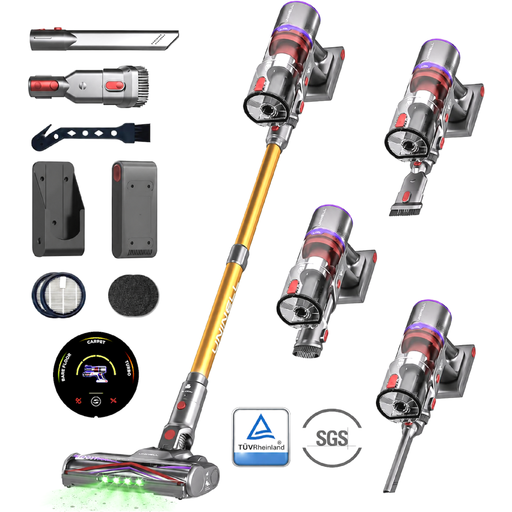
Why it's a good fit: This cordless stick vacuum is designed for households that want to quickly clean multiple rooms without having to move a cord.
The product description mentions a removable battery, maintenance alerts on the display, and an anti-tangle brush. The stated 65 minutes is a maximum value; check which power mode this was measured in.
According to the product description, it offers up to 60 kPa peak suction power, 7-stage filtration, LED lights, and a handheld vacuum function.
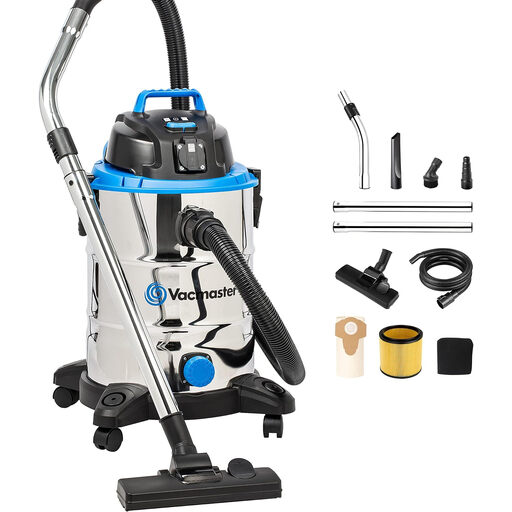
Why it's a good fit: This model is aimed at larger cleaning jobs, workshops, and situations where you need to vacuum up dry debris, liquids, and sawdust.
The product information distinguishes between filters for dry and wet use. Use the correct filter and do not vacuum flammable or hot materials.
1500 W motor, 30-litre stainless steel tank, blower function, and a EU power socket for compatible power tools.
We have compiled a complete, up-to-date list of products that fully meet these strict selection criteria and comply with current European safety regulations.
A dust mite vacuum cleaner is a supplement to a regular vacuum cleaner and is designed for mattresses, pillows, and sofas. The Xiaomi Dust Mite Vacuum Cleaner 2 states 12,000 Pa suction power, UV light, a four-stage filtration system, and a 2-metre cord. The product information also mentions that this model does not have a HEPA filter. This distinction is important for consumers specifically looking for a HEPA vacuum.
For stains, the Vacmaster SCB0501 and Bissell MultiClean Spot & Stain are practical categories to compare. Both work with separate water tanks and a hose for sofas, carpets, stairs, and car interiors. An upholstery cleaner removes localised dirt differently from a dry vacuum: you must check the fabric for water resistance beforehand and allow it to dry sufficiently after use.
For a small, specific cleaning task in the car, a handheld vacuum cleaner may be sufficient. The EDCO All Ride works via a 12V socket, has a 3-metre cord, and is not suitable for liquids, according to the product specifications.
The lifespan depends on use, maintenance, and parts. Clean filters according to the manual, remove hair from brushes, and empty containers on time. For cordless models, the battery is a key wear-and-tear component. Therefore, check in advance if a replacement battery is available.
Not always. A bagged model may release less dust when being emptied, but you will have to buy new bags regularly. A bagless model doesn't need bags, but its filters must be cleaned and sometimes replaced. It's best to compare the costs of bags, filters, and potentially batteries.
No. Only use a wet and dry vacuum cleaner that is explicitly designed for this purpose. A regular household vacuum cleaner can be damaged and cause electrical hazards if you use it to suck up liquids.
