
Vandaag of morgen in huis

Kwaliteit gegarandeerd

Welkomstaanbiedingen ontgrendelen: GRATIS bezorging | Tot 80% korting | Gratis 30 dagen JoyPlus-proefperiode
Download de app
A device that vacuums and mops simultaneously sounds like a dream for any busy household. Less time spent cleaning, more time for the things you love. The market for these all-in-one cleaners has exploded in recent years, but that doesn't make the choice any easier. Manufacturers promise the world, but not every model lives up to those promises.
Before you invest in a new household helper, it's wise to know where the pitfalls lie. Many disappointments stem from three common problems:
self-cleaning robot mop, make this claim. In reality, this sometimes only means the mop pads are rinsed. The base station itself, the dirty water tank, and the brushes still require significant manual maintenance, which negates the promised convenience.robot vacuum with mopping function that isn't smart enough can leave your carpet or rug wet and dirty. Models without an automatic mop-lift or proper carpet detection are a risk for households with mixed floor types.To avoid these pitfalls, it's helpful to look beyond the marketing buzzwords. Pay attention to the following objective specifications to find a model that truly fits your situation.
Suction power, expressed in Pascals (Pa), indicates how powerful the motor is. For a household with only hard floors, a lower value (around 3,000-5,000 Pa) is often sufficient. However, if you have carpets, pets, or children, higher suction power is essential. A model with 7,000 Pa or more is a strong consideration as a vacuum for pet hair and for deep-seated dirt in carpets. Also, look at the brush design. Models with dual rubber brushes or a special anti-tangle mechanism prevent hair from getting wrapped and significantly reduce maintenance.
The effectiveness of a robot vacuum depends on how well it navigates.
smart vacuum with an app uses LDS (Laser Distance Sensor) or LiDAR to create a precise map of your home. This allows it to clean systematically, and you can set no-go zones via the app. The most advanced models add AI-driven cameras to recognise and avoid objects like shoes, cables, and toys in real-time.The choice between a fully automatic robot and a manual stick vacuum is a personal one.
cordless mop and vacuum in a stick format gives you complete control. You can target specific stains and don't have to worry about navigation issues. These models are often lighter, more compact, and more budget-friendly. They are a great choice for smaller homes or for those who prefer to stay in control.Based on these criteria, we have selected several models that suit different needs and households.
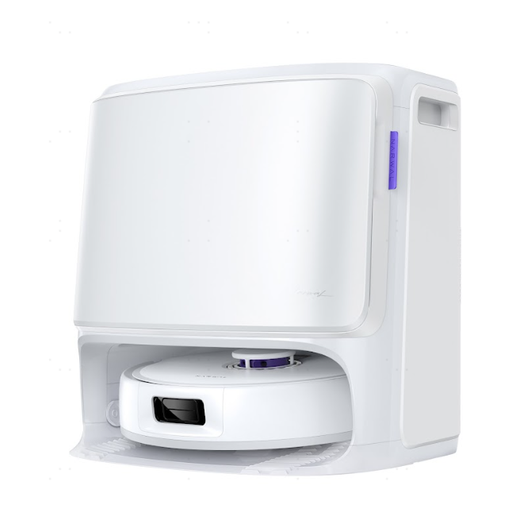
Why This Fits Their Persona: This model is designed for households where pet hair and daily dirt are a constant challenge. The high suction power and anti-tangle system significantly reduce maintenance frustration.
The dual anti-tangle brush directly tackles the problem of tangled hair. Its triangular mop system is specifically designed to better reach edges and corners, bypassing the pitfall of poor edge cleaning.
11,000 Pa suction power for deep cleaning and an autonomous station that washes mops, dries them, and collects dust.
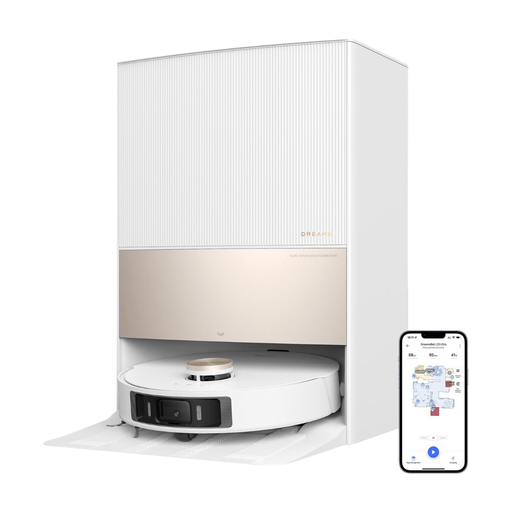
Why This Fits Their Persona: For those seeking maximum automation and the latest technology. This model takes virtually all the work off your hands, from cleaning to the maintenance of the robot itself.
The MopExtend technology automatically extends the mop to reach edges. The base station is truly self-cleaning: it empties dust, washes and dries the mops, and refills water. Its ultrasonic carpet detection ensures the mops are retracted, preventing the carpet nightmare.
Fully automatic base station and MopExtend technology for superior edge cleaning.
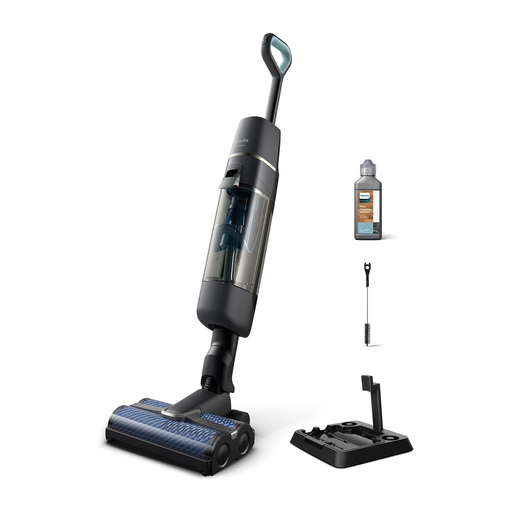
Why This Fits Their Persona: This is a reliable and effective `wet and dry vacuum` for those who don't need a fully automatic robot. Ideal for apartments or for quick, targeted cleaning jobs. You have full control, and the device is easy to store.
As a manual stick vacuum, you have complete control over where you clean, avoiding the robot-specific pitfalls of poor edge cleaning and wet carpets. The automatic cleaning mechanism for the brushes does, however, handle a portion of the maintenance.
Combines vacuuming and mopping with two rotating brushes that clean with fresh water, thanks to the Aqua Diffusion system that immediately collects dirty water.
We have compiled a complete, up-to-date list of products that fully meet these strict selection criteria and safety regulations.
Although the term "self-cleaning" suggests it's a hands-off experience, some maintenance is always required. For advanced models with a fully automatic base station, you'll need to periodically (once every 1-2 months) replace the dust bag and empty/refill the clean and dirty water tanks. It's also advisable to occasionally wipe the sensors on the robot and the station with a dry cloth for optimal performance.
This heavily depends on the model. A stick vacuum with mopping function is typically only suitable for hard floors. Advanced robot vacuums with ultrasonic carpet detection are the solution here. They recognise carpet, automatically lift the mop, and often increase suction power to deep clean the carpet without getting it wet. Always check for this specification if you have both hard floors and carpets.
Pascal (Pa) is the unit of pressure used to measure the vacuum's suction force. A higher number means more power.
