
Vandaag of morgen in huis

Kwaliteit gegarandeerd

Welkomstaanbiedingen ontgrendelen: GRATIS bezorging | Tot 80% korting | Gratis 30 dagen JoyPlus-proefperiode
Download de app
Sunglasses with UV400 protection may seem easy to choose at first glance. However, models vary considerably in fit, lens quality, comfort and suitability for different activities. Sunglasses that feel comfortable on a walk are not necessarily suitable for cycling or driving.
The key question is therefore not just which colour or shape you like best. You should also look beyond the marketing terms. Below, we explain what to look for, which claims to check and which type of sunglasses best suits your everyday needs.
A dark lens does not automatically block UV radiation. UV400 refers to protection against UV radiation with wavelengths of up to 400 nanometres, including UVA and UVB. Check that UV400 is clearly stated in the product specifications. A dark colour or mirrored finish alone is not proof of this protection.
Also be aware of the difference between UV protection and visual comfort. A lens may filter UV radiation but still produce distracting reflections on wet roads, car windows or water.
Polarised sunglasses can reduce glare from horizontal surfaces. This is useful when driving, cycling, sailing or walking on sunny days. However, polarisation does not replace a UV400 specification. Check both features separately.
You should also take care when driving with photochromic lenses. According to OutdoorMaster’s product information, photochromic lenses may not become as dark inside a car because the windscreen blocks some UV radiation.
Lightweight sunglasses can be comfortable, but a frame that is too wide or too narrow may still slip. Pay attention to the frame width, bridge and temple length. For sports sunglasses, grip, adjustable nose pads and a secure fit are particularly important. With oversized sunglasses, it is sensible to compare the measurements with those of a pair you already own.
Sunglasses with UV400 protection are a sensible choice for everyday outdoor use. The lens category also indicates how much visible light is transmitted. A darker lens is not automatically better suited to every situation. For changing weather conditions, photochromic sunglasses may be more practical, while a fixed dark lens offers more predictable performance in bright sunlight.
Never use ordinary sunglasses to look directly at the sun, view a solar eclipse, carry out welding work or work with flying particles. Impact-resistant does not mean shatterproof and is not a substitute for certified eye protection.
Anti-reflective sunglasses can reduce distracting reflections on the front or back of the lens. According to Beneunder’s product description, certain models feature an OAR anti-reflective coating. The percentages listed are claims made in the brand’s product information and should not be interpreted as a universal guarantee for every wearer.
An oleophobic coating is designed to reduce visible fingerprints. A scratch-resistant coating can help limit everyday wear, but no lens will remain scratch-free if you place it loose in a bag.
TR90 is a thermoplastic material often used for flexible, lightweight frames. With lightweight sunglasses, it is not just the weight that matters. Pressure on the nose and temples, the flexibility of the arms and grip during movement are also important.
Foldable sunglasses are convenient for travelling or carrying every day. However, check that the hinge feels sturdy and that you open and close the sunglasses according to the instructions. Ideally, store them in a hard case and clean the lenses with a microfibre cloth.
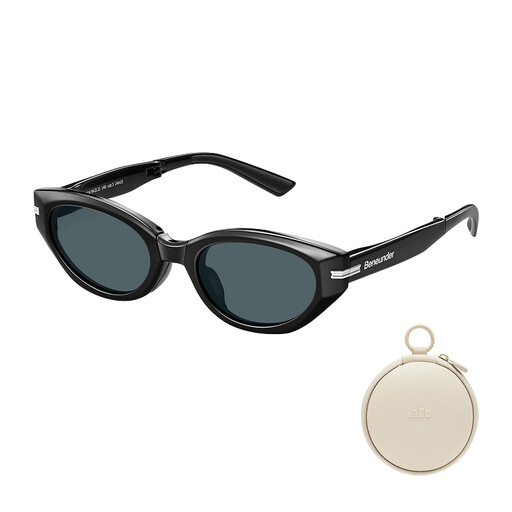
Why it suits this profile: Compact cat-eye sunglasses for everyday use, driving and carrying in a small bag.
The product description specifies UV400 and an OAR anti-reflective coating; the folding design means you do not have to leave the sunglasses loose in a bag.
TR90 frame, nylon lenses, soft nose pads and a stated frame width of 5.8 inches.
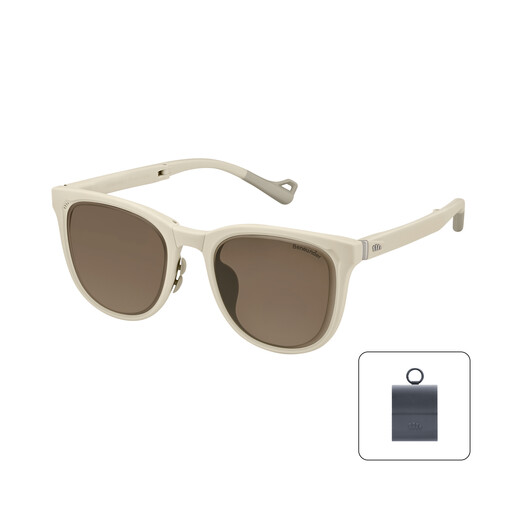
Why it suits this profile: For anyone looking to combine a classic Boston shape with adjustability and a refined finish.
The product description lists UV400, anti-reflective, oleophobic and scratch-resistant coatings. The adjustable arms help you fine-tune the fit.
TR90 frame, nylon lenses, dual-axis nose pads, three arm positions and a stated weight of 0.97 oz.

Why it suits this profile: Designed for cycling, running and other outdoor activities in changing light conditions.
According to the product information, this model combines UV400 with polarised and photochromic lenses. However, the manufacturer states that photochromic lenses may change colour less inside a car.
TR90 frame, polycarbonate lenses, adjustable nose pads, stated weight of 26–29 g and an included inner frame for prescription lenses.
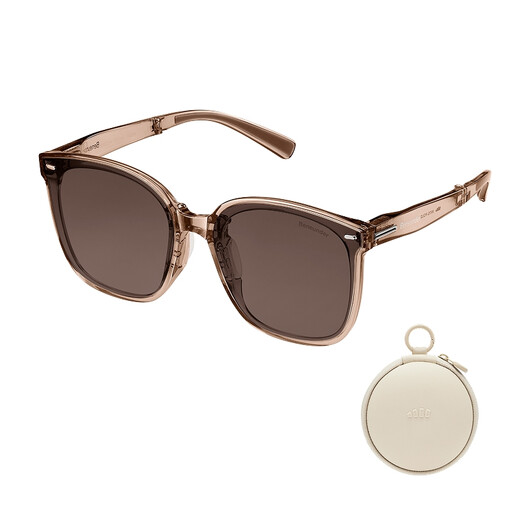
Why it suits this profile: Oversized sunglasses for travelling, driving and everyday use when compact storage is important.
The product description states that UV400 and an OAR anti-reflective coating are included. The tri-fold design is specified as 35 mm thick when folded.
TR90 frame, nylon lenses, stated weight of 26 g and a choice of several frame colours.
We have put together a complete, up-to-date list of products that fully meet these strict selection criteria and the applicable European safety regulations.
They can be, provided the lenses offer sufficiently clear vision and are not too dark for the conditions. Polarised sunglasses can reduce reflections from the road surface. According to the product information for some models, photochromic lenses may not become as dark inside a car because of the UV-filtering windscreen.
Their lifespan depends mainly on use, storage and the condition of the coatings. Sunglasses may last longer when stored in a case and cleaned with a microfibre cloth. Scratches, loose hinges or damaged coatings are all reasons to consider replacing them.
Not necessarily. The price depends on factors including the frame material, lens type, coatings, adjustability and included accessories. So do not compare price alone: also consider UV400 protection, fit, lens function and portability.
