
Vandaag of morgen in huis

Kwaliteit gegarandeerd

Welkomstaanbiedingen ontgrendelen: GRATIS bezorging | Tot 80% korting | Gratis 30 dagen JoyPlus-proefperiode
Download de app
A UV-protective umbrella is useful for commuting, travelling and summer walks. Yet many models look alike, even though they can perform quite differently. For example, a compact sun umbrella that fits easily into a handbag may not be as stable as a larger rain umbrella.
So the most important question isn’t just which colour or print you like, but which combination of UV protection, size, weight and wind resistance best suits your needs.
Brands use terms such as UPF 50+ or UPF 2000+, as well as UV-blocking percentages. Beneunder’s product descriptions quote figures of over 99% for some models. This is a claim made by the brand, not a general guarantee for every situation. The actual protection depends on factors including the sun’s position, gaps at the sides and how you hold the umbrella.
So check whether the product page specifies the UPF rating, coating type and construction. According to the product description, a black-coated umbrella can also reduce heat beneath the canopy, but don’t expect it to create a completely cool environment.
A compact umbrella fits easily into a bag, but may offer limited coverage when open. Don’t look only at its folded length. A diameter of around 89 to 99 cm is a useful guide to the coverage it provides for one person. A standard folding umbrella usually offers limited coverage for two people.
A wind-resistant umbrella isn’t automatically suitable for strong gusts. According to the product descriptions for several Beneunder models, fibreglass ribs and an aluminium frame help provide stability. Even so, it’s best to close your umbrella in strong winds. Check the shape of the ribs, the frame and any wind rating. A marketing term without technical details tells you very little.
For everyday use, a UPF 50+ umbrella with a black or other light-blocking coating is a popular choice. Some models use polyester with L.R.C Black Coating. According to Beneunder’s product information, the coating is designed to reduce UV radiation and heat.
Also check the construction:
A 5-fold folding umbrella is generally suitable for a small bag or rucksack. A 3-fold model often opens more quickly and has a roomier canopy. So compare:
A lightweight umbrella weighing around 170 grams is easy to carry every day. A model weighing around 370 grams may offer a larger canopy and extra layers, but will feel heavier on a long walk.
Fibreglass is flexible, while aluminium keeps the weight down. A combination of the two materials is often found in models described as wind-resistant. Also check the number of ribs. Six reinforced ribs may provide more shape retention than a very basic construction, but the number alone doesn’t determine overall durability.
Always store your umbrella dry. A damp coating and a wet metal or plastic frame can wear out more quickly.
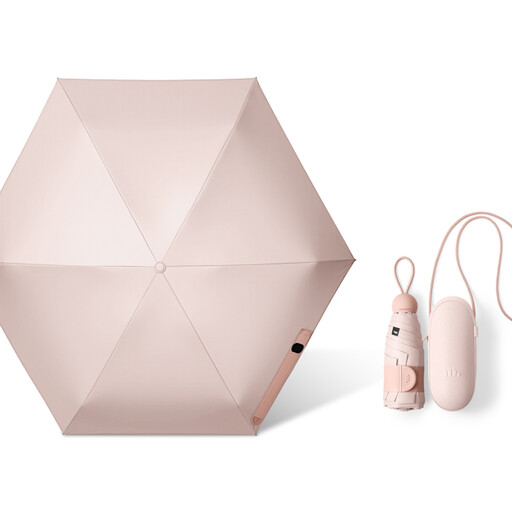
Why it suits this profile: This 5-fold folding umbrella has a folded length of 19 cm and weighs 248 grams, according to the product information. That makes it practical for everyday carrying in a bag or rucksack.
The open diameter of 94.5 cm is listed, so you don’t have to estimate its size based on the compact cover alone.
30D polyester with L.R.C Black Coating, a fibreglass and aluminium frame, and a cover that can be carried by hand or crossbody.
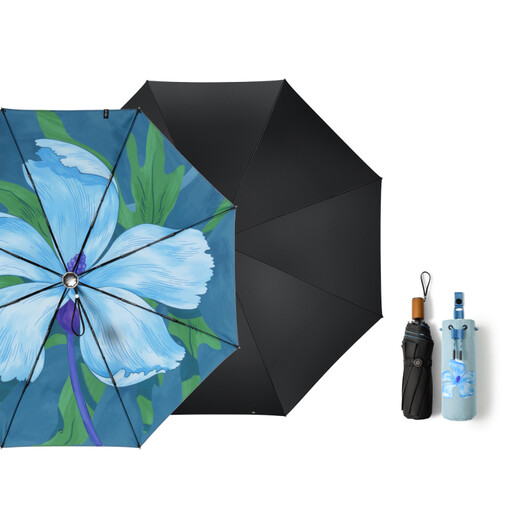
Why it suits this profile: This 3-fold folding model is designed for anyone who wants more coverage in sun and rain. According to the product information, the canopy has a diameter of 99 cm.
The specifications list both its open and folded dimensions, as well as its weight of 370 grams. So you’ll know in advance that extra coverage means carrying more weight.
Double canopy, polyester fabric with a black coating, and a fibreglass and aluminium frame. The floral print is on the inside.
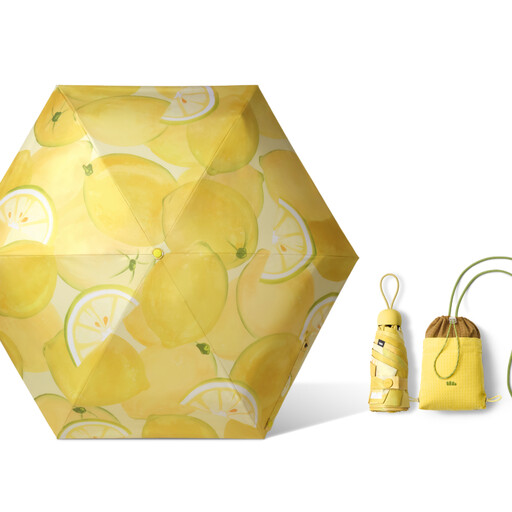
Why it suits this profile: For commuters and travellers who want protection from the sun and an unexpected shower, this model combines a compact size with a water-repellent finish.
The product information lists six reinforced ribs, a fibreglass and aluminium frame, and a weight of around 255 grams. That gives you more to go on than the term “wind-resistant” alone.
UPF 50+ according to the product description, a diameter of 94.5 cm, and a cover that can be carried by hand or crossbody.
We’ve put together a complete, up-to-date list of products that meet these strict selection criteria and the applicable European safety regulations.
If you’re mainly looking for long-lasting shade, you’ll need a different type of product from a travel umbrella. A large 3 x 4 metre garden parasol is suitable for a patio, balcony or garden furniture set. The models mentioned have a side post, an aluminium frame, a hand crank and a manually adjustable 360-degree base.
Pay close attention to an important buying detail: the cross base is included, but ballast plates or water-filled parasol weights are not included. A large parasol may be unstable without enough ballast. Don’t place it in strong winds, and follow the assembly instructions.
That depends on the fabric and construction. According to the product descriptions, models with a water-repellent coating are designed for sun and light rain. Always check whether rain resistance is explicitly mentioned. A sun umbrella isn’t automatically designed for prolonged or heavy rainfall.
Its lifespan depends on how often you use it, wind exposure and maintenance. Let a wet umbrella dry completely, fold it without forcing the fabric and store it in its cover. Even a wind-resistant umbrella can be damaged in strong winds. If a metal or plastic part becomes stiff, don’t put the umbrella under further strain.
According to Beneunder’s product information, the black coating is designed to reduce UV radiation and heat. This is a claim by the brand about how the coating works; the temperature you experience also depends on the outdoor temperature, air circulation and how you use the umbrella. So, as well as the coating, consider the canopy size and whether it has a double layer.
