
Vandaag of morgen in huis

Kwaliteit gegarandeerd

Welkomstaanbiedingen ontgrendelen: GRATIS bezorging | Tot 80% korting | Gratis 30 dagen JoyPlus-proefperiode
Download de app
A UV-protective umbrella may seem straightforward to choose at first glance. However, small differences in coating, frame and folding mechanism can determine whether your purchase performs well during a sunny bike ride, commute or shower in the city.
Pay particular attention to these three common pitfalls:
A sun-protective umbrella often uses a dark or black coating on the inside or outside of the polyester fabric. This layer can help prevent sunlight and heat from passing directly through the canopy.
Some models state UPF 50+. This is a relevant product specification, but always check who is making the claim. For the Beneunder models, the UPF information comes from the manufacturer’s product description. According to Beneunder’s own information, certain models offer UPF 50+ and block more than 99% of the full UV spectrum. Treat this as a stated product specification, not a medical guarantee.
A double canopy can also provide extra shade. This is particularly practical when you spend longer periods outdoors or want more body coverage than a small compact travel umbrella can provide.
A folding umbrella is convenient for everyday carry, but the ratio between its folded length and open diameter varies considerably.
Don’t look at the weight alone. A larger canopy can be more comfortable in the rain, while an ultra-light model takes up less space. Choose according to how you intend to use it.
For a wind-resistant umbrella, the frame and ribs are at least as important as the fabric. Glass fibre and aluminium alloys are used in this product range for their combination of low weight and structural support. Some models have six reinforced ribs.
Note the difference between water-repellent and fully waterproof. The supplied product information describes water-repellent coatings and quick drying for several models. This does not mean that the umbrella will remain completely leak-free during prolonged heavy rain.
Always allow an umbrella to dry fully after use. Storing it while the fabric is wet can place unnecessary strain on the coating and material.
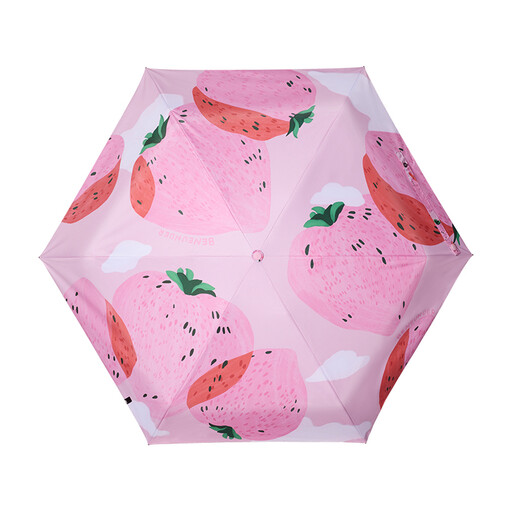
Why it suits this profile: This model combines a compact five-fold design with a playful pattern and a cover that can be carried by hand or cross-body. Handy if you are buying an umbrella for sun and rain for the first time.
The specifications state UPF 50+, six reinforced ribs and a water-repellent finish. This means you can compare the key features in advance rather than judging it by appearance alone.
According to the manufacturer: 37.2-inch diameter, weight of approximately 255 grams, five-fold design and a coating for sun protection.
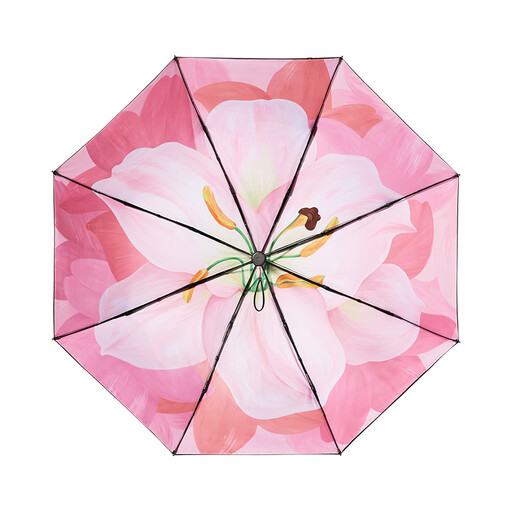
Why it suits this profile: The large canopy is ideal for anyone wanting greater coverage during walks, travel or everyday use in changeable weather.
The product information specifies a double canopy, a 39-inch diameter and a frame made from glass fibre and aluminium. This makes it clear at a glance that it is not an ultra-small pocket model.
According to Beneunder’s own information: UPF 2000+, more than 99.9% UV blocking and a weight of approximately 370 grams. These claims come from the manufacturer’s description.

Why it suits this profile: This lightweight option is ideal for commuters, travellers and anyone with limited space in their bag.
The dimensions and weight are clearly stated: approximately 150 grams and a slim profile of around 5 cm. This makes it clear what you are giving up in exchange for maximum portability.
According to the manufacturer: UPF 50+, 20D polyester fabric, a carbon fibre–aluminium alloy frame and a multi-purpose carrying cord.

Why it suits this profile: The card-shaped design and compact size are practical for a handbag, coat pocket or laptop bag during your commute.
The product description specifies the material, a folded length of 15.5 cm and a construction featuring an aluminium shaft and glass fibre ribs. This makes its portability easy to assess.
According to the manufacturer: UPF 50+, an open diameter of 35 inches, a weight of approximately 170 grams and a cover for hand or cross-body use.
A coating will generally stay in better condition when you handle the umbrella carefully. Follow this simple routine:
In strong winds, it is advisable to close an umbrella in good time. Even a model described as wind-resistant in the product description can be damaged when gusts place uneven strain on the canopy.
We have put together a complete, up-to-date list of products that fully meet these strict selection criteria and the applicable European safety regulations.
Many models are designed for use in both sun and rain. Check whether the description refers to a water-repellent coating or a waterproof cover. Water-repellent does not automatically mean that the canopy will remain completely dry during prolonged heavy rain.
UPF 50+ is a clear product specification that you can include in your comparison. Your actual experience will also depend on the canopy size, how you use the umbrella and how much sunlight enters from the sides. According to the manufacturer’s own information, this designation is used for various Beneunder models.
Its lifespan depends on wind exposure, frequency of use and maintenance. A glass fibre and aluminium frame, reinforced ribs and careful drying can be practical for regular use. Store the umbrella dry and do not force it closed; this helps limit wear to the fabric, coating and mechanism.
