
Vandaag of morgen in huis

Kwaliteit gegarandeerd

Welkomstaanbiedingen ontgrendelen: GRATIS bezorging | Tot 80% korting | Gratis 30 dagen JoyPlus-proefperiode
Download de app
A quality sun hat is indispensable for anyone who loves the outdoors. Whether you're hiking, working in the garden, or heading to the beach, effective sun protection is a necessity, not a luxury. However, the market is flooded with hats that overpromise and underdeliver. Before you invest in a new sun hat, it's crucial to know what to look for.
Many hats fail on critical points. These are the three most common pitfalls:
To avoid wasting your money, there are a few technical specifications you should always check. These features determine whether a hat is truly functional for your activities.
The Ultraviolet Protection Factor (UPF) indicates how much UV radiation a fabric allows to pass through. A UPF 50+ hat is the highest achievable classification, blocking at least 98% of harmful UVA and UVB rays. This is a reliable, standardized measurement, unlike vague marketing terms. For serious protection, this is a non-negotiable requirement.
The material determines comfort and durability. Nylon and polyester are popular because they are lightweight, quick-drying, and durable. A waterproof hat made of nylon is practical for unpredictable weather. Also, look for breathable mesh panels for ventilation.
The brim is your first line of defense. A wide-brim sun hat (at least 7 cm / 3 inches) is essential to protect not only your face but also your ears and neck. For frequent travellers, a packable sun hat that you can easily stuff in your bag is a game-changer.
A good fit is crucial. Look for models with an adjustable drawcord around the head and a detachable chin strap. This ensures your hat stays securely in place, even during a hike on a windy day.
For specific activities, there are useful extras. A hat with a neck flap offers maximum protection for anglers and gardeners. A women's bucket hat with a ponytail opening combines functionality with comfort for those with long hair.
Based on these objective criteria, we have selected several models that suit different user profiles.
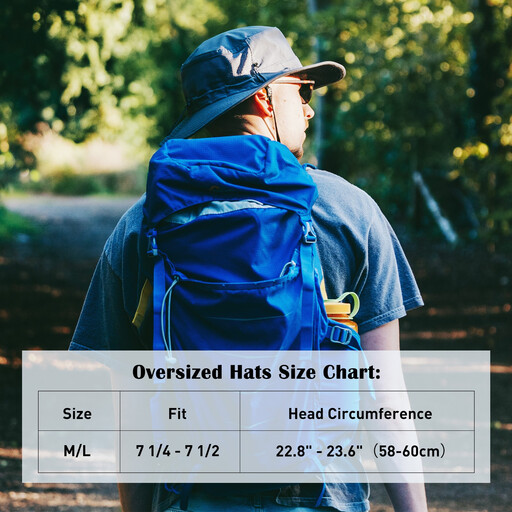
Why This Fits Their Persona: This hat is lightweight, packable, and features an adjustable chin strap. Perfect for the hiker or traveller who needs a reliable, compact hat that fits into any backpack.
The breathable mesh panels prevent overheating (pitfall #3), and the adjustable chin strap ensures the hat won't blow off (pitfall #2).
Certified UPF 50+ protection, waterproof nylon, and a packable design make this a versatile hiking hat.
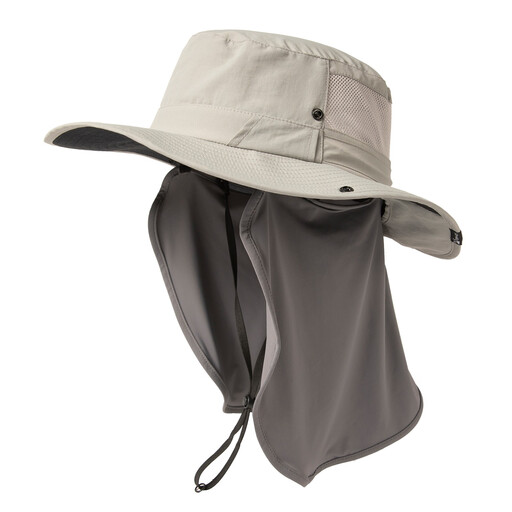
Why This Fits Their Persona: The detachable neck flap hat provides maximum neck coverage, ideal for those who spend hours in the sun in a fixed position, such as when fishing or gardening.
This model offers verified UPF 50+ protection (pitfall #1) and adds extra neck coverage that standard hats lack.
The 2-in-1 design is clever: the neck flap can be stowed away inside the hat. This makes it a versatile fishing and hiking hat in one.
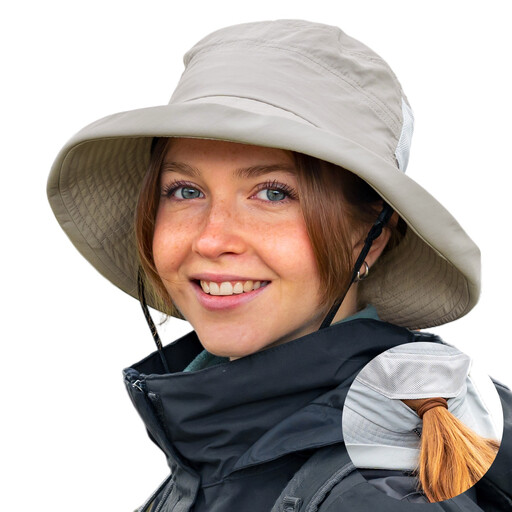
Why This Fits Their Persona: This women's bucket hat is specially designed with a ponytail opening. This ensures a comfortable and stable fit, keeping hair out of the way during sports or hiking.
It solves the fit problem (pitfall #2) for anyone with a ponytail or bun. The hat stays securely in place, making it truly functional.
Combines a wide brim and UPF 50+ protection with a thoughtful design that prioritises comfort and functionality.
We have compiled a complete, up-to-date list of products that fully meet these strict selection criteria and applicable safety standards.
UPF (Ultraviolet Protection Factor) is a standard for clothing and fabrics, while SPF (Sun Protection Factor) is used for sunscreen. UPF measures the blockage of both UVA and UVB radiation. A UPF 50+ hat provides a constant, physical barrier, unlike sunscreen which needs to be reapplied.
In most cases, yes, but always check the care label. Many nylon or polyester hats can be machine-washed on a low temperature. Models with a special coating or a rigid structure may require hand washing to maintain their shape and waterproof properties.
Darker colours generally absorb more UV radiation, which can theoretically offer slightly more protection. Lighter colours, on the other hand, reflect more heat, making them feel cooler. However, with a hat that has a certified UPF 50+ rating, the protection is already guaranteed regardless of the colour. The choice then becomes primarily a matter of personal preference.
