
Viewer with limited space for positioning
You want a large ballet image without putting the projector in the middle of the walkway, and need to balance wall width, furniture depth and lens distance.


First, measure the available distance from the wall and the width of the image you can accommodate. Choose UST if the projector needs to sit close to the wall, or short throw if you have a straight, stable spot further away. For ballet, you should also consider dark scenes, ambient light and how your sound source connects.
You want a large ballet image without putting the projector in the middle of the walkway, and need to balance wall width, furniture depth and lens distance.
You want to pick out details in dark stage scenes and see movement smoothly, and can darken the room while watching.
You can’t always darken the room and want to assess brightness, screen type, incoming light and viewing position together.
Start with the available lens distance and wall width. Then consider dark scenes, ambient light and the source and audio connections you need.
A good fit when: there’s very little space between the projector and the wall, and you have a stable spot close to a sufficiently wide, flat wall.
Bear in mind: measure the image size from the intended position. A UST set-up may require a suitable screen and viewing angle.
A good fit when: you can place the projector further from the wall, straight and securely. BenQ Netherlands gives the TK705STi a throw ratio of 0.8; check the distance needed for your preferred image width.
Bear in mind: this set-up needs more lens distance than UST. BenQ Netherlands warns that heavy keystone correction can affect sharpness and the edges of the image.
| Consideration | What to look for | Who does this matter to? |
|---|---|---|
| Image size and positioning | Measure the wall width, lens position, furniture depth and walkway; consult the distance chart for the exact model. | If the room is narrow, I want to know first whether the lens distance and image width will fit without blocking the walkway. Around 36% of consumers make positioning their top priority. |
| Dark scenes and movement | Assess a recording with dark backgrounds and fast dance movements; check which picture settings the model offers. | When watching ballet, I want to follow the dancers and their movements against a dark background too. Around 29% of consumers make scene detail their top priority. |
| Ambient light | Note when light falls on the wall and assess any screen from your own seat. | If I can’t always darken the living room, I want to know how the set-up will work with the light at the time I watch. Around 21% of consumers prioritise watching in ambient light. |
| Source and sound | Check the app or player you use, the HDMI and audio connections you need, and whether you’ll need any extra equipment. | If I want to play my recordings without unnecessary extra equipment, I check the source and sound together. Around 14% of consumers make ease of connection and additional equipment their top priority. |
The image width, projector distance and available wall space all need to work in your room.
Draw the lens position and the image rectangle you want to scale, then check the distance chart for the exact model.
You may need to rearrange your furniture or get a suitable screen.
Light falling on the screen can reduce contrast. ProjectorCentral also explains that ambient-light-rejecting screens can place demands on positioning and viewing angle.
Assess the light in the room at the time you usually watch, and consider the projector and any screen as a combination.
Darkening the room or using a screen suited to a UST set-up may require extra space.
Projection technology, stated output resolution and supported input signals can be described differently from one model to another.
Check these details separately for the exact model and recording source. For example, Optoma Europe lists the GT3500HDR as 1920 × 1080.
The examples below describe product specifications for individual models. Manufacturer information is not an independent assessment of how ballet recordings look.
BenQ Netherlands describes the TK705STi as a short-throw model with 4K image display and a throw ratio of 0.8.
Epson Netherlands presents the EH-LS670W as an ultra-short-throw model with 4K PRO-UHD, Google TV and built-in 2.1-channel sound.
According to LG Netherlands, the CineBeam S PU615U is a compact UST option for a projector that needs to sit close to the wall.
The Dutch PX3-PRO and L9Q are different UST models, with different stated image sizes.
The European GT3500HDR specification describes a UST model with Full HD and HDMI connections.
These Joybuy projectors are options for watching ballet recordings at home. Check the lens distance required for each model and how your recording source connects.
 No image available
A good option if you’re looking for a 4K UHD model and can work out the projector distance to suit your room in advance.
The product name lists 3,800 lumens, DLP, 1.3× zoom and a 15 W speaker. The stated throw ratio is 1.21:1–1.59:1; use this to check the lens distance required.
 No image available
A good option if you’re looking for a projector with 4K and UHD in the product name; first measure the distance from the wall.
The stated throw ratio is 1.2:1. Check that the distance required will suit your preferred image width.
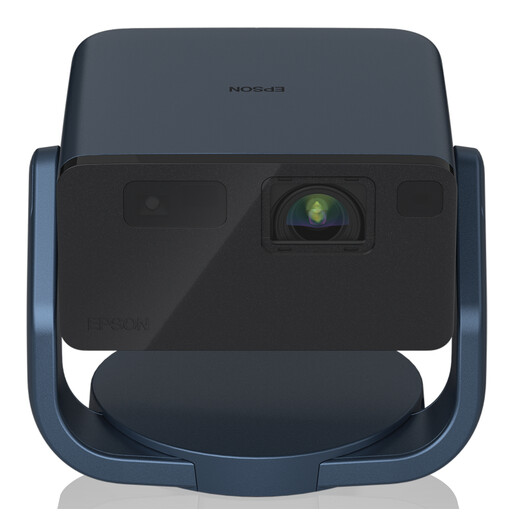 No image available
This standard-throw model could suit you if you have enough room to position the projector away from the wall.
The product name lists 3LCD and 1080p (1920 × 1080). The stated throw ratio is 1.00–1.82:1; check the distance needed for your preferred image size.
 No image available
A good option if you want to watch recordings through the Google TV or Netflix environment listed in the product name; check in advance that your particular source is available there.
The product name lists 1,200 ISO lumens, 1080p, HDR10, an image size of up to 180 inches and two 5 W speakers. This model has no internal battery and needs to be connected to a power adapter.
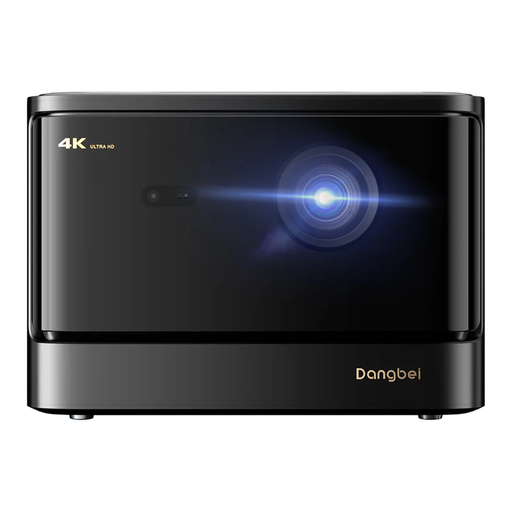 No image available
A good option if you’re looking for a projector with a 4K label and built-in speakers; also check how much distance your room allows.
The product name lists 2,450 ISO lumens, an image size of up to 200 inches and two 12 W speakers. Wi-Fi and Bluetooth are also listed in the product name.
Measure the available image width and work out where the lens can go. Compare those measurements with the distance chart or projection calculator for the exact model; ‘short throw’ doesn’t mean the same distance for every projector.
Where possible, start by positioning the projector straight. BenQ says digital keystone correction can affect the edges and sharpness of the image, among other things; use it to fine-tune a well-positioned projector.
According to ACM ConsuWijzer, the seller must provide a product that meets what you could reasonably expect. If it breaks sooner during normal use, the seller must put things right free of charge under the statutory guarantee. There is no fixed statutory guarantee period for all products in the Netherlands.
For a standard online consumer purchase, there is usually a statutory cooling-off period that ends 14 days after delivery. Before ordering, check the terms for trying the product and the applicable returns information; the cooling-off period is different from your rights if the product is faulty.
Electrical and electronic equipment covered by applicable EU rules may need to undergo a conformity assessment and carry the CE marking. According to the European Commission, CE is a declaration made by the manufacturer, not a quality certificate issued by a central EU body; the rules that apply depend on the specific product.