
Travellers with one USB torch
You mainly want to know whether the cable and USB port will work with your torch, without taking more charging gear than you need.


First, check which charging port, cable and power supply your USB torch needs: USB rechargeable doesn’t automatically mean that every cable or charger will fit. For one torch, a compatible USB wall charger is usually enough. Extra ports, an extension lead or a power bank are mainly useful if you’re charging more devices, the socket is awkward to reach or you want to charge without access to a socket. Follow the instructions and charge your torch in a clear space where heat can escape.
You mainly want to know whether the cable and USB port will work with your torch, without taking more charging gear than you need.
You may want to charge your torch and phone at the same time. Check the number of ports and the connections your devices need.
If the socket is inconveniently placed or you want to charge without mains power, compare an extension lead with a power bank.
Choose this if: you have an accessible socket and want to charge your torch, or one other device.
Bear in mind: a wall charger won’t move the socket and only offers the ports it has.
Choose this if: you need extra reach or want to plug in mains devices as well as USB devices.
Bear in mind: an extension lead takes up more space in your luggage. The maximum power rating of its sockets doesn’t tell you how much power its USB ports deliver.
Choose this if: you want a USB power source even when there’s no accessible socket.
Bear in mind: you’ll need to charge the power bank itself and carry the extra weight.
| What to consider | What should you check? | Who is this important for? |
|---|---|---|
| Connection and power supply | Check your torch’s charging port, cable and power requirements. Compare the output of each port, not just the total power. | If I only want to charge my torch, I need to know that the cable and charger are compatible. Around 36% of consumers say a suitable power supply for their torch is their top priority. |
| Charging several devices at once | Count the devices you’ll connect at the same time, and check the port types and any conditions for using them simultaneously. | If I also want to charge my phone, I need enough compatible ports so I don’t have to keep swapping cables. Around 29% of consumers prioritise charging several devices at once. |
| Socket reach | Compare the cable length with the location where you’ll charge. If you’re staying outside the Netherlands, check the local plug type and mains voltage too. | If the hotel socket is awkwardly placed, I want to be able to position my charging setup elsewhere. Around 21% of consumers say socket reach is their main requirement. |
| Charging without a socket | Check that the power bank’s output is compatible with your torch cable and that its charge capacity suits your needs. | If I can’t rely on having an accessible socket, I want to bring an extra USB power source. Around 14% of consumers prioritise charging without a socket. |
Your torch doesn’t necessarily have the same connection as your charger. So, a port on the charger doesn’t prove that you can connect your torch directly to it.
Check the instructions and the cable you already have before choosing a charger. Then compare the port and charging requirements.
The maximum power rating for its mains sockets doesn’t tell you how much power its USB outputs deliver.
Look for separate USB output specifications if they’re important for your torch.
On 27 August 2026, the Netherlands Food and Consumer Product Safety Authority warned about the TravelCharge Pro RCS, item number P821.0203, batch PU044797, because of a risk of electric shock. The warning applies to the specified product and batch.
Don’t use the product mentioned. If in doubt, check the model, item number and batch number, and don’t charge devices with visibly damaged equipment.
According to Belkin, the BoostCharge WCB009vfWH reviewed here has one USB-C port and one USB-A port. A separate USB-A model reviewed here is supplied with a USB-A/USB-C cable.
According to Anker, the 511 Charger (Nano 3), model A2147, reviewed here is a single-port option with USB-C.
According to UGREEN, the Nexode 35W model reviewed has one USB-C port and one USB-A port for two devices.
The Fuel Series 5 FS5102U reviewed is a power bank with two USB-C ports and one USB-A port.
These Joybuy products include extension leads with USB ports and USB wall chargers. Before buying, check that the port, cable and power supply are compatible with your torch’s instructions. For mains-powered products, also check the applicable CE marking and, if you’re staying outside the Netherlands, the local connection.
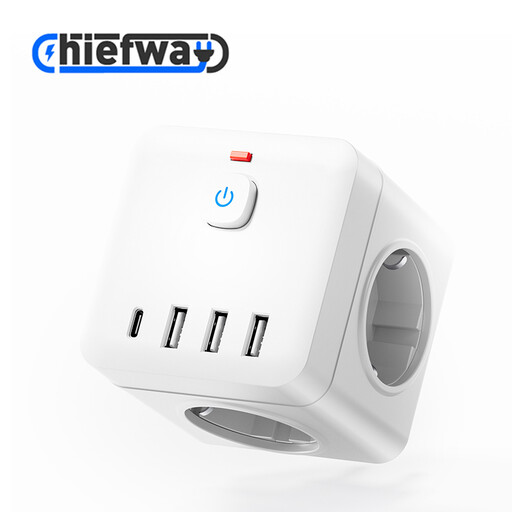 No image available
Could be suitable if you want to plug in mains devices as well as your torch. The product name lists several AC sockets and USB-A and Type-C ports; check which output is compatible with your torch cable.
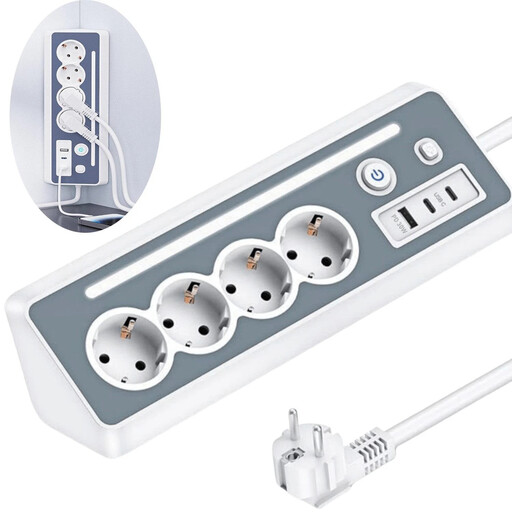 No image available
Could be suitable if you want to connect your torch and other devices at the same time. The product name lists four sockets and three USB ports; check the port configuration and charging requirements of your devices.
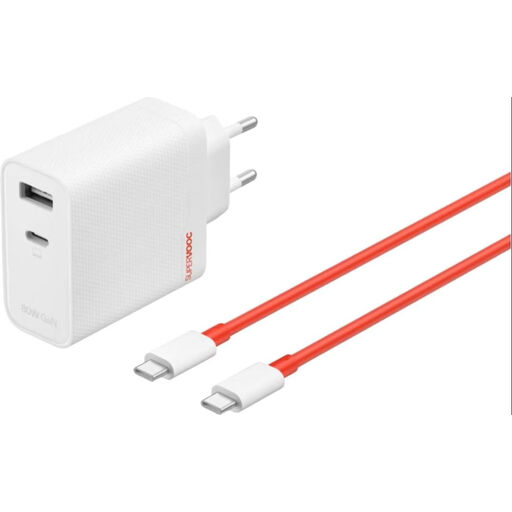 No image available
Could be useful if the USB-A or USB-C output is compatible with your torch cable. The product name lists two ports; check your torch’s power requirements before choosing an adapter.
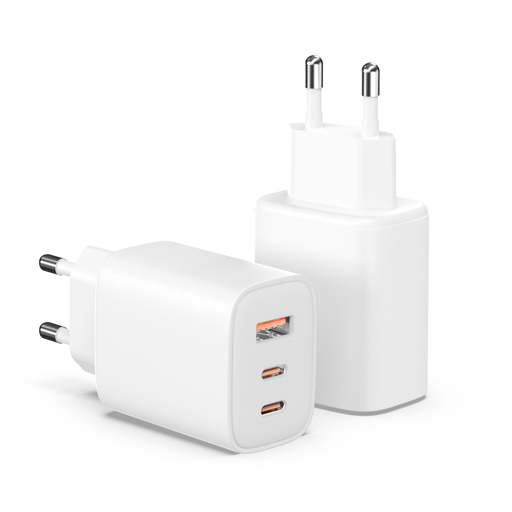 No image available
Could be suitable if you want to connect several devices and the port types match your cables. The product name lists 65 W and three ports; check the output specifications for each port and your torch’s charging requirements.
 No image available
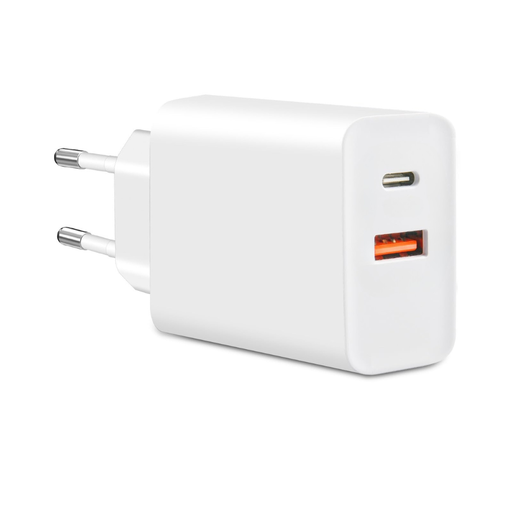
Could be suitable if either port matches your torch cable. The product name lists 30 W and USB-A plus USB-C; check the charging requirements before choosing based on the total power rating.
No, not for that reason alone. The European Commission says the rules have applied to certain device categories since 28 December 2024, and to laptops since 28 April 2026. Torches aren’t among the categories listed, so check the actual charging port on your torch.
Follow the instructions and make sure the charger and torch have room to release heat. The Netherlands Fire Service lists overcharging, short circuits, a damaged battery and moisture as fire risks for batteries and chargers. Choose a clear, dry spot and don’t use a damaged charging setup.
No. The Netherlands Food and Consumer Product Safety Authority distinguishes between the applicable CE marking and independent testing; a CE marking on its own isn’t evidence of an independent test. Check whether the marking applies to the product and read the safety information.
According to ACM ConsuWijzer, online consumer purchases generally come with a statutory cooling-off period that ends 14 days after delivery. A product must also perform as you’d reasonably expect under normal use. If it’s faulty, the seller is responsible for providing an appropriate solution free of charge.