First, check which USB ports both computers have and how much space the entire project folder needs. If you often copy folders like these, compare the write speed of the exact model; quoted maximums are not guaranteed copy times. If you have an individual file larger than 4 GB, also check the file system and whether the other computer supports it. For sensitive files, treat security as a separate requirement.
Who is this buying guide for?
Anyone who often copies large project folders
If you regularly transfer entire folders, write speed matters more than read speed alone. Kingston and Transcend quote maximum speeds, but actual performance depends on factors including your computer and its connection.
Anyone who presents on different computers
If you switch between computers, check that the stick plugs directly into the ports on both devices. SanDisk describes the Ultra Dual Drive Go as having USB-A and USB-C connectors.
Anyone carrying sensitive project files
If your project folder contains personal data, consider not only transferring it but also controlling access if the stick is lost. The Dutch Data Protection Authority advises keeping sensitive documents on your work server wherever possible. If that is not an option, it suggests using an encrypted USB stick.
What should you look for?
Start by checking the ports on both computers and the total size of the folder. Then compare write speeds, check for any large individual files and consider whether you need security features.
| What to consider |
What should you check? |
Who is this important for? |
| Copy time |
Compare the quoted write speed of the exact model and check the USB port on the computer you will be copying from. Kingston says a USB 3.2 Gen 2 connection is required for the optimal performance described for the DataTraveler Max. |
If you often copy large folders to your stick, you’ll want to know how its write specification matches your computer. Around 33% of consumers put copy time first. |
| Connecting to both computers |
Check whether both devices have USB-A, USB-C or another suitable port type; check the supported USB speed separately. |
If you switch between computers with different ports, you’ll want a stick that connects directly to both. Around 25% of consumers put compatibility first. |
| Storage space and file size |
Check the size of the whole folder, the available storage space and whether any individual file is larger than 4 GB. Microsoft says exFAT supports larger individual files than the FAT32 limit. Before formatting, check that both computers support the file system you choose. |
If you want to make sure the entire project folder will fit, check for large individual files as well as the total storage capacity. Around 25% of consumers put storage space for transfers first. |
| Confidentiality |
Check whether the folder contains personal data, what rules apply in your organisation and whether you can unlock an encrypted stick on the receiving computer. |
If you carry sensitive files, you’ll want to minimise the risk of unauthorised access if the stick is lost. The Dutch Data Protection Authority identifies losing a USB stick containing unencrypted personal data as a potential data breach; around 17% of consumers put file protection first. |
Common buying mistakes
-
Confusing read speed with write speed
A high read speed doesn’t tell you how quickly you can copy a project folder onto the stick. Samsung says the FIT Plus has a lower write speed than its quoted maximum read speed. Kingston also points out that performance depends on your computer and how you use the stick.
Compare the write specification for the exact model and don’t treat manufacturers’ maximums as guaranteed copy times.
-
Looking only at the number of GB
The file system may prevent you from copying a file, even if there’s enough free space. Transcend says the JetFlash 920 is pre-formatted with FAT32, which has a 4 GB limit for individual files.
Check the total folder size, individual file sizes and the file system. First, back up any existing data, and check that the receiving computer supports your chosen file system before formatting.
-
Assuming a similar model name means it’s the same model
A model name without its full designation doesn’t confirm that the capacity and version match. Computerles voor Beginners’ guide lists the DataTraveler Exodia S; a Kingston DataTraveler Exodia without the S is not automatically the same model.
Before buying, check the full model name, capacity and specifications of the version you want to use.
-
Assuming a standard stick protects confidential files
The Dutch Data Protection Authority identifies losing a USB stick containing unencrypted personal data as a potential data breach.
First, check whether transferring files on a stick complies with the relevant rules. For sensitive files, consider storing them on your work server or using an encrypted model that you can unlock on the other computer.
Relevant brands for this choice
Kingston
Kingston offers DataTraveler Max models with either USB-A or USB-C, as well as the separate IronKey Locker+ 50 range for encrypted storage.
- Kingston quotes maximum read speeds of 1,000 MB/s and write speeds of 900 MB/s for the DataTraveler Max. For the optimal performance described, Kingston specifies a USB 3.2 Gen 2 connection. These are manufacturer maximums, not guaranteed copy times.
- The speed and encryption features belong to different product ranges. Kingston specifies hardware encryption for the IronKey Locker+ 50, with maximum read and write speeds of 145/115 MB/s over USB 3.2 Gen 1.
SanDisk
The Ultra Dual Drive Go is designed for transferring files between devices with USB-A and USB-C connections.
- SanDisk confirms that this range has both connector types and a swivel design.
- Convenient connections alone don’t guarantee high write speeds. If copy time matters, check the write specification for the exact model.
Samsung
The FIT Plus range is a compact USB-A option; Samsung also offers a separate USB Type-C range.
- Samsung quotes sequential read speeds of up to 400 MB/s for the 512 GB FIT Plus.
- Samsung says the write speed is lower than the read speed. So the read specification doesn’t tell you how quickly you can copy a large project folder.
Transcend
The JetFlash 920 is a USB-A range for which Transcend quotes both read and write speeds.
- Transcend quotes maximum read speeds of 420 MB/s and write speeds of 400 MB/s, with capacities of 128, 256 and 512 GB.
- According to the product sheet, the stick is pre-formatted with FAT32. To store an individual file larger than 4 GB, you’ll need to change the file system, provided the receiving device supports it.
USB sticks at Joybuy
These Joybuy products are USB sticks for transferring presentations and project files. Check the connection, write specifications and required storage space for each model.
 No image available
Kingston DataTraveler Exodia DTX 256 GB
Worth comparing if you want to factor in a quoted write speed when transferring files.
USB 3.2 Gen 1; 256 GB; quoted write speed of up to 625 MB/s. This is a product claim, not a measured copy time for your project folder.
Joybuy
 No image available
SanDisk Ultra Flair 512 GB
An option to consider if the computer you’re copying from has a USB-A port and you need plenty of storage space.
512 GB; USB-A; quoted speed of up to 150 MB/s refers to read speed, not write speed.
Joybuy
 No image available
SanDisk Ultra Dual Drive Go 512 GB
An option if you switch between devices with USB-A and USB-C and need extra storage for project files.
512 GB; USB 3.1; USB-A and USB-C connections. The quoted speed of up to 150 MB/s refers to read speed, not write speed.
Joybuy
 No image available
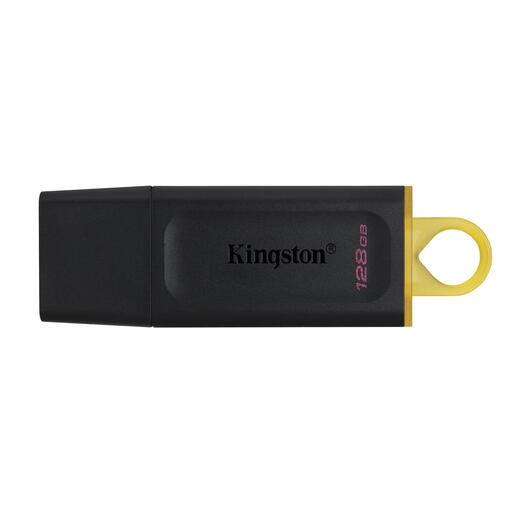
Kingston DataTraveler Exodia 128 GB
An option to consider if this connection is suitable and 128 GB is enough for the files you want to carry.
128 GB; USB Type-A; USB 3.2 Gen 1. If copy time is a deciding factor, check the write specifications for this model.
Joybuy
Frequently asked questions
Why won’t a large file fit when there’s enough free space?
Check the file system: FAT32 has a 4 GB limit for individual files, while exFAT supports larger files. Back up any existing data before formatting, and check that the computer you’ll be presenting on can read exFAT. The total folder size is not the same as the size of an individual file.
How can I check that the presentation has transferred in full?
Open the presentation and any files it refers to on the receiving computer, and check that the entire project folder has transferred. Then safely eject the stick; Microsoft recommends doing this to prevent data loss.
Does every presentation need to be on an encrypted USB stick?
Not as a general rule based on these sources. If the folder contains personal data or sensitive work documents, follow the relevant security rules. The Dutch Data Protection Authority advises keeping sensitive documents on your work server wherever possible. If that isn’t an option, it recommends an encrypted stick.
Must the loss of a USB stick containing personal data always be reported?
No. The assessment depends on the risk and the circumstances. According to the Dutch Data Protection Authority, whether you need to notify the regulator depends on the risk to the rights and freedoms of the people concerned. You should inform those people if there is likely to be a high risk to them. For work files, also follow your organisation’s reporting procedure.


