Choose a USB stick based on your total storage needs, the size of your largest individual audio file, the ports on both computers and the write-speed specification of the exact model. A stated maximum is not a guaranteed copy speed. Use the stick as a transfer medium or an additional copy, not as your only archive copy: the Library of Congress recommends keeping copies on different media and in different locations. If people are identifiable or performances are protected, assess access controls and permissions separately, taking guidance from the Dutch Data Protection Authority, the Dutch Government and Auteursrecht.nl into account.
Who is this guide for?
Archive manager
Makes verifiable copies of recordings and wants to avoid losing the only copy if a stick fails or goes missing. The Library of Congress and the KB, the National Library of the Netherlands, explain the importance of digital preservation and keeping separate copies.
Volunteer transferring recordings
Copies concert files between computers and needs to consider storage capacity, write time and whether the connections are compatible with the devices in use. Kingston Technology and SanDisk describe models with different connectors and speed specifications.
Manager of restricted recordings
Manages recordings in which people may be identifiable and needs to decide who can access them and how that access will be secured. The Dutch Data Protection Authority notes that identifiable audio recordings may contain personal data.
What should you look for in a USB stick for concert recordings?
Start with the files and devices you actually use; then compare the write-speed specifications of the models you are considering.
| What to consider |
What to look for when buying |
Who is this most relevant to? |
| Archive copies |
Keep additional copies on different media and in different locations, and check files after transferring them, as recommended by the Library of Congress. |
I want to avoid losing the only concert recording if a stick fails or goes missing; around 28% of consumers prioritise archive preservation and verifiable copies. |
| Capacity and file size |
Calculate the total size of your files and check the largest individual file. Microsoft states that FAT32 supports a maximum file size of 4 GiB. |
I want to take my whole collection with me without a large audio file being held up by storage space or the file system; around 22% of consumers prioritise having enough storage and room for their largest file. |
| Write time |
Compare the write-speed specification for the exact model and check the host port. Kingston states that USB 3.2 Gen 2 is required for optimal DataTraveler Max performance. |
I want to minimise waiting time when repeatedly copying large recordings; around 22% of consumers make write time their top purchasing priority. |
| Connections |
Check the ports on both the source computer and the archive computer, and see whether you need USB-A, USB-C or an adapter. |
I transfer recordings between computers with different USB ports and want to use them without connection issues; around 17% of consumers prioritise compatibility with their devices. |
| Restricted access |
Decide who can access the files and how passwords and recovery will be managed. The Dutch Data Protection Authority says that appropriate security measures depend on the processing involved and the organisation. |
If recordings should only be accessible to authorised people, I want to arrange access in advance; around 11% of consumers prioritise restricted access. |
Common mistakes when copying concert recordings
-
Mistaking a high read speed for fast archiving
When writing files to a stick, write speed is what matters. A read-speed specification alone does not tell you how quickly files will copy to the stick.
Compare the write-speed specification for the exact model and check the computer's port. Samsung lists a maximum read speed for certain BAR Plus models; don't treat this as a write speed. A lower write speed can also mean longer waits when transferring large files.
-
Mistaking more gigabytes for a secure archive
A stick with more storage is still just one storage medium. If it fails or goes missing, the only copy stored on it could still be lost.
Keep additional copies on different storage media and in different locations, as recommended by the Library of Congress. Check that files are unchanged after transferring them; a checksum can help identify changes.
-
Failing to check your largest recording
Free space on the stick is not the only limitation: Microsoft states that an individual file on FAT32 can be a maximum of 4 GiB.
Before copying, check the file size and which file systems are supported by both devices. Back up existing files before reformatting a stick.
-
Mistaking encryption for permission
Encryption controls access to a storage medium, but it does not give you permission to make, copy or share concert recordings publicly. The Dutch Government and Auteursrecht.nl explain that separate rights apply to copies and performances.
Keep a separate record of who is allowed to copy, store and view files. Then decide which access controls are suitable for the recordings and the archive's arrangements.
Brands worth considering
Kingston
The DataTraveler Exodia range is an example of USB-A transfer storage; DataTraveler Max is designed for large transfers via a compatible high-speed port. IronKey Vault Privacy 50 is a separate range for those looking for hardware encryption.
- Kingston lists maximum speeds of 1,000 MB/s read and 900 MB/s write for DataTraveler Max, and specifies USB 3.2 Gen 2 as the host interface for optimal performance.
- These are manufacturer-stated maximums, not measured copy times for long-term archive copies. IronKey features apply to that product range, not to all Kingston sticks.
SanDisk
The Extreme PRO Dual Drive is a product range for transferring files between devices with USB-A and USB-C connections.
- SanDisk lists maximum speeds of 1,000 MB/s read and 900 MB/s write for this product range.
- These maximums do not establish the actual speed of long-term archive transfers. Check the capacity and full model number of the version you are considering.
Samsung
BAR Plus is a USB-A range where the capacity and relevant speed specification of the model you choose are important considerations.
- Samsung Netherlands lists sequential read speeds of up to 400 MB/s for the BAR Plus capacities mentioned.
- This read speed is not a write speed. The 256 GB model and other variants are not necessarily the same product.
Transcend
JetFlash 920 is a USB-A range for those who want to compare a stated write speed as well as capacity.
- Transcend lists maximum speeds of 420 MB/s read and 400 MB/s write for the range, with models available in 128, 256 and 512 GB.
- The claim of high durability is not an independently verified lifespan for archive use.
Joybuy products for concert recordings
These USB sticks are options for transferring concert recordings. Compare the capacity and USB specification of the exact model with your files and the ports on both computers.
 Image unavailable
Kingston DataTraveler Exodia DTX 256 GB USB 3.2 Gen 1
An option to compare if 256 GB suits your collection and the stated write speed is important to you.
The product name lists a maximum write speed of 625 MB/s. This is not a guaranteed copy speed.
View at Joybuy
 Image unavailable
Kingston DataTraveler Exodia 128 GB USB 3.2 Gen 1 Type-A
An option if 128 GB is enough for your files and your computer has a compatible USB Type-A port.
The product name lists 128 GB and USB 3.2 Gen 1 Type-A.
View at Joybuy
 Image unavailable
SanDisk Ultra Flair 64 GB USB 3.0
An option to compare if 64 GB suits the amount of recordings you need to transfer.
The product name lists 64 GB and USB 3.0.
View at Joybuy
 Image unavailable
SanDisk Ultra Flair 256 GB USB 3.0
An option to compare if 256 GB suits your collection.
The product name lists 256 GB and USB 3.0.
View at Joybuy
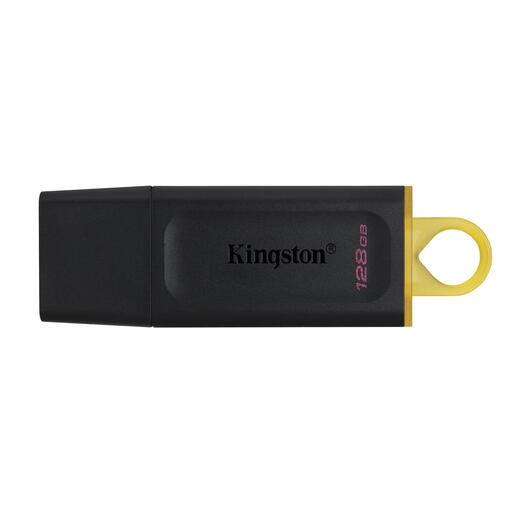 Image unavailable
Kingston DataTraveler Exodia USB 3.2
An option for straightforward file transfers; check that the capacity of the model you choose suits your collection.
The product name lists USB 3.2.
View at Joybuy
Frequently asked questions
Can you keep a USB stick as your only long-term archive copy?
No, not if preservation is your aim. The Library of Congress recommends keeping copies on at least two different storage media and in separate physical locations. Check transferred files; comparing checksums can reveal changes.
Which file system should you choose for a very large audio file?
First check the file size and which file systems are supported by both devices. Microsoft states that FAT32 has a maximum file size of 4 GiB, while exFAT allows larger files. Back up existing files before reformatting a stick.
Does a stated write speed of 900 MB/s mean your archive will copy at that speed?
No. It is a manufacturer-stated maximum for a specific product range, not a guaranteed copy speed. Kingston says that optimal DataTraveler Max performance requires, among other things, a USB 3.2 Gen 2 host port.
Can a community archive copy and share concert recordings without restriction?
Don't assume so. The Dutch Government says that the private-copying exception applies to personal use and not to distribution or making works available to the public. Performing musicians also have rights relating to recording, reproducing and making their performances available to the public. The permissions required for a particular collection depend on the works, performances, rights holders and intended access involved.
Is encryption legally required for every concert recording?
The appropriate level of security depends on the processing involved and the organisation. The Dutch Data Protection Authority points out that identifiable audio recordings may contain personal data, and that appropriate technical and organisational measures may be necessary. An encrypted stick is one possible product choice, but it is not, by itself, a complete GDPR solution.


