Who is a USB stick suitable for?

Creators with large project folders

You want to keep the project file and the media it uses together, so you compare the size of the entire folder with the stick’s available capacity. Adobe explains how After Effects can collect project files and the source files used; Kingston Technology points out that formatting reduces the capacity available for files.

Creators who regularly save new versions

You often copy large files, so you pay attention to the stated write speed, not just the read speed. Also check that your computer and the connection you use support the stated performance.

Creators who want to be able to recover projects

You don’t want to rely on a single USB stick if something is lost or goes wrong, so you check that there’s a separate copy elsewhere and that you can restore files from it. Veilig Internetten recommends making regular backups.

What should you look for when choosing?

Start with the entire project folder and the role of the stick: a portable copy calls for different considerations from storage you work from every day.

Consideration What to look for Who is this important for?
Space for the entire project Gather the files you need, check the folder size and compare it with the available capacity of the exact model. If I want to keep my project file and linked media together, the whole folder needs to fit. Around 36% of consumers mainly look for space for a complete project.
Time spent waiting for files to copy Compare the stated write speed of the exact model and check the USB port and any hub you use. If I often save large files, I want to know how quickly data transfers to the stick. Around 29% of consumers mainly prioritise spending less time waiting for files to copy.
Being able to recover a project Keep a separate copy in another location and, after copying, open the project and a few source files to check them. If I want to be able to recover my project after something is lost or goes wrong, I don’t want to rely on a single stick. Around 21% of consumers mainly look for an additional copy they can recover.
Connecting to multiple computers Check the USB-A or USB-C ports on the computers you’ll use and whether both can read the file system on the stick. If I exchange files between computers with different ports, I want to be able to open them without connection issues. Around 14% of consumers mainly look for a connection that works with the computers they need to use.

Common mistakes

  • Copying only the project file

    A project may refer to separate source files that you need to continue working on it elsewhere. Adobe describes the ‘Collect Files’ feature in After Effects, which gathers a copy of the project and the files it uses.

    Use your software’s tools to gather the files you need, then open a test copy from the stick.

    Missing source files can take time to find or gather again.

  • Relying on the stick as your only backup

    A portable copy doesn’t give you a separate way to recover your files if the stick is lost or damaged. Veilig Internetten recommends making regular backups.

    Keep a recent copy elsewhere too, and check that you can restore the files from it.

  • Confusing read speed with copy speed

    Reading from a stick and writing files to it are different tasks. Samsung lists a maximum sequential read speed for the BAR Plus 256 GB, but that figure isn’t a write speed.

    If you copy files often, compare the stated write speed of the exact model and check that your computer has the required USB port. Kingston specifies a 10 Gb/s USB 3.2 Gen 2 port for optimal performance from the DataTraveler Max.

    Copying large project folders can take longer than you might expect from the read speed alone.

  • Assuming USB-A and USB-C mean two connectors on one stick

    Kingston offers the DataTraveler Max in separate Type-A and Type-C models. SanDisk describes two connector types for its Dual Drive ranges; check the full model name and the version you’ve chosen.

    Check the ports on both computers and make sure the stick will fit before you order.

    If the connector won’t fit your computer, you may need a suitable adapter.

Brands to consider

Kingston

The DataTraveler Max comes in separate USB-A and USB-C models, while IronKey Locker+ 50 G2 is a USB-A range with access protection.

  • Kingston states maximum speeds of 1,000 MB/s read and 900 MB/s write for the DataTraveler Max. Actual performance depends on factors including your computer and how you use it.
  • The USB-A and USB-C versions of the DataTraveler Max are separate models, not two connectors on the same stick.
  • For the IronKey Locker+ 50 G2, Kingston lists AES-256 hardware encryption and models up to 256 GB.
  • Kingston states a maximum write speed of 115 MB/s for the IronKey Locker+ 50 G2. Check the requirements for unlocking it before you buy.

SanDisk

The Ultra Dual Drive Luxe and Extreme PRO Dual Drive are designed for transferring files between USB-A and USB-C devices; check the specifications for the range you choose.

  • SanDisk lists both connector types for these ranges.
  • The stated maximum speeds of 1,000 MB/s read and 900 MB/s write apply to the Extreme PRO Dual Drive, not the Ultra Dual Drive Luxe. These are manufacturer claims, not measurements taken on your computer.

Samsung

The BAR Plus is a USB-A range worth considering if that connection and the capacity of the model you choose are suitable.

  • Samsung lists a sequential read speed of up to 400 MB/s for the BAR Plus 256 GB under its specified test conditions.
  • This read speed tells you nothing about write speed, so don’t use it as a measure of performance when copying files to the stick often.

Transcend

The JetFlash 920 is a USB-A range for which Transcend lists both read and write speeds.

  • Transcend lists maximum speeds of 420 MB/s read and 400 MB/s write, with models available up to 512 GB.
  • These are manufacturer claims. Consider the practical speed and whether the capacity is suitable for your project separately.

USB sticks at Joybuy

These USB sticks are designed for storing and carrying portable project copies. Check the capacity and connections of the model that suits your computers.

Kingston DataTraveler Exodia DTX 256 GB USB flash drive

Kingston DataTraveler Exodia DTX 256 GB

A portable project copy if 256 GB is enough for the project folder you’ve measured.

USB 3.2 Gen 1; stated write speed up to 625 MB/s.

View at Joybuy

Kingston DataTraveler Exodia USB flash drive, 128 GB

Kingston DataTraveler Exodia 128 GB

A portable project copy if 128 GB is enough for the entire folder.

USB 3.2 Gen 1; Type-A connector.

View at Joybuy

SanDisk Ultra USB flash drive, 512 GB, USB 3.0

SanDisk Ultra 512 GB

A portable project copy if the entire folder fits within the available capacity.

512 GB; USB 3.0.

View at Joybuy

SanDisk Ultra Dual Drive Go USB 3.1, USB-C, 512 GB

SanDisk Ultra Dual Drive Go 512 GB

A portable project copy for carrying files between devices, if 512 GB is enough for your project folder.

USB 3.1; USB-C.

View at Joybuy
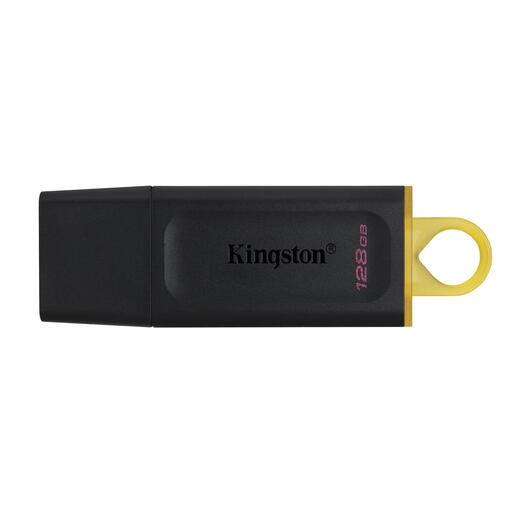
Kingston Technology DataTraveler Exodia USB 3.2 flash drive

Kingston Technology DataTraveler Exodia USB 3.2

A portable project copy if the model you choose has enough space for your files.

USB 3.2 Gen 1.

View at Joybuy

Frequently asked questions

Can you animate directly from a USB stick?

It depends on the project and your computer. For intensive work with source files or disk cache in After Effects, Adobe recommends fast local storage and says SSDs are suitable for the cache. In that case, use the stick for transferring files or keeping an additional copy instead.

How do you put a complete After Effects project on a stick?

Adobe describes ‘Collect Files’ as a way to gather a copy of the project and the source files it uses. Compare the size of that folder with the available space, then open the copy to check it. Other animation programmes may use a different process.

Why can’t you reach the stated speed?

Manufacturer maximum speeds apply under certain conditions and don’t guarantee the speed you’ll get from your computer. Kingston specifies a 10 Gb/s USB 3.2 Gen 2 port for optimal performance from the DataTraveler Max; your computer and any hub you use can also affect performance.

What are your rights if a USB stick you bought online is faulty?

For a consumer purchase in the Netherlands, the seller is responsible for providing a suitable solution if a product doesn’t perform as you could reasonably expect under normal use. ACM ConsuWijzer also states that online purchases generally come with a cooling-off period that ends 14 days after delivery; check which exceptions apply to your purchase.

Is encryption a legal requirement for animation projects?

Not simply because they’re animation projects. If an organisation processes personal data, the GDPR requires appropriate security measures based on the processing and the risks involved. The Dutch Data Protection Authority cites the loss of a USB stick containing unencrypted personal data as a possible data breach; the measures that are appropriate depend on the content and how it’s used.
