
Script archive manager
You want to be able to retrieve older versions and complete project folders. The National Cyber Security Centre advises keeping multiple versions of important business data and testing that files can be opened from a backup.


Choose a USB stick based on the complete project folder, your devices’ connections and the write speed of the exact model; a high read speed doesn’t tell you how quickly your folder will be copied. Use the stick as one copy alongside a separately stored backup, and test that you can open files from it. If the folder contains personal data, decide what level of protection is appropriate for the risk rather than treating encryption as a universal product requirement.
You want to be able to retrieve older versions and complete project folders. The National Cyber Security Centre advises keeping multiple versions of important business data and testing that files can be opened from a backup.
You regularly add files and want to choose capacity and copy time based on the complete folder. Stated maximum speeds vary by product range and don’t predict how long your project folder will take to copy.
You share files between devices, so you need to make sure the connections and file systems are compatible. If the folder contains personal data, you also need to consider who can access the files.
For large theatre project folders, the main considerations are recoverability, capacity and copying time, use across different devices, and confidentiality.
| Consideration | What to look for | Who is this important for? |
|---|---|---|
| Being able to restore your archive | Keep a separate copy and, after copying, open a few important files from the archive stick. | As an archive manager, I want to retrieve older versions and check that files really do open; around 36% of consumers prioritise recoverability. |
| Storing and updating large folders | Check the size of the complete folder and leave room for new versions. If you copy files regularly, compare the write speed of the exact model. | When my project folder grows, I want enough space and a practical copying time; around 29% of consumers give capacity and copying time top priority. |
| Opening files on your devices | Check the connections and file system on all the devices you use. Test reading and writing before using the stick for your archive. | When I switch between computers, I want to open files without connection or write issues; around 21% of consumers prioritise device compatibility. |
| Protecting confidential content | Establish whether the folder contains personal data and what access protection is appropriate for the risk; also check the capacity and connection of any secure model. | When my project folder contains personal data, I want to prevent unauthorised access; around 14% of consumers prioritise confidentiality. |
If it’s lost or damaged, your only copy of scripts and project files could become inaccessible. The National Cyber Security Centre advises keeping at least three versions of important business data: the original files and two backups.
Keep at least one separate copy and test that you can open important files from it.
Manufacturers list read and write speeds separately. The maximum read speed doesn’t tell you how long it will take to copy an entire folder.
Compare the write speed of the exact model and check the USB connection you’ll use. Treat stated maximum speeds as specifications, not as a real-world test of your project folder.
A compatible connection doesn’t guarantee that files can be read and written on every device. Apple also warns that formatting erases existing files; Microsoft Learn states that FAT32 has a maximum file size of 4 GB.
Test reading and writing on the devices you intend to use, and save your files elsewhere before formatting.
The Dutch Data Protection Authority gives the loss of a USB stick containing unencrypted personal data as an example of a data breach.
Establish whether the folder contains personal data and choose appropriate access and security measures. Also keep a copy that you can restore.
Kingston offers product ranges for USB-C transfers and hardware encryption on USB-A models.
The BAR Plus is a USB-A option for a working environment with USB-A connections.
According to the product sheet, the JetFlash 930C has USB-A and USB-C connectors and is available in 128, 256 and 512 GB models.
The Dual QuickStick is a USB-A and USB-C option to compare if you switch between different connections.
These Joybuy product options are portable USB sticks for storing and transferring project files. Compare the capacity, connections and available write-speed information for each model with your own folder and devices.
 No image available
An option to compare if you regularly copy project files.
USB 3.2 Gen 1; stated write speed of up to 625 MB/s.
 No image available
An option to compare if you move project files between devices with USB-A and USB-C.
The product description lists USB-A and USB-C and a read speed of up to 150 MB/s; it doesn’t specify a write speed.
 No image available
An option to compare for storing a project folder on a USB stick.
USB 3.0; the product description lists a read speed of up to 150 MB/s. This doesn’t indicate the write speed.
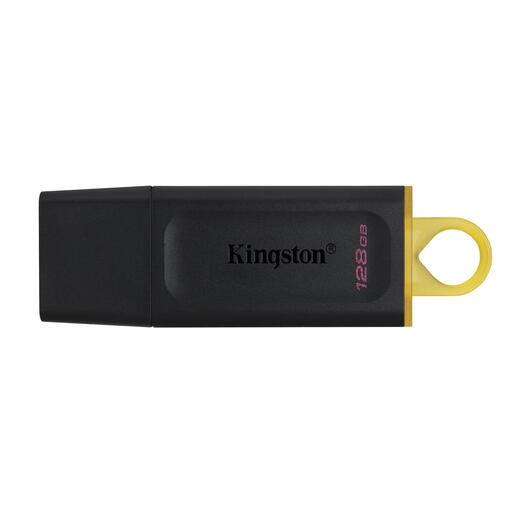 No image available
A portable option for documents; check that the model you choose has enough space for your complete project folder.
The product specifications list USB Type-A and USB 3.2 Gen 1.
 No image available
A portable option for documents; check that the model you choose has enough space for your complete project folder.
The product specifications list USB Type-A and USB 3.2 Gen 1.
No, don’t rely on one USB stick as your only copy. The National Cyber Security Centre advises keeping multiple versions of important business data and testing that you can restore it; so check that you can open files from your separate backup.
If you regularly update large folders, compare the stated write speed of the exact model. A read speed or maximum figure doesn’t measure how long it will take to transfer your files.
Apple recommends exFAT for formatting a drive larger than 32 GB that’s intended for use with both systems. Formatting erases existing files, so save them elsewhere first, then test reading and writing on the computers you plan to use.
The Dutch Data Protection Authority lists encryption as one possible security measure, not as a general product requirement for every USB stick. If the files contain personal data, choose measures that are appropriate for the risks; losing a stick containing unencrypted personal data could be a data breach.
According to Microsoft Learn, FAT32 has a maximum file size of 4 GB for each individual file. That’s different from the total amount of free space; check the file system if a file is larger than this limit.