First, work out which files you need to be able to restore: the catalogue, the original photos you need, or both. Then choose a capacity, connector and write speed suited to the files you’ve measured and the archive’s devices. Use the stick as part of a back-up strategy, not as your only copy. If it contains personal data, assess what level of security is appropriate for the risks.
Who is this buying guide for?
Archive manager responsible for arranging recovery
Wants to know whether both the catalogue and the necessary photo files can be restored, and is looking for a verifiable backup alongside other backups. The National Cyber Security Centre advises keeping multiple versions of important data.
Volunteer who transports the backup
Moves between archive devices and needs to check which connector is required and what protection is suitable for the risk of loss. The Dutch Data Protection Authority explains that security measures should be appropriate to the risks.
Manager of a growing collection
Needs to match capacity and copying time to the files measured and the back-up schedule, rather than relying on a general estimate of how many photos fit on a stick.
What should you look for?
First decide which files you need to be able to restore. Then compare capacity, connectors, protection and copying time.
| What you need |
What to look for when buying |
Who is this most relevant to? |
| A complete, recoverable copy |
Decide which catalogue and photo files need to be included, measure their total size and carry out a test restore. |
If I want to restore both the catalogue and the photos I need, I want to know which files need to fit together. Around 33% of consumers put recoverability first. |
| Protection for personal data |
Assess the risk of loss, who needs access and whether password management will be practical during recovery. |
If the backup contains identifiable people, I want to match access to the risk and make sure authorised managers can access it. Around 27% of consumers put data protection first when choosing what to buy. |
| Compatibility with archive devices |
Check the ports on both the computer used for the backup and the device you want to restore files to. |
If volunteers use devices with different ports, I want to avoid choosing a stick that won’t connect to a device they need. Around 20% of consumers put device compatibility first. |
| Time needed for regular backups |
Compare write speed with read speed, check the computer’s port and try copying a representative set of files. |
If large files are copied frequently, I want to know how long it actually takes to write them to the stick. Around 20% of consumers put copying time first when choosing what to buy. |
Common pitfalls
-
Relying on the USB stick as your only archive copy
A single stick leaves you without another copy or storage location if it is lost or stops working. The National Cyber Security Centre advises keeping multiple copies on different media, with one copy stored elsewhere.
Before you buy, decide what role the stick will play in your overall back-up strategy.
That strategy may involve an additional storage device, another storage location and time for recovery tests.
-
Copying only the catalogue when you also need the photos
A catalogue may contain information about photos without storing the original files themselves. Adobe describes this for Lightroom Classic; this is just an example and doesn’t indicate which software the archive uses.
Check which original files are needed for the application you actually use, and verify this with a test restore.
If the photos also need to be included, those files require extra storage space and management.
-
Assuming the maximum read speed is the speed you’ll get when backing up
Reading and writing data are different operations. Actual transfer speeds also depend on factors such as the computer and how it is being used.
Check the stated write speed and connector type, then try copying a representative set of files using the archive computer.
-
Choosing encryption without checking capacity and access
According to the manufacturer, the Verbatim Secure Pro 98666 has a capacity of 64 GB. Security won’t help with recovery if the files you need don’t fit or authorised managers can’t access them.
Measure the files, agree who will manage the password and test that recovery works.
You may need a larger or additional storage solution, as well as time to manage access.
Brands to consider
Samsung
The BAR Plus MUF-256BE4/APC is an example of a 256 GB USB-A stick for a computer with that connector.
- Samsung lists a metal casing and a maximum read speed of 400 MB/s for this version.
- The maximum read speed isn’t a stated write speed for your archive backup, and the stick doesn’t provide a complete back-up strategy.
Kingston
The DataTraveler Max range has separate USB-A and USB-C versions, while the Exodia range includes USB-A sticks for everyday use.
- Kingston lists maximum speeds of 1.000 MB/s read and 900 MB/s write for the DataTraveler Max range.
- Kingston says the stated speeds depend on the host, software and usage. Don’t apply the Max specifications to Exodia versions.
SanDisk
The Ultra Dual Drive Luxe SDDDC4-256G-G46 is designed for use with USB-C and USB-A devices.
- SanDisk lists two connectors, 256 GB capacity and a metal casing for this model.
- Having two connectors doesn’t solve a lack of capacity, missing encryption or the absence of a second backup.
Verbatim
The Store ’n’ Go Secure Pro 98666 is a 64 GB USB-A model for situations where hardware encryption is appropriate.
- Verbatim lists password protection and AES-256 hardware encryption for this model.
- Check that the backup you need fits within the capacity and decide who will manage access. Encryption isn’t automatically the prescribed measure for every archive.
USB sticks at Joybuy
These USB sticks are options to compare for archive backups. For each model, check that its capacity and connector suit the files you’ve measured and the archive’s devices.
 No image available
Kingston DataTraveler Exodia DTX 256 GB
An option to compare if the files you’ve measured fit within the capacity and you want to assess high stated write speeds.
256 GB; USB 3.2 Gen 1; stated write speed up to 625 MB/s.
View at Joybuy
 No image available
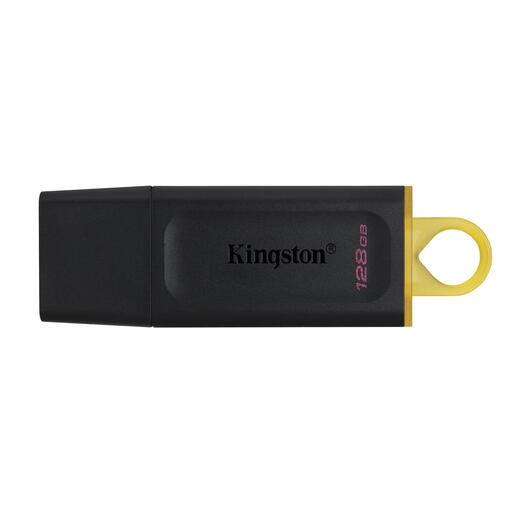
Kingston DataTraveler Exodia 128 GB
An option to compare if the archive computer has USB-A and the files you’ve measured fit within the capacity.
128 GB; USB 3.2 Gen 1 Type-A.
View at Joybuy
 No image available
SanDisk Ultra Flair 64 GB
An option to compare if the computer has a USB-A port and the backup you need fits within the capacity.
64 GB; USB 3.0.
View at Joybuy
 No image available
Kingston DataTraveler Exodia 64 GB
An option to compare for a USB-A computer if the files you’ve measured fit within the capacity.
64 GB; USB Type-A; USB 3.2 Gen 1.
View at Joybuy
 No image available
Kingston DataTraveler SE9 G3 64 GB
An option to compare if a 64 GB metal USB-A stick is suitable for the archive devices.
64 GB; USB 3.2 Gen 1; stated read speed up to 220 MB/s.
View at Joybuy
Frequently asked questions
How can you check whether a USB backup is usable?
Restore files to another location and open a few of them there. The National Cyber Security Centre advises testing a recovery. If you use archive software, also check that the application works with the restored data.
Does a copy of the catalogue automatically include all the photos?
Not necessarily. Adobe describes the Lightroom Classic catalogue as a database that includes information such as file locations and metadata. Check separately which original photo files need to be included for the archive’s software.
Does a Dutch community archive need to encrypt identifiable photos on a USB stick?
The Dutch Data Protection Authority lists encryption as one possible security measure. What is appropriate depends on the risks involved in processing the data. The Authority’s guidance doesn’t prescribe one specific type of encrypted USB stick for every photo catalogue.
Can a community archive keep identifiable photos indefinitely or simply publish them online?
Not without first assessing the applicable requirements. According to the Dutch Data Protection Authority, the GDPR does not set one general fixed retention period for personal data. The organisation must consider what is necessary for its purpose and whether other legal retention periods apply. Publishing online is a separate form of processing, and the Authority says consent is required in most cases. A USB backup does not, in itself, grant permission to publish.


