
Creating a large video delivery
You want the entire delivery folder to fit on the stick, and are looking for a write speed suited to how often and how quickly you transfer large files.


First, choose a stick with enough usable space for the entire delivery folder, and check that its connector and file system work with your customer’s device. For large transfers, compare the quoted write speed, not just the read speed. If the footage needs extra protection, consider whether encryption is suitable and whether your customer will be able to unlock the stick. Also keep a separate copy and check the files.
You want the entire delivery folder to fit on the stick, and are looking for a write speed suited to how often and how quickly you transfer large files.
Your computer and your customer’s device may have different connectors. So check both ports, as well as support for the chosen file system and video format.
You want to consider who can access the footage and what losing the stick could mean. Security also needs to be practical for your customer to use.
First, check that the video fits and can be opened on your customer’s device. Then consider write speed and any access protection.
| What to consider | What to look for when buying | Who should pay particular attention? |
|---|---|---|
| Space for the video | Compare the size of the complete folder with the free space on the stick; don’t rely on a general estimate of how many hours of video it can hold. | If I want to hand over the entire delivery folder, I need to know that everything will fit. Around 28% of consumers say usable storage space is their main purchasing concern. |
| Connector and file system | Check the USB port on both devices, and whether the receiving device can read the chosen file system and video format. Microsoft states that FAT32 has a limit of 4 GiB per individual file. | If my computer and my customer’s have different ports, I need a suitable connector and files that can be read on their device. Around 22% of consumers say device compatibility is their top priority. |
| Write speed | Compare the quoted write speed for the exact model and check your computer’s port. A quoted maximum doesn’t guarantee the speed you’ll get for your transfer. | For large folders or a tight schedule, I want to know how quickly files will be written to the stick. For around 22% of consumers, copying time is their main purchasing concern. |
| Access to sensitive footage | Weigh up the content and the risk of loss. If you choose encryption, check that your customer can unlock the stick on their device. | If unauthorised people shouldn’t be able to open the footage, I need suitable protection that my customer can also use. Around 17% of consumers put confidentiality first. |
| Checking and keeping a separate copy | Check the copied folder and open the files on the receiving device; also keep a separate copy. | I want to be able to check that the files have transferred properly without relying on the stick as the only copy. Around 11% of consumers say being able to verify delivery and keep a copy is their main concern. |
Read speed doesn’t tell you how quickly you can write files to the stick. Samsung quotes a maximum sequential read speed for the BAR Plus MUF-256BE4/APC, but no comparable write specification.
Look up the write speed for the exact model and check that your computer’s port is compatible with the stick.
According to Microsoft, FAT32 can’t store an individual file larger than 4 GiB, even if there is still plenty of free space on the stick.
Compare your largest video file with the limit and check which file system your customer’s device supports. Make a copy of any existing files before formatting, as formatting erases the contents.
You may need to reformat the stick or use a different transfer method.
Security won’t help with the transfer if your customer can’t unlock the stick on their system.
Check which systems and unlocking methods are supported in advance, and test access with your customer.
If there’s only one copy on the transfer stick, you’re relying on that single device to preserve the files.
Keep a separate copy and check that the video files you need open after copying. The Digital Trust Center recommends keeping and testing backups in different locations or formats.
The DataTraveler Max and IronKey Locker+ 50 G2 are separate product ranges for different transfer needs.
The BAR Plus MUF-256BE4/APC is a USB-A model; Samsung’s Type-C stick is a separate model.
The 256 GB Ultra Dual Drive Luxe SDDDC4-256G-G46 has both USB-A and USB-C connectors.
The Dual QuickStick #32040 and MyDual Pro #30318 are separate product ranges with USB-A and USB-C connectors.
This selection includes USB sticks for taking home videos to a customer. Check that the capacity, connector and any security features of each model are right for your transfer.
 No image available
For delivery folders that fit within 256 GB and where a quoted write speed matters.
USB 3.2 Gen 1; quoted write speed of up to 625 MB/s.
 No image available
For transfers between devices that need different connectors from those listed.
32 GB; USB 3.0, Lightning, USB-C and Micro-USB. Before buying, check which connector and file format your customer uses.
 No image available
For anyone looking for a 512 GB stick whose devices have a USB 3.0 port.
512 GB; USB 3.0. Check that your customer’s device can read the chosen file format.
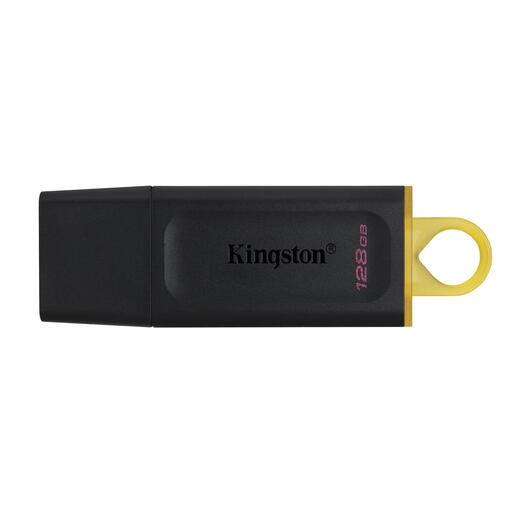 No image available
For a transfer via USB-A; check that this model’s capacity is large enough for your delivery folder.
The product name specifies USB 3.2. Check the connector on the devices being used and test that your customer can open the files.
 No image available
For a transfer via USB-A; check that this model’s capacity is large enough for your delivery folder.
The product name specifies USB 3.2. Check the connector on the devices being used and test that your customer can open the files.
Check the file system: according to Microsoft, FAT32 can’t store an individual file larger than 4 GiB, while exFAT supports larger files. Check in advance that your customer’s device can read exFAT, and save existing files elsewhere before formatting, as formatting erases the contents.
That depends on the connectors and file systems used by the devices. Apple lists exFAT as a format available in Disk Utility that’s compatible with Windows. Also check that the devices support the port and video format, and test a file on the devices your customer actually uses.
No. Don’t rely on a single storage location to keep your files safe. The Digital Trust Center recommends keeping backups in different formats or locations, and testing them by restoring files.
No. The Dutch Data Protection Authority doesn’t specify a universal USB stick requirement for every home video. Organisations that process personal data must determine appropriate security measures based on the risks involved. If the footage contains personal data, consider who needs access and what losing the stick could mean. The Dutch Data Protection Authority recommends using an encrypted USB stick to take data with you when it can’t be stored on the work server.
Not without checking which rights apply to the edit. The Dutch government states that you need the creator’s permission to use other people’s copyright-protected films, photos and music, and that private copies must not be distributed. Before delivery, check that you’re allowed to use and share the material.