Choose a USB stick after checking the total size of your project folders, your largest individual file and the ports on your workstation. Use the stick as an extra copy that you can check, not as your only archive: the Library of Congress advises keeping copies on different storage media and in separate locations. For confidential client files, access protection may be a consideration, but it does not replace a separate copy.
Who is this guide for?
Creators who want to protect their work
You keep original project files and want to be able to find them if a copy on your workstation is lost. The Library of Congress advises keeping multiple copies on different media and in separate locations; the Consumers’ Association warns that connected storage can also be affected by ransomware.
Creators with large project folders
You want to match the available space to your folders, saved versions and largest individual file. The time it takes to write files may also matter if you regularly archive large projects.
Creators working on confidential projects
You store clients’ work or data and want to check in advance who could access it if a stick goes missing. The Dutch Data Protection Authority describes the loss of a USB stick containing unencrypted personal data as a possible data breach.
What should you look for when buying?
First decide how you’ll store and check your copies. Then choose the capacity, connector and any security features to suit your files and workstation.
| What to consider |
What should you check? |
Who is this important for? |
| Being able to restore a copy |
Keep another copy on a different storage medium and in a separate location. After copying, open a few important files and disconnect the stick when you’re not using it. |
If I want to be able to replace a lost or damaged copy, I look beyond the capacity of a single stick. Consumers who prioritise being able to restore files make up around 31% of this buyer group. |
| Space for files and versions |
Measure the selected folders and the largest file, then check the capacity of the exact model and its file system. According to Microsoft, FAT32 has a maximum file size of 4 GiB. |
If I want to keep project folders and selected versions on one extra stick, I need to know what will actually fit. Consumers who prioritise having enough archive space make up around 25% of this buyer group. |
| Write time when archiving |
Compare the stated write speed for the same capacity and model. A manufacturer’s maximum won’t tell you exactly how quickly your computer can write files over an extended period. |
If I regularly copy large files, I want to know how long it takes to write them from my workstation. Consumers who prioritise copy time make up around 19% of this buyer group. |
| Connecting to your devices |
Check the USB-A and USB-C ports on the computers you use to copy and retrieve files, and compare them with the connector on the exact stick. |
If I move files between devices with different ports, I don’t want to find out that the connector doesn’t fit only when I try to plug it in. Consumers who prioritise connectivity make up around 13% of this buyer group. |
| Access to confidential files |
Check the unlocking method, computer compatibility and password process for the exact model. Keep an independent copy as well. |
If I take confidential or personally identifiable client files with me, I want to check in advance how access can be restricted if the stick is lost. Consumers who prioritise confidentiality make up around 12% of this buyer group. |
Common buying mistakes
-
Assuming a large stick is a complete archive
Having plenty of free storage doesn’t stop you losing files if the stick is your only copy. A connected backup can also be affected by ransomware.
First plan where you’ll keep separate copies and how you’ll check that important files still open. Then choose the capacity for the stick you’ll use as an extra copy.
Using an extra storage medium and managing separate copies take additional care.
-
Using the highest read speed to estimate backup time
Manufacturers list read and write speeds separately. So a high read speed doesn’t tell you how quickly your project files will be written.
Compare the stated write speed for the exact model and check that its connector suits your computer. Samsung warns that actual speeds may vary depending on the device and usage conditions.
-
Finding out after purchase that a file is too large
According to Microsoft, FAT32 has a maximum file size of 4 GiB, even if there’s still space available on the stick.
Check the size of your largest project file and which file systems are supported by the computers you’ll use to open the archive later.
-
Choosing an encrypted stick without a password and recovery plan
Kingston states that the IronKey Locker+ 50 G2 drive can be cryptographically erased if the administrator password is entered incorrectly ten times in a row.
Check that you can unlock it on your computer, manage passwords carefully and keep an independent copy of your files.
If you lose access to the encrypted stick, you may also lose access to the data stored on it.
Brands to consider
SanDisk
The Extreme PRO Dual Drive offers USB-A/USB-C connectivity for copying files between devices with both types of port.
- For the 1 TB SDDDE1-1T00-G46 model, SanDisk lists maximum speeds of 1,000 MB/s read and 900 MB/s write over USB 3.2 Gen 2.
- These are manufacturer maximums, not measurements taken on your workstation or proof of archive longevity. Check that the model suits your devices.
Kingston
The DataTraveler Exodia offers USB-A connectivity, while Kingston describes the IronKey Locker+ 50 G2 as designed for secure storage.
- Kingston lists USB 3.2 Gen 1 and various capacities for the Exodia. For the IronKey Locker+ 50 G2, Kingston specifies hardware encryption, USB-A and capacities from 32–256 GB.
- The IronKey’s features don’t automatically apply to other Kingston sticks. Kingston states that entering the administrator password incorrectly ten times in a row can result in the drive being cryptographically erased.
Samsung
The FIT Plus is a compact USB-A model to consider if you plan to leave the stick connected to your workstation.
- For the 128 GB FIT Plus MUF-128AB/APC, Samsung lists sequential read speeds of up to 400 MB/s.
- Samsung says actual speeds may vary depending on the device and usage conditions. Read speed isn’t write speed, and it doesn’t prove that permanently connected storage is safe as your only archive copy.
Lexar
The JumpDrive P30 is worth comparing if you want to take both read and write specifications into account.
- For the 1 TB JumpDrive P30, Lexar lists maximum read and write speeds of 450 MB/s over USB 3.2 Gen 1.
- These are manufacturer maximums. Before buying, check the model, connector and compatibility with your own workstation.
USB sticks at Joybuy
This selection includes USB sticks for keeping an extra copy of your digital art. Compare the stated capacity and connector with your files and workstation, and decide how you’ll keep an independent copy.
 No image available
Kingston DataTraveler Exodia DTX 256 GB USB 3.2 Gen 1
An option if your selected project files fit within the stated capacity.
256 GB storage and USB 3.2 Gen 1; the product title lists write speeds of up to 625 MB/s. This is a stated maximum, not a measurement taken on your workstation.
Joybuy
 No image available
SanDisk Ultra Flair 64 GB USB 3.0
An option if 64 GB is enough for your selected files and you use a USB-A port.
The product information lists USB 3.0 and software-based password protection with 128-bit AES. Check that you can unlock it on the computer you’ll use to open the files.
Joybuy
 No image available
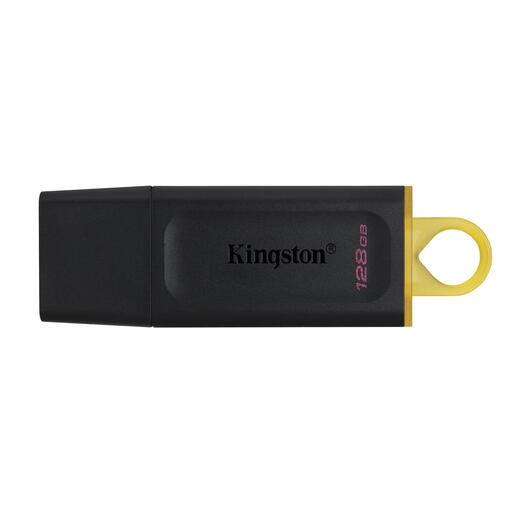
Kingston DataTraveler Exodia 128 GB
A USB-A option if 128 GB suits the files you want to keep as an extra copy.
The product information lists 128 GB, USB Type-A and USB 3.2 Gen 1.
Joybuy
 No image available
Kingston DataTraveler Exodia 64 GB
A USB-A option if your selected project files fit within 64 GB.
The product information lists 64 GB, USB Type-A and USB 3.2 Gen 1.
Joybuy
 No image available
Kingston DataTraveler SE9 G3 64 GB, 220 MB/s
A USB-A option if the stated capacity suits your selected files.
The product information lists 64 GB, USB Type-A and USB 3.2 Gen 1, with write speeds of up to 100 MB/s. The product name also states 220 MB/s without specifying whether this is read or write speed.
Joybuy
Frequently asked questions
Can you archive your digital art on a USB stick alone?
Not if you want to be able to restore the files if that stick fails. The Library of Congress advises keeping copies on at least two different storage media and in separate locations. Also check that important files open from a copy, and, following this advice, transfer saved copies to current storage media roughly every five years.
Which file system should you choose for a large project file?
First check the file size and what’s supported by the computers you’ll use to open it later. According to Microsoft, FAT32 has a maximum file size of 4 GiB; exFAT has a higher limit. Formatting doesn’t replace keeping a separate copy of your files.
Should your backup stick stay connected to your workstation?
For a separate backup, the Consumers’ Association advises connecting the USB stick only when you’re making the backup. Ransomware can also encrypt files on connected storage. After copying, check that important files are readable, then disconnect the stick.
What can you do if the stick fails sooner than you expected?
For a consumer purchase in the Netherlands, the seller must, according to ACM ConsuWijzer, resolve at no cost any issue with a product that, under normal use, doesn’t meet what you could reasonably expect. This could mean repair, replacement or a refund. It won’t automatically restore lost files, so keep separate copies.
Is encryption legally required when you store digital art at home?
Not simply because you store digital art at home: the Dutch Data Protection Authority describes an exemption from the GDPR for exclusively personal or household use. This exemption may not apply to professional use. The Authority describes the loss of a USB stick containing unencrypted personal data as a possible data breach; the security you need for your project depends on its content and how you use it.


