
Volunteer who needs to restore the accounts
You make copies of club files at home and want to be sure you can actually restore them after a problem. The National Cyber Security Centre advises testing backups by opening files from the copy.


Choose a USB stick that connects to both your home computer and the device you’ll use for recovery, and that has enough space for your files and future copies. Use it as an additional copy, not your only one: the National Cyber Security Centre advises keeping multiple backup versions and testing recovery. If your club files contain personal data, assess the risks to decide what access protection is appropriate; an encrypted stick also requires password and access management.
You make copies of club files at home and want to be sure you can actually restore them after a problem. The National Cyber Security Centre advises testing backups by opening files from the copy.
If the files contain personal data, the club must decide on appropriate security based on the data and the risks. The Dutch Data Protection Authority emphasises that organisations must protect personal data properly.
You make the copy on one computer, but may need to open it on another device. So check the ports on both devices before choosing a stick.
First decide how you want to restore and protect your files. Then check that the connections and capacity suit the devices and files you use.
| What to consider | What should you check? | Who is this important for? |
|---|---|---|
| Restorable copy | Select the folders you need to include, keep a separate copy and try opening or restoring files from the stick. | If I make a copy, I want to know whether I can really restore my files later. Around 36% of consumers prioritise being able to restore their files. |
| Confidentiality | Decide what data will be stored on the stick, who needs access and how authorised volunteers will retain access. | If membership data is on a stick, I want to stop unauthorised people from reading it. Around 29% of consumers prioritise confidentiality. |
| Connections | Check whether both your home computer and the recovery device support USB-A or USB-C. | If I need to open files on different devices, I want the plug to fit both. Around 21% of consumers prioritise the connection. |
| Storage space and copying time | Check how much space the selected folders take up and allow for future copies. If you make copies frequently, compare the write speed of the exact model. | If I need enough space for files and future versions, I also want copying to take a reasonable amount of time. Around 14% of consumers prioritise storage space and copying time. |
A single copy on one stick is still vulnerable to loss, faults or an error that only comes to light when you try to restore your files.
Keep a separate copy and test whether you can open or restore files before relying on the stick.
The right level of security depends on the data, who has access and the possible consequences of loss. The Dutch Data Protection Authority emphasises that organisations must take appropriate security measures.
First decide what data will be stored on the stick and who needs to be able to open it. Then choose access protection that suits the risks.
When you make a backup, you write files to the stick. The stated read speed doesn’t tell you how quickly it can write them.
For the exact model, compare the write speed if it’s listed. Bear in mind that your computer and how you use it can also affect transfer speeds.
According to Kingston, data on the Kingston IronKey Locker+ 50 G2 can be erased if an incorrect administrator password is entered repeatedly.
Agree in advance who will manage the stick, how authorised volunteers will access it and how a copy will be kept elsewhere.
The product ranges reviewed include everything from basic USB-A sticks to models with hardware encryption.
According to SanDisk, the 128 GB Ultra Dual Drive Luxe reviewed has both USB-A and USB-C connections for devices with different ports.
The BAR Plus range is a USB-A option if you’re looking for a removable copy.
The 16 GB Store ’n’ Go Secure Pro reviewed is a USB-A model with password protection, according to Verbatim.
These USB sticks are designed for storing and transferring an additional copy of club files. Check the capacity and connection you need for each model.
 No image available
An option for storing and transferring files as an additional copy.
Capacity: 64 GB.
 No image available
Can be used as an additional copy of your files. Check that the connection suits your computer and recovery device.
Capacity: 128 GB. Connection: Type-A.
 No image available
An option for storing and transferring files. Match the capacity to the folders you want to copy.
Capacity: 64 GB. Connection: USB 3.0.
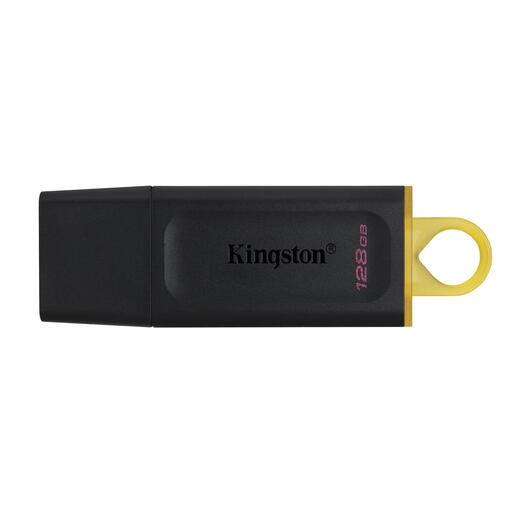 No image available
Can be used to store and copy files as an additional backup.
The product name specifies USB 3.2.
 No image available
An option for storing and transferring files. Check that 64 GB is enough for the selected folders.
Capacity: 64 GB. Design: Metal. Connection: USB 3.2 Gen 1.
Don’t use the stick as your only remaining copy. The National Cyber Security Centre advises keeping multiple versions on different types of media, with one copy stored elsewhere. You should also test that you can restore files. This is security advice, not a general legal requirement to follow that exact approach.
There is no general, fixed requirement to use encrypted USB sticks. If the club processes personal data, it must decide on appropriate security based on the risks. The Dutch Data Protection Authority emphasises that the measures needed depend on those risks. So assess what data will be stored on the stick and who needs access.
Check that the expected files are on the stick, then try opening or restoring a few files from the copy. The National Cyber Security Centre advises testing backups so you know whether recovery works.
Find out what data was on the stick and assess the risk to the people concerned. According to the Dutch Data Protection Authority, that risk determines whether you need to report the incident to the Dutch Data Protection Authority (AP) and notify the people affected. A loss does not automatically mean that every notification is required.
For a consumer purchase, the manufacturer’s warranty is separate from your statutory rights under Dutch law. If a product is faulty, contact the seller, according to ACM ConsuWijzer. Check whether you’re buying privately or on behalf of the club, as this consumer guidance does not determine which consumer rights apply when the club makes the purchase.