What should you look for when buying?
Cardioid USB condenser microphone
Suitable when: you perform from a fixed position in a reasonably quiet room and want to capture vocal nuances.
Bear in mind: a greater distance can sound more natural, but it also picks up more of the room; positioning remains important.
Dynamic USB microphone for close-up speaking
Suitable when: you can stay close to the microphone and want to take background noise in the room into account.
Bear in mind: speaking close to the microphone limits your freedom of movement, and won’t automatically eliminate reverb or loud exclamations.
A setup that moves with you
Suitable when: moving around the room is an essential part of your monologue.
Bear in mind: a fixed USB microphone won’t follow you; first consider whether you can limit your movement or need a different setup.
Next, check that you can connect the microphone easily and monitor the recording as you go.
| Concern |
What to look for |
Who is this mainly relevant to? |
| Room acoustics and clarity |
Make a test recording from your performance position and check the pickup pattern and placement. |
If you record at home, you don’t want the room’s acoustics to overpower your words. Around 33% of consumers prioritise controlling room acoustics. |
| Quiet and loud passages |
Test both extremes and listen to check whether the processing suits your performance. |
If you whisper as well as deliver powerful exclamations, you’ll want to preserve your vocal dynamics. Around 27% of consumers prioritise this. |
| Connecting and monitoring it yourself |
Check the connection, supplied cable and direct headphone monitoring. |
If you record on your own, you’ll want to connect easily and check what the microphone is capturing. Around 20% of consumers prioritise being able to manage the recording workflow themselves. |
| Freedom of movement |
Play back a full scene recorded from the positions you plan to use. |
If movement is part of your performance, you won’t want to be tied to one fixed speaking position. Around 20% of consumers prioritise freedom of movement. |
USB microphones at Joybuy
These product picks focus on fixed USB setups for spoken-word recordings, with directional pickup patterns.
 No image available
USB Condenser Microphone, Cardioid Pattern
The stated cardioid pickup pattern may suit a setup with one speaker in front of the microphone.
The product description mentions a gain control, mute button, headphone socket for zero-latency monitoring, boom arm, shock mount and pop filter.
Joybuy
 No image available
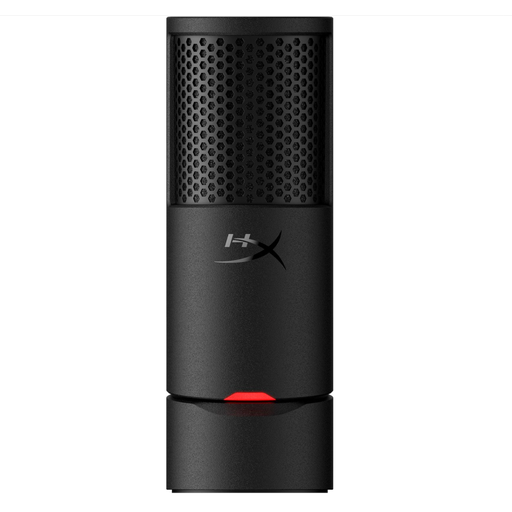
HyperX SoloCast 2 USB Gaming Microphone, Black
The stated cardioid pattern suits a fixed setup with one speaker in front of the microphone.
The product description mentions a USB-C to USB-A cable, built-in shock mount and pop filter, mute button and adjustable stand.
Joybuy
 No image available
Razer Seiren V3 Mini Quartz USB Microphone
The stated supercardioid pattern is designed for a directional microphone setup; make a test recording to see how it performs in your chosen space.
The product information describes a compact USB microphone with tap-to-mute controls.
Joybuy
Frequently asked questions
How should I start a test recording of my monologue?
Record from the position where you plan to perform, then listen back to both the quietest and loudest passages. If needed, adjust the distance, angle or input level, and check for plosives and room reverb before recording a full scene. RØDE’s advice on distance applies to the brand’s own microphones and isn’t a fixed setting for every model.
Why can I hear my voice twice in my headphones?
This can happen if you monitor directly through the microphone while your recording software also sends your voice back at the same time. In this situation, RØDE recommends muting the software playback of your voice while recording and turning it back on for playback.
Do I need to buy anything else with the microphone?
Check what’s included in the specific set and which connections your computer or tablet has. According to RØDE, the NT-USB Mini comes with a USB-C to USB-A cable; Sennheiser offers a Profile set with a desktop stand and a Streaming Set with an arm. Whether you need a different cable or mount therefore depends on the set and setup you choose.
What are my rights when buying online in the Netherlands?
For many applicable distance purchases from a business, you have a 14-day cooling-off period; check the terms and any exceptions. You’re also entitled to a product that is fit for purpose. According to the Dutch government, Dutch statutory warranty has no fixed duration, and the retailer is your point of contact if there’s a problem.
Can I publish a recorded monologue using someone else’s text?
Not simply because you made the recording yourself. The Dutch government distinguishes between making a copy for personal use and distributing or making protected work available to the public. Check the rights to the text before publishing and obtain permission if necessary. If your publication contains other people’s personal data, privacy rules may also apply.


