Who is a USB microphone for speech practice relevant for?

Speakers who want to listen back to their language switches

If you’re practising a speech in two languages, recording yourself lets you assess your pronunciation, pauses and clarity in each passage. Headphone monitoring and a test recording can help you check your setup; the microphone itself doesn’t assess or translate your text. The features described are from RØDE and Samson.

Speakers practising in a noisy room

If you practise close to the microphone in a room with background noise, you could compare directional dynamic microphones. A directional pickup pattern doesn’t mean that all background noise will disappear. Audio-Technica and Samson describe features of models designed for this kind of use.

Speakers who might use a PA system later

If you want to record via USB at home and might use the same microphone at a venue, it’s worth looking at XLR options too. The connection options for the Samson Q2U and Shure MV7+ are based on information from their manufacturers; also check which inputs the PA system has.

What should you look for in a microphone for your speech?

What to consider What should you check? Who is this important for?
Clarity Check the pickup pattern and positioning, and whether you can make a test recording where you plan to speak. If I want to hear whether both language passages sound clear, I’ll focus on positioning and background noise. Around 36% of consumers prioritise clarity.
Listening back Check whether there’s a headphone output and how monitoring and playback work on your computer. If I want to listen back to my pauses and transitions, being able to monitor my voice directly is important. Listening back is the top priority for around 29% of consumers.
A simple setup Check computer compatibility, the cable and the stand or mount included with the exact variant. If I want to be able to practise at the table straight away, I’ll want to know in advance what I need to position and connect the microphone. Around 21% of consumers prefer a simple setup.
Possible stage use Ask whether a suitable XLR microphone input is available, and check the cable and stand requirements for the venue. If I might take the same microphone to the showcase, I’ll check the connections and setup there first. Possible stage use is the top priority for around 14% of consumers.

Pitfalls when buying a microphone for a speech

  • Confusing USB with a connection for the venue’s PA system

    A microphone that works with a computer via USB won’t automatically fit the microphone input on a PA system.

    Ask the venue which input is available, then compare USB/XLR models and the cables you’ll need.

    If the connection isn’t compatible, you may need a different microphone or cable.

  • Assuming a directional pickup pattern removes all background noise

    A directional pickup pattern doesn’t guarantee a quiet recording in every room. The speaker’s distance and position still matter.

    Make a test recording from the distance you plan to speak at, and listen for background noise during the language switches too.

  • Assuming the standard package suits every setup

    The packages mentioned vary. Samson lists a desktop tripod stand and XLR cable among the Q2U’s included items, while Shure doesn’t list a stand in the MV7+ standard package.

    Compare what’s included with the exact variant against your table or stage setup.

Brands to compare

RØDE

The NT-USB Mini is a compact option for a desk. According to RØDE, the NT-USB+ adds features including a detachable pop filter and headphone monitoring controls.

  • The manufacturer describes USB recording, desktop positioning and headphone monitoring for the models mentioned.
  • Check the cables and included accessories for each model. Based on their connections, the USB models mentioned aren’t XLR microphones.

Audio-Technica

The European product information describes the AT2040USB as a directional dynamic USB microphone with direct monitoring, designed for a single voice.

  • Its hypercardioid pickup pattern and headphone output make this model worth comparing for close-up use.
  • The stated sound isolation is a manufacturer claim, not a guarantee for every practice room. Don’t confuse the AT2040USB with the XLR AT2040.

Samson

Samson describes the Q2U as a dynamic microphone with USB and XLR, plus accessories for a desktop setup.

  • According to Samson, it comes with a headphone output, desktop tripod stand, windscreen, and USB and XLR cables.
  • Check whether the venue has a compatible XLR input. The manufacturer’s claims about reducing background noise aren’t based on independent measurements.

Shure

According to Shure, the MV7+ is a USB-C/XLR option with headphone monitoring and adjustable software features.

  • Having both connection options may be useful if you want to use USB as well as a suitable XLR input.
  • A stand isn’t listed in the standard package. Check software compatibility if you want to use the features mentioned.

Joybuy product picks for speech practice

This selection includes USB microphones and wireless microphones with a USB-C receiver. Check that each model’s connection suits your computer or phone and the way you want to record your speech.
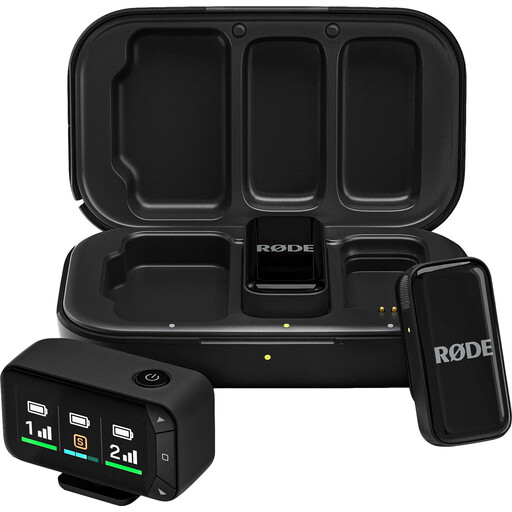
RØDE Wireless Micro with two microphones, receivers and charging case

RØDE Wireless Micro – Compact Wireless Microphone Camera Kit

For computer use, check that the USB-C receiver works with your computer and recording setup.

The product name lists two microphones, a camera and smartphone receiver, and a charging case; the receiver is USB-C.

View at Joybuy
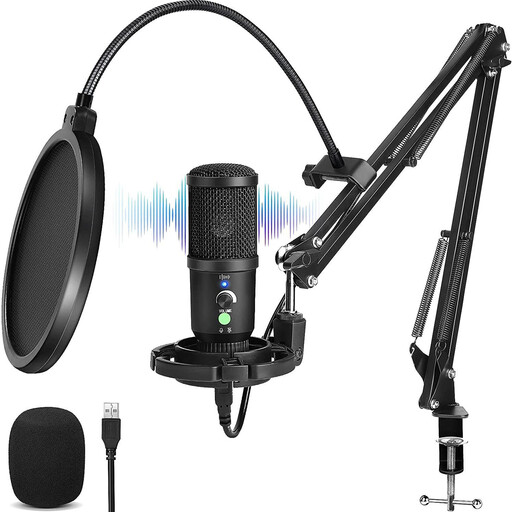
USB condenser microphone with cardioid pickup pattern and monitoring

USB Condenser Microphone

This option is worth comparing for a fixed practice spot; check that you have enough room to position it on your desk.

The product name lists a cardioid pickup pattern and zero-latency monitoring.

View at Joybuy
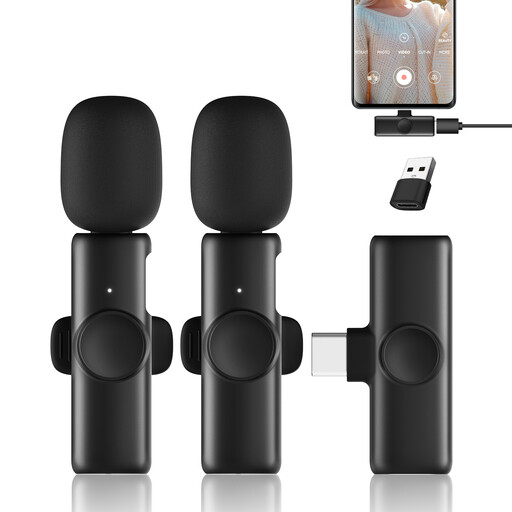
Moman MS1X(C) wireless lavalier microphone for USB-C Android phones

Moman MS1X(C) Wireless Lavalier Microphone

This set is designed for use with a USB-C Android phone; check that it’s compatible with the device you want to practise with.

The product name lists two transmitters and one receiver (2TX&1RX).

View at Joybuy
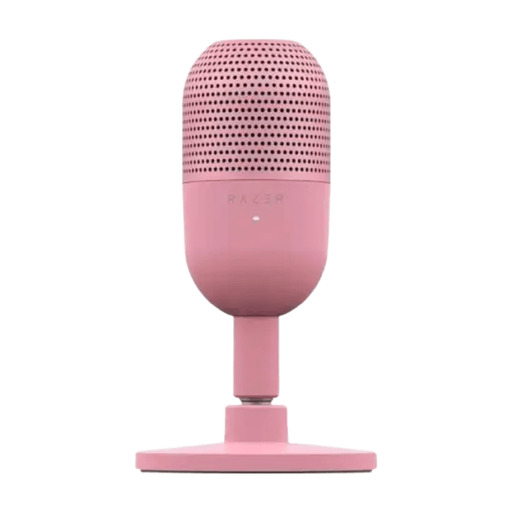
Razer Seiren V3 Mini Quartz compact USB microphone with tap-to-mute function

Razer Seiren V3 Mini Quartz

The USB connection makes this model worth comparing for USB voice recording.

The product name describes a compact USB microphone with a tap-to-mute function.

View at Joybuy

Frequently asked questions about microphones for speech practice

Can a USB microphone assess my pronunciation or translation?

No. The features mentioned are for recording and listening, not assessing a translation. Record both passages and listen back yourself; you could also ask someone who speaks the languages for feedback.

How do I get started with practising and listening back?

Connect the microphone with a suitable cable, select it in your recording device’s audio settings and start with a short test recording. The RØDE NT-USB Mini manual explains how to select the microphone as an audio input and output; for other models, consult their own manuals.

Can I connect the same microphone directly to a PA system?

You can’t tell from the USB connection alone. Samson lists USB and XLR for the Q2U, and Shure lists those connections for the MV7+. Ask the venue which microphone input is available before relying on it for stage use.

What can I do if a microphone I bought online doesn’t work as promised?

If a product is faulty, the retailer is your point of contact in the Netherlands. According to the Dutch Government, distance purchases generally come with a 14-day cooling-off period; check the terms and any exceptions that apply to your purchase.

What should I consider if other people can be heard in my recording?

Consider who can be heard in the recording and how you intend to use or share it. The Dutch Data Protection Authority describes an exception for images that are kept private or shared within a very limited circle; this guidance isn’t a general statement about every audio-only recording.
