For close-miked poetry recordings, a dynamic USB microphone is a sensible option to try if your room is audible and you can consistently stay close to the mic. A USB condenser microphone may also suit a quiet room with a fixed setup. Compare test recordings, paying attention to plosives, speaking distance, positioning and headphone monitoring.
Who is this relevant to?
Poet recording in a room with noticeable noise
You’re recording a single voice up close and want to hear how much room noise gets into the recording. Shure describes the MV7+ as a dynamic microphone for close-miked speech; RØDE gives the NT-USB Mini a directional pickup pattern aimed at the speaker.
Poet with a wide vocal range
You switch between quiet lines and powerful accents, and want to check plosives and input levels in a test recording. Manufacturers list features such as a pop filter and level control on specific models; try them out with your own text.
Poet recording at a fixed desk
You want to position the microphone in the same place each time, connect it easily and hear yourself while recording. Check that the stand, any boom arm, connection cable and headphone monitoring suit your reading position and recording device.
What should you look for when choosing?
Dynamic USB microphone
A good fit if: you’re recording solo, can stay close to the microphone and hear too much room noise in your test recording. Shure describes the MV7+ specifically for close-miked speech recordings.
The trade-off: a dynamic model won’t silence a reverberant room. Check the stand, too, and listen to quiet lines, loud accents and plosives.
USB condenser microphone
A good fit if: your room is quiet enough, you can point the microphone at a fixed position, and a desk setup or headphone monitoring matters to you. Their manufacturers describe the NT-USB Mini, AT2020USB-X and Profile as cardioid condenser microphones.
The trade-off: a cardioid pattern won’t eliminate reverberation. For the NT-USB Mini, RØDE recommends around 10–15 cm for uses such as voice-over; don’t treat this as a fixed rule for other models.
| What to consider |
What to look for |
Who is this important for? |
| Room noise |
Make a test recording in your chosen spot from your normal speaking distance, and listen to the silences between lines, too. |
If I’m recording in a room with noticeable noise, I want to know how clearly my voice comes through above the background sound. That’s why around 29% of consumers prioritise the balance between voice and room noise. |
| Plosives and vocal dynamics |
Test p and b sounds, quiet lines and powerful accents; listen for popping and distortion. |
When reciting a poem with whisper-quiet lines and emphatic passages, I want to assess the sounds and levels clearly. Around 23% of consumers focus first and foremost on plosives and vocal dynamics. |
| Speaking position |
Check that the stand or boom arm can hold the microphone at the right height and distance without getting in the way of your reading position. |
If I’m reading aloud from a fixed spot, I want to be able to position the microphone correctly every time. Around 18% of consumers prioritise a stable speaking position. |
| Monitoring |
Check whether the exact model has a headphone output and how the volume or mix is controlled. |
Anyone who wants to check the sound as they recite can benefit from suitable headphone monitoring. Around 18% of consumers give monitoring the highest priority. |
| Connection |
Compare the port on your recording device with the cable and compatibility of the exact version. |
If I want to get started without extra connection issues, the cable and device need to work together. Around 12% of consumers choose mainly on the basis of the connection. |
Common mistakes
-
Assuming a directional microphone will eliminate all reverberation
You can point a cardioid microphone at the speaker, but the recording also depends on the distance and the room’s acoustics.
Make a test recording where you actually plan to record and assess the result before choosing based only on the pickup pattern.
-
Taking a pop filter or high sample rate as proof of a better recording
A pop filter is designed to reduce plosives; a quoted converter specification doesn’t tell you how your voice, room and setup will sound together.
Test p sounds, quiet lines and powerful accents, then choose the controls and positioning that work for your recitation.
-
Assuming every version comes with the same cable or stand
Cables and included setups can vary between versions, so a microphone may not connect straight away to your device or suit your reading position.
Before buying, check the connections and what’s included with the exact version you’re considering.
Brands to compare
Shure
Shure describes the MV7+ as a dynamic USB/XLR microphone for close-miked speech recordings.
- Shure lists USB-C, XLR and a 3.5 mm headphone output.
- Voice isolation and automatic level control are features listed by Shure; they don’t guarantee that room reverberation will disappear. Also check that the connections and stand suit the version you’re buying.
RØDE
According to RØDE, the NT-USB Mini is a compact cardioid USB condenser microphone for a desk or a compatible boom arm.
- RØDE lists a built-in pop filter, detachable stand and direct headphone monitoring.
- The recommended distance of around 10–15 cm applies to the NT-USB Mini for uses such as voice-over. Check the cable included with the version you’re looking at.
Audio-Technica
The AT2020USB-X is a cardioid USB condenser microphone for a fixed recording position and direct monitoring.
- Audio-Technica lists a headphone output, mix control and a converter of up to 24-bit/96 kHz.
- That converter specification alone doesn’t prove that a poetry recording will sound better in your room. Check which accessories are included with the version you’re buying.
Sennheiser
The Profile USB is designed for a fixed USB-C setup with controls on the microphone.
- Sennheiser lists controls for gain, mix and headphone volume, plus a tilting mount.
- Check that the height and the set on offer suit your reading position; these features aren’t a comparative listening test.
USB microphones for a fixed setup
These Joybuy product picks are USB microphones for a fixed desk setup, with features worth checking for close-miked speech recordings.
 No image available
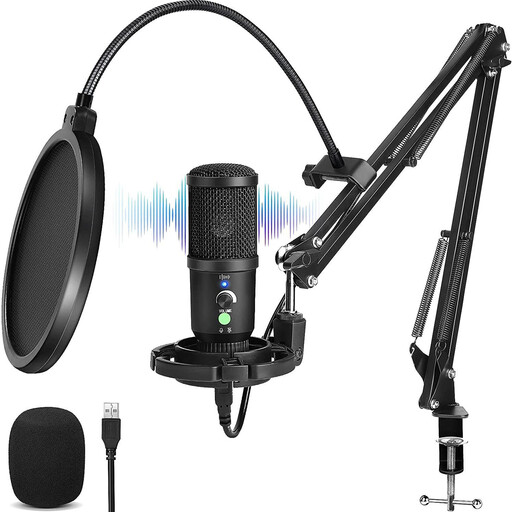
USB condenser microphone with cardioid pickup pattern
An option to consider if you want a fixed USB setup and to monitor your recording as you go.
Cardioid pattern; pop filter in the accessory kit; 3.5 mm headphone jack.
View at Joybuy
 No image available
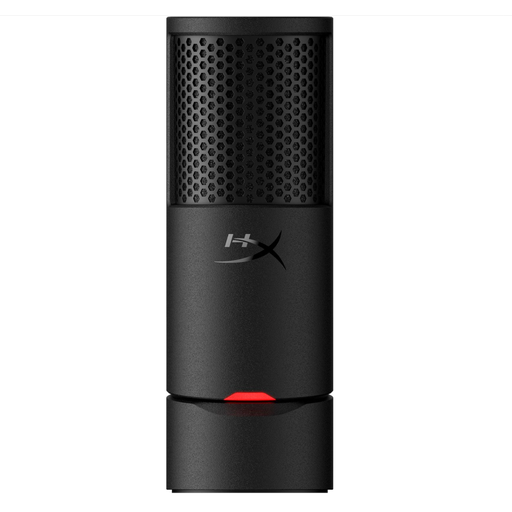
HyperX SoloCast 2 USB microphone
An option for a desk setup where a pop filter and adjustable stand are useful features.
Cardioid condenser capsule; built-in pop filter; compact adjustable stand; USB-C to USB-A connection.
View at Joybuy
 No image available
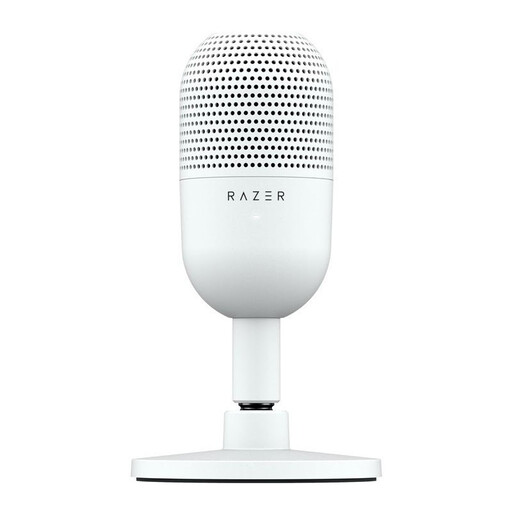
Razer SEIRÉN V3 MINI White USB microphone
A compact option for a desktop setup if you want mute controls on the microphone.
Supercardioid pattern; USB connection; tap-to-mute control; white version.
View at Joybuy
Frequently asked questions
How close should you place the microphone when reciting?
Start with the distance recommended by the manufacturer for your model and record a short passage in your chosen spot. For uses such as voice-over, RØDE recommends around 10–15 cm for the NT-USB Mini; this isn’t a general distance rule for USB microphones.
What should you check during setup and use?
Check your device’s port and the cable included, select the microphone as your recording source and make a short test recording. RØDE says the NT-USB Mini works without a separate driver, but also notes that a different cable or adapter may be needed for certain device ports.
Do you need to pay extra for a warranty if the microphone breaks?
You don’t need to take out a paid extended warranty to claim your statutory rights under Dutch consumer law. According to the Government of the Netherlands, there is no fixed statutory warranty period; if a product is faulty, the seller is your point of contact. If you’re considering an extended warranty, check what additional rights it actually gives you.
Can you publish a recording of someone else’s Dutch poem online?
Not automatically. According to the Government of the Netherlands, the exception for copies for personal use doesn’t give you a general right to make other people’s copyright-protected texts available to the public. Before publishing, check whether you need permission or another valid legal basis; buying a microphone doesn’t give you the right to publish.
Does a CE mark prove that a USB microphone is suitable for recitation?
No. The European Commission describes CE marking as part of product conformity with applicable EU rules, not as an assessment of recording quality. The rules that apply to a specific version need to be established for each product.


