
Poet performing in an ordinary room
You record at home without a dedicated recording space, and can stay close to a single microphone. You want to assess clarity and positioning rather than rely on a promise that the microphone will remove echo.


If you mainly record close to the microphone, a dynamic USB microphone is a practical choice. A cardioid USB condenser microphone may be a better fit for a quiet, fixed desk setup. Record both a soft introduction and a loud line of poetry, then listen back. Positioning, gain, plosive sounds and compatibility with your device all matter, and none of these microphones will automatically silence a reverberant room.
You record at home without a dedicated recording space, and can stay close to a single microphone. You want to assess clarity and positioning rather than rely on a promise that the microphone will remove echo.
You alternate between a quiet spoken introduction and emphatic or louder lines. You want to check the input level and plosive sounds in a test recording.
You want to record via USB and listen back straight away, with clear controls and a stand or suitable mount for your workspace.
First, consider whether you can stay close to a microphone while performing and how quiet your recording space is. Then check that you can record both the soft introduction and the loudest line clearly, and that the connection and stand suit your device and desk.
| What to consider | What should you check? | Who is this important for? |
|---|---|---|
| Clarity in the room | Check the polar pattern and mounting options, and whether you can keep the microphone close during a test recording. | In an ordinary room, I want to record my voice clearly without relying on echo removal. Around 36% of consumers prioritise clarity in their recording space. |
| Varying speaking volume | Record quiet and loud passages; assess peaks, clarity and plosive sounds. | For a quiet introduction followed by an emphatic poem, I want to avoid soft words getting lost or loud lines distorting. Around 29% of consumers prioritise control over changes in vocal volume and plosive sounds. |
| Connecting and listening back | Check the USB port, cable, headphone socket and included stand for the exact version you’re considering. | I want to connect the microphone to my own device, position it properly and listen back to my recording straight away. Around 21% of consumers prioritise a straightforward USB desk setup. |
| Expandability and a complete setup | Decide whether you only need USB or also want to use XLR; check which cables and mounts are included in the set you choose. | If I want to use XLR in future, I want to know what equipment and accessories I’ll need. Around 14% of consumers prioritise expandability and a complete setup. |
Directional recording and any processing are no substitute for good positioning or a quiet room. Claims about isolation or noise cancellation come from the manufacturer and do not guarantee a silent recording.
Try the microphone up close in the intended position and listen back to the recording. Assess the room’s acoustics separately from the microphone’s features.
Cables, stands and other included accessories vary between models and versions. An XLR output is also not the same as a USB connection to a computer.
Compare the contents of the exact package with your device and recording space. To record via XLR on a computer, you’ll need a suitable audio interface.
A setting that works for a quiet voice may cause clipping during an emphatic line. A voice that’s too quiet or too far away may also be difficult to hear.
Test the full range of volumes in your performance, and check both the loudest peaks and the clarity of the introduction.
The ATR2100x-USB is a dynamic handheld microphone for close-up speaking, with USB and an optional XLR connection.
The NT-USB Mini is a compact cardioid USB condenser microphone; the PodMic USB is a dynamic USB/XLR microphone for close-up speaking.
The Profile USB is a cardioid USB-C condenser microphone for a fixed recording space, with controls on the microphone.
The Q2U is a dynamic USB/XLR microphone for close-up spoken-word recording.
The MV7+ is a dynamic USB-C/XLR microphone with digital controls and processing via USB.
This selection includes USB microphones for spoken-word recording and desk setups. Compare the connections, positioning and features with your own way of performing.
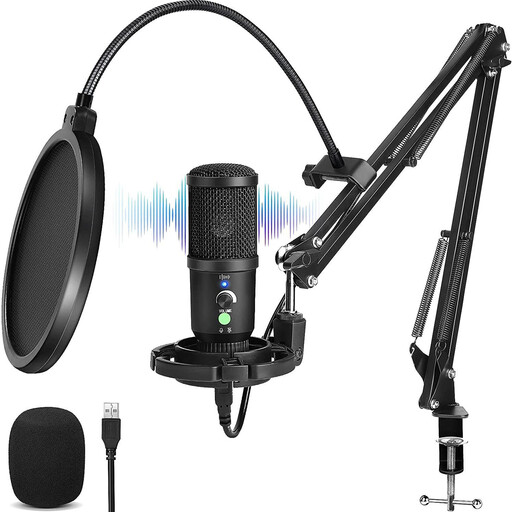 No image available
An option to compare if you want to record spoken word via USB and low-latency monitoring is important to you.
The product name lists a cardioid pattern and low-latency monitoring.
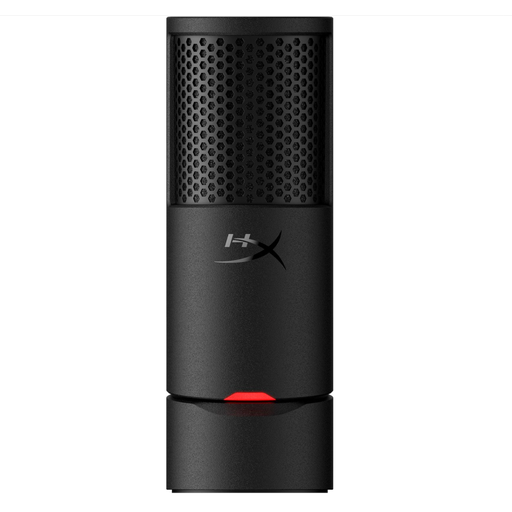 No image available
A USB microphone to compare if you’re looking for a desktop model for spoken-word recording.
Check that the connections and included setup suit your device and the microphone position you want.
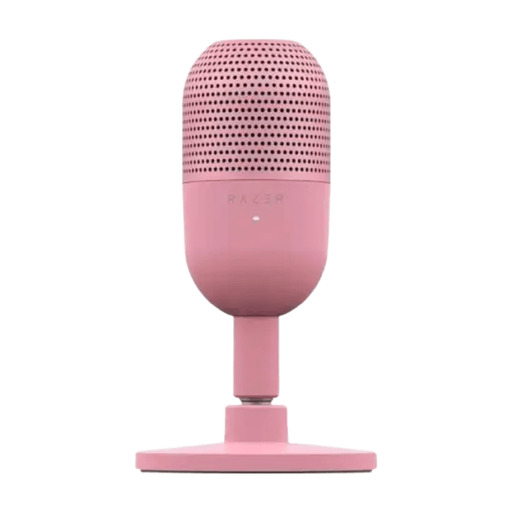 No image available
A compact USB microphone to compare if you’re considering a desk setup for spoken-word recording.
The product name lists tap-to-mute controls. Check that the positioning and controls suit your recording habits.
Make a test recording with both extremes and adjust the input gain so the loudest passage doesn’t clip. Also listen for whether the quieter words remain clear. According to the manual, a green indicator on the Sennheiser Profile USB doesn’t prove that a quiet voice or one recorded from too far away is loud enough.
You don’t need an audio interface to record via USB on a compatible device. If you want to record the analogue XLR output of a Shure MV7+, for example, on a computer, Shure says you’ll need a suitable audio interface. Also check that the USB port and included cable are compatible with your device.
Use a test recording to check the direction, distance and input gain, and use the pop protection supplied with your model. For the PodMic USB, RØDE recommends a distance of around 5–10 cm; this model-specific guidance does not automatically apply to other microphones.
ACM ConsuWijzer states that for an ordinary online product purchase, you generally have a statutory cooling-off period of up to 14 days after delivery, subject to legal exceptions. If a product does not do what you could reasonably expect under normal use, the seller is responsible for providing a solution under the statutory guarantee; a commercial warranty does not replace these rights.
Not without more. The Dutch government distinguishes between making a copy for personal use and distributing or making a text public. Before publishing, check who owns the rights to the poem and what permission or exception applies to your use; buying a microphone does not give you the right to publish.