Start by making a test recording from the spot where you plan to practise your museum talk. A microphone won’t remove room echo from a recording by itself. A directional dynamic USB microphone is a good fit if you can speak close to it; a USB condenser microphone with a desk stand may be more convenient for a simple desktop setup. Also check the connection, mounting options and ways to listen back to your voice.
Who is this guide for?
Speakers in echoey rooms
You practise in the same spot each time and mainly want to check that your words remain clear. The distance between your mouth and the microphone, as well as the room’s acoustics, deserve your attention. Shure explains that distance and positioning affect the balance between direct speech and reflected sound.
Speakers who want to record quickly
You want to connect the microphone at your regular practice spot without using a separate audio interface. Check in advance that the cable and connection are compatible with your recording device.
Speakers who want to listen back
You’re practising your intonation and pace and want to check your voice through headphones. Check whether each model has a headphone output, and make a recording you can play back too.
What should you look for?
Directional dynamic USB microphone
A good fit if: you can speak close to the microphone in your usual spot and want to record a single voice.
The trade-off: distance and positioning still matter; the recording pattern won’t eliminate room echo.
USB condenser microphone
A good fit if: you want a simple desktop setup and would like to monitor your voice through the microphone while practising.
The trade-off: check that the stand positions the microphone at your preferred speaking height; room acoustics still matter too.
For a regular practice spot, your choice mainly comes down to clarity, connectivity, playback and finding a practical position for the microphone.
| What to consider |
What to look for |
Who is this important for? |
| Clarity |
Try the speaking distance you intend to use and listen to check that your words remain clear. |
I want to judge from my usual spot whether my speech is easy to understand. Around 36% of consumers put clarity first. |
| Connection |
Check the USB port, included cable and audio input on your recording device. |
I want to connect the microphone directly to the device I practise on. Around 29% of consumers prioritise easy connectivity. |
| Playback |
Check whether the model has a headphone output, and make a test file you can play back. |
I want to assess my voice and the saved recording while practising. Around 21% of consumers prioritise listening back. |
| Positioning |
Check which stand or mount comes with the model and whether it suits your speaking height. |
I want to know in advance whether the microphone can be positioned properly in my regular spot. Around 14% of consumers first look for a complete, practical setup. |
Common mistakes when choosing
-
Assuming a directional microphone will solve all your room echo problems
Reflected speech is still part of the sound that reaches the microphone. Shure emphasises that a microphone cannot effectively separate direct speech from room echo.
Make a test recording where you plan to practise and compare speaking distances before treating the recording pattern as the deciding factor.
You may need extra time to adjust the position and make more test recordings.
-
Treating USB, XLR and included cables as interchangeable
Connections and included accessories vary by model. A USB connection and an XLR output are separate connection options.
Check which cable and mount are included with the exact model, and which port your recording device has.
Depending on your setup, you may need a suitable cable, stand or XLR equipment.
-
Confusing live monitoring with playing back a recording
Monitoring lets you listen while you speak, but it isn’t the same as recording the whole talk and listening back to it later.
Make a short test file, save it and play it back before practising your full museum talk.
Brands to consider
Audio-Technica
The ATR2100x-USB is a dynamic cardioid microphone with USB and a separate XLR connection for recording a single voice.
- The Dutch product information also lists a headphone output.
- The specifications don’t tell you how echo will sound in your room; positioning still matters.
RØDE
The NT-USB+ is a USB condenser microphone supplied with a desk stand and pop filter. The NT-USB Mini is a different model.
- RØDE lists headphone monitoring and volume and mix controls for the NT-USB+.
- Check the cables and compatibility for the exact model; don’t assume that accessories for the NT-USB Mini are also included with the NT-USB+.
Sennheiser
The Profile USB is a cardioid USB-C condenser microphone for desktop use. Sennheiser also describes a Streaming Set that includes an arm.
- Sennheiser lists gain, mix and volume controls, as well as a headphone output, for the Profile.
- Check whether the version on offer includes a desk stand or an arm; the specifications can’t predict how echo will sound in your room.
Shure
Shure describes the MV7+ as a dynamic USB-C/XLR microphone for speaking close to the microphone.
- Shure lists automatic level control and voice isolation as features of this model.
- These manufacturer features don’t prove that room echo will disappear; also check the mounting options for your regular spot.
Razer
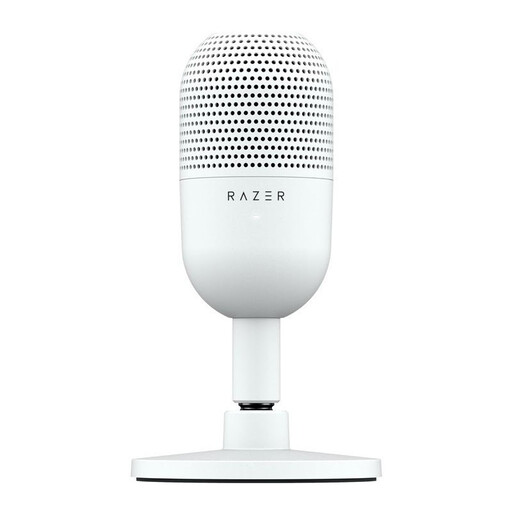
The Seiren V3 Mini is a compact USB condenser microphone with a supercardioid recording pattern.
- Razer lists a tilting stand and tap-to-mute control.
- These model specifications aren’t an independent test of speech clarity; check how you can monitor and record with your setup.
USB microphones at Joybuy
This selection focuses on USB microphones for recording speech from a regular spot. Check each model’s connection, positioning and playback options.
 No image available
USB condenser microphone with cardioid recording pattern
This cardioid USB condenser setup is suited to a regular speaking spot; check whether you can position the microphone at your preferred height.
View at Joybuy
 No image available
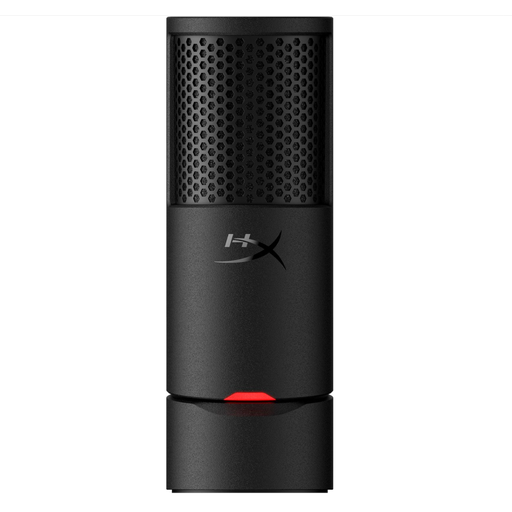
HyperX SoloCast 2 USB Gaming Microphone Plug & Play Cardioid Black
The product name describes a USB microphone with a cardioid recording pattern; check the connection and mounting options for your recording spot.
View at Joybuy
 No image available
Razer Seiren V3 Mini White
According to Razer, this compact USB microphone has a supercardioid recording pattern and a tilting stand; the product name also mentions tap-to-mute control.
View at Joybuy
Frequently asked questions
Should you position a USB microphone close to your mouth if your practice room is echoey?
Make a test recording in your usual speaking spot and compare microphone positions. Shure says a microphone can’t effectively separate direct speech from room echo, so speaking from further away may affect clarity.
Do you need a separate audio interface to record over USB?
Not if you’re connecting directly by USB to a compatible recording device. Check the port, cable and selected audio input; recording through an XLR output requires a suitable XLR connection.
What if the microphone turns out to be faulty after you buy it?
When you buy as a consumer in the Netherlands, you’re entitled to a product that is of satisfactory quality. The Dutch government says the retailer must provide a solution if there’s a problem; a manufacturer’s guarantee is in addition to your statutory rights.
Can you return a microphone bought online?
For eligible distance purchases from a trader, you generally have a 14-day cooling-off period. Before ordering, check the terms and any exceptions that apply to your purchase.
Can you record recognisable voices of other people while practising?
If you record only yourself, other speakers’ privacy isn’t involved. According to the Dutch Data Protection Authority, a sound recording in which someone else is recognisable may count as personal data. Whether the GDPR applies to a particular recording depends, among other things, on whether it is for private use or another purpose; this doesn’t amount to general permission to record other people or publish recordings.


