
Narrators in a quiet home office
If you record alone at a desk, a simple USB setup can be a good choice, with the microphone held securely at a practical distance.


For a seated film narrator, a USB microphone that can sit securely close to your mouth and lets you monitor your voice directly is a sensible starting point. In a quiet room, a compact cardioid condenser microphone may be all you need. If room noise is persistent, a dynamic USB microphone for speech with adjustable processing may be worth considering, but it won’t remove every sound. Also check the connection, whether you need a stand or boom arm, and whether extra controls will genuinely improve your recording.
If you record alone at a desk, a simple USB setup can be a good choice, with the microphone held securely at a practical distance.
If you can hear ventilation, echo or other room noise, position the microphone close to your voice and consider which controls or processing options suit your recording environment.
If you want to monitor your voice as you record or position the microphone out of shot, look at monitoring, controls and how the model can be mounted.
Start with the speaking distance and where the microphone will sit. Then consider what recording features or extra controls you really need.
| What to consider | What should you check? | Who is this important for? |
|---|---|---|
| Clear solo voice | Test the recording pattern from your usual speaking position and check that the microphone can sit close to the narrator, securely and at a consistent distance. | When I record a synopsis, I want my voice to remain clear and the microphone to stay at a fixed distance. Around 36% of consumers say clarity is their main concern when buying. |
| Room noise and echo | Make a test recording with the types of noise you get in your room. Shure says the MV7+ denoiser is designed for persistent noise, not sounds such as voices or keyboard clicks. | If you record with a fan running, or have echo or other background noise, you’ll want to know what positioning and processing can change. Around 29% of consumers prioritise reducing room noise. |
| Monitoring while recording | Check whether the exact model has a headphone output and direct monitoring; a mix control for computer audio is a separate feature. | If I want to hear mistakes or plosive sounds as I record, I need to be able to monitor my voice directly. Around 21% of consumers say monitoring is their main concern when buying. |
| Desk or in-shot positioning | Compare the supplied stand with the mount you need. Audio-Technica lists an optional shock mount for the AT2020USB-X. | If the microphone needs to sit in a particular place on the desk or out of shot, the right mounting option matters. Around 14% of consumers prioritise their desk or camera setup. |
Shure distinguishes between persistent noise, which the optional denoiser is designed to address, and sounds such as other voices or keyboard clicks, which it won’t completely remove.
Test the microphone at your actual speaking distance, with the sounds you expect during recording.
A test recording and any retakes will take extra time.
RØDE lists a built-in pop filter for the NT-USB Mini, but COMPUTER BILD reported that plosive sounds were still audible with this model.
Record a test sentence with p and b sounds, then adjust the angle, distance or filter if needed.
You may need to change your recording position, add a pop filter or record again.
Audio-Technica lists the shock mount for the AT2020USB-X as an optional accessory. RØDE says the NT-USB Mini comes with a USB-C-to-USB-A cable; check which cable you need for your device.
Compare what’s in the box for the exact version with the narrator’s position and your recording device’s connections.
You may need a different cable or mount if the supplied accessories don’t suit your setup.
The tested Razer Seiren V3 Chroma is a different model from the Seiren V3 Mini. The Shure MV7X also has only an XLR output and no USB output, unlike the MV7+.
Check the full model name and connection; don’t identify a product by its brand or series name alone.
The NT-USB Mini is a compact USB condenser microphone for a simple solo voice setup at a desk or on a boom arm.
The MV7+ is a dynamic USB/XLR microphone for those who speak close to the mic and want to adjust the settings.
The AT2020USB-X is a USB condenser microphone for those who want to monitor their voice directly and adjust the balance with computer audio.
The Seiren V3 Mini is a compact USB microphone with a mute control on the mic itself.
According to Elgato, the Wave:3 MK.2 combines a USB condenser microphone with adjustable processing and audio mixing.
These Joybuy product picks are suited to desk-based USB voice recording, with a focus on monitoring, compact positioning and lavalier setups.
 No image available
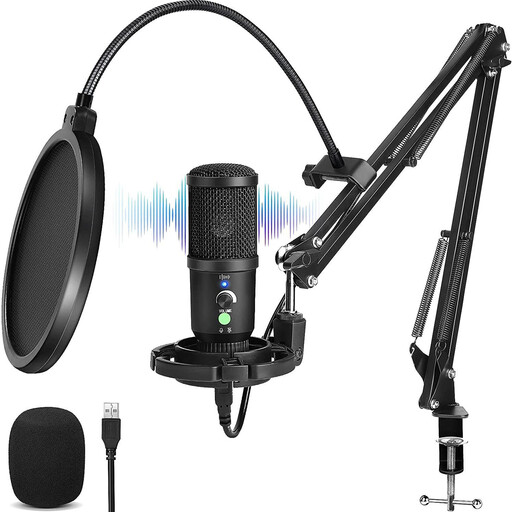
The product description mentions zero-latency monitoring and a headphone socket for those who want to monitor their voice while recording.
The title specifies a cardioid pattern. The description also mentions a mute control, boom arm and pop filter.
 No image available
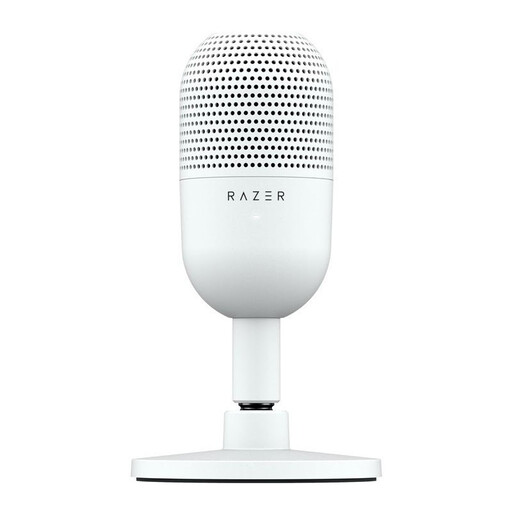
This compact USB microphone could suit a small desk or be a good choice if you want a mute control on the mic itself.
Razer specifies a supercardioid recording pattern and tap-to-mute.
 No image available
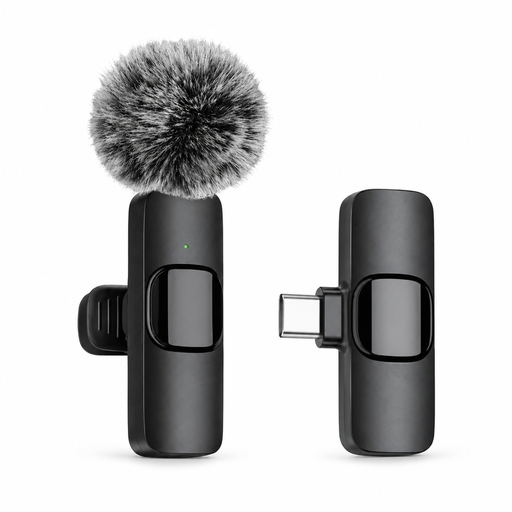
This model may be worth considering if you’re looking at a lavalier setup for a recording or interview.
The product title describes a wireless microphone with a Type-C connection. Before buying, check that the connection works as a USB audio input with your recording device.
Connect a USB microphone that works with your recording device, select it as the audio input and start with a short test recording. RØDE says the NT-USB Mini comes with a USB-C-to-USB-A cable; check separately which cable you need if your device only has USB-C.
Test your speaking angle and distance, and check whether you need a pop filter. RØDE lists a shock mount as a way to reduce mechanical vibrations; the ideal distance varies depending on the microphone and your voice.
According to ACM ConsuWijzer, most standard online consumer purchases come with a statutory cooling-off period of up to 14 days after delivery, although exceptions apply. The statutory guarantee is separate from any manufacturer’s warranty. If a product proves faulty too soon under normal use, the retailer is your point of contact.
That depends on the product rules that apply to the specific version. According to the European Commission, CE marking is mandatory only for products covered by harmonised EU rules that require it; the mark is not a general quality assessment.
Buying a microphone doesn’t give you the right to use film footage or music. The Dutch government says permission is generally required to use copyright-protected films and music; assess any specific clip and potentially applicable exceptions separately.