If you’re practising with someone across a table, choose a microphone mode and position that you can assess for both voices with a test conversation. AKG describes the Ara as having a front-and-rear mode, while the standard Logitech Yeti also has a bidirectional mode, according to its manual. For practising pronunciation solo in a noisy room, a directional microphone is a more suitable choice, as long as you can speak in front of it. You can set up repeat playback in recording software: Audacity describes a loop region for this purpose, a feature that doesn’t automatically come with the microphone.
Who is this choice relevant for?
Conversation partners at the table
You’re practising with someone else and want to hear both the questions and the answers. AKG and Logitech say that certain pickup patterns are designed to capture sound from more than one direction; positioning and a test recording are still important.
Solo pronunciation practice
You’re mainly recording your own voice in successive takes and want to listen back to specific passages and compare them. Samson and RØDE describe directional microphones for a speaker positioned in front of the mic, while Audacity explains how to play a passage on repeat.
Practising in a noisy room
You can speak close to and in front of a directional microphone, and want to hear how much room noise makes it into your test recording. Samson and RØDE describe directional pickup patterns, but the result also depends on the location and set-up.
What should you look for when choosing?
Start by deciding whether you want to record one voice or two at once. Then test the set-up where you practise and check separately how to replay a passage.
| What to consider |
What should you check? |
Who is this important for? |
| Two voices |
Check the pickup pattern of the exact model, position the microphone between the speakers and listen back to a test conversation. |
If we’re practising together at a table, I want to hear both voices and check the positioning. Around 36% of consumers prioritise capturing two voices above all else. |
| Consistent solo recording |
Test the speaking side, positioning and input level with a short recording. |
For successive pronunciation practice, I want to record from a fixed position and compare my own sentences. Around 29% of consumers prioritise consistent solo recordings. |
| Room noise |
Assess both speech and background noise in your practice room; manufacturers’ descriptions can’t tell you what your room will sound like. |
In a noisy room, I want to hear how much ambient noise is picked up when I speak in front of the microphone. Around 21% of consumers prioritise reducing room noise. |
| Repeating passages |
Check that the microphone connects to your device and test the repeat function in your chosen recording software. |
If I want to practise a difficult sentence again, I want to be able to replay that passage easily. Around 14% of consumers prioritise easy playback over the pickup pattern. |
Common buying pitfalls
-
Assuming all Yeti models have the same pickup patterns
According to its manual, the standard Yeti includes a bidirectional mode. Logitech lists cardioid and omnidirectional modes for the Yeti Nano, so don’t assume that one model’s specifications apply to another.
Check the full model name and pickup patterns before choosing a microphone for two people at a table.
-
Choosing a directional solo microphone for a conversation at the table
Samson and RØDE describe the models mentioned as having a cardioid pattern that prioritises sound from in front of the microphone. That doesn’t necessarily mean a conversation partner sitting beside it will be recorded just as clearly.
Test both speaking positions and try a different set-up if the second voice isn’t clear enough.
-
Confusing headphone monitoring with a repeat function
Listening live through headphones and replaying a recorded passage are two different functions.
Check monitoring separately and test repeat playback in your chosen recording software.
Relevant brands to consider
AKG
AKG describes the Ara as having two switchable pickup patterns, designed for either a solo set-up or sound from the front and rear.
- According to AKG, the Ara has a USB connection, headphone monitoring, and front and front/rear modes.
- The specifications don’t say that both voices will be recorded at the same volume in every room.
Logitech G / Blue
The name and design matter: the standard Yeti and the Yeti Nano don’t have the same listed pickup patterns.
- The standard Yeti’s manual lists a bidirectional mode and direct monitoring, among other features.
- For the Yeti Nano, Logitech lists cardioid and omnidirectional modes, but not the standard Yeti’s bidirectional mode.
Samson
Samson describes the Q2U as a dynamic cardioid USB/XLR microphone for focused recording.
- Samson lists a headphone output, desktop stand and included cables.
- With its described pickup pattern, one Q2U isn’t necessarily an equivalent set-up for two people sitting around a table.
RØDE
RØDE describes the NT-USB Mini as a compact cardioid USB microphone for a focused desktop set-up.
- RØDE lists a desktop stand, built-in pop filter and switchable direct headphone monitoring.
- The cardioid mode isn’t an all-round mode for a group.
Shure
Shure describes the MV7+ as a USB-C/XLR model for close-mic speaking, with features that can be adjusted using the accompanying software.
- Shure lists a headphone socket and software features including level control.
- Check that the stated software compatibility suits the device you use.
Joybuy product picks
These product picks are mainly suited to solo practice, with a microphone positioned in front of or worn by one speaker. Check your device’s connection; the listed pickup patterns don’t confirm that two people at a table will be recorded equally well.
 Image unavailable
USB condenser microphone with cardioid pickup pattern
Suited to solo practice where you can speak in front of the microphone; the listed pattern doesn’t confirm that two voices at a table will be recorded equally well.
The product information lists USB, a cardioid pattern and a headphone output for monitoring.
View at Joybuy
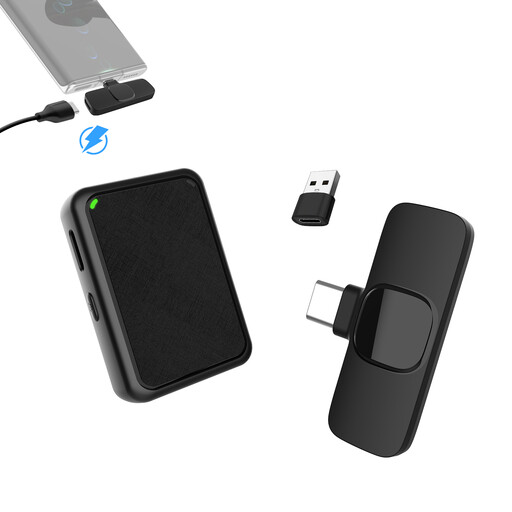 Image unavailable
Moman MB1C clip-on microphone for iPhone 18/17/16, 1TX+1RX, USB-C
The clip-on design is suited to a solo practice session where one speaker wears the microphone.
This version lists 1TX+1RX, USB-C and iPhone 18/17/16.
The listed transmitter set-up doesn’t confirm separate recording of two conversation partners.
View at Joybuy
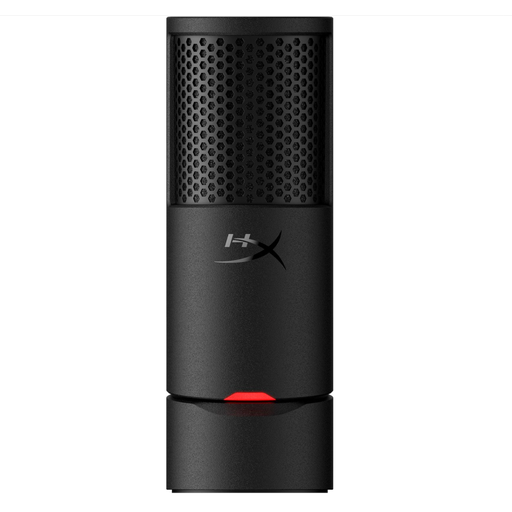 Image unavailable
HyperX SoloCast 2 USB microphone, cardioid, black
Suited to solo pronunciation practice from a fixed position in front of the microphone; the cardioid pattern doesn’t confirm that two voices at a table will be recorded equally well.
The product information lists a USB-C-to-USB-A connection, a cardioid pattern, an integrated shock mount and a pop filter.
View at Joybuy
 Image unavailable
Razer Seiren V3 Mini Quartz USB microphone
Suited to a solo set-up in a fixed position; the listed directional pickup characteristic doesn’t confirm that two people at a table will sound equally clear.
The product information lists USB, a supercardioid pattern and tap-to-mute controls.
View at Joybuy
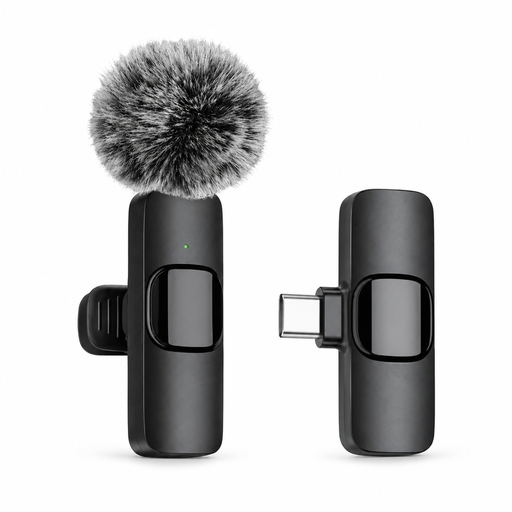 Image unavailable
Verbex K9-Black wireless mini lavalier microphone, Type-C
The portable lavalier set-up is suited to solo practice where one speaker wears the microphone.
The product name lists a wireless microphone and a Type-C interface. The described one-to-one set-up doesn’t confirm separate recording of two conversation partners.
View at Joybuy
Frequently asked questions
Is an omnidirectional mode always the best choice for two speakers?
No. Choose a pickup pattern based on where everyone is sitting, then check both voices with a test recording. AKG describes the Ara as having a front/rear mode; according to its manual, the standard Logitech Yeti also has a bidirectional mode. A pattern that picks up sound from more directions may also capture more room noise.
How can you play a Dutch sentence back repeatedly?
Select the passage in suitable recording software. Audacity describes a loop region that repeats during playback; this is a software feature, not something built into every USB microphone.
What should you check before a long practice session?
Select the microphone you want to use as your recording input, speak at your normal volume and check the recording level. Audacity recommends lowering the level if the meter enters the yellow or red area during testing, to prevent distortion.
Are you always entitled to just two years’ legal guarantee on a USB microphone in the Netherlands?
No, two years isn’t the general fixed standard for the legal guarantee in the Netherlands. According to ACM ConsuWijzer, your right to a product that works properly depends on what you could reasonably expect under normal use; if a product is faulty, the seller is responsible for providing an appropriate solution.
What should you agree with your conversation partner before recording a practice conversation?
Discuss in advance what you’re recording and whether you’ll only listen back to it privately or share it too. The Dutch Data Protection Authority describes the exception for personal or household use in guidance about video recordings; this isn’t a general statement about every audio recording or publication.


