Who is this choice for?

Practising pronunciation at your desk

You mainly want to listen back to your own Dutch speech and can position the microphone directly in front of you. Audio-Technica says the ATR2100x-USB has a cardioid pattern that picks up less sound from the sides and rear.

Practising together at the table

You want to know whether one microphone can also pick up someone sitting elsewhere at the table. Logitech says the Yeti Nano has both a cardioid and an omnidirectional setting; the latter picks up sound from multiple directions.

Practising with real-time monitoring

You want to listen through headphones while recording or adjust settings within easy reach. Audio-Technica lists direct headphone monitoring for the ATR2100x-USB; Sennheiser says the Profile USB has gain, mix and volume controls.

What should you look for when buying?

What to consider What should you check? Who is this important for?
Recording your voice clearly Check the pickup pattern and whether you can position the microphone at the distance and angle you need. If you want to listen back to your pronunciation while seated, suitable placement is key; around 36% of consumers prioritise being able to hear their own voice clearly.
Recording someone you’re speaking to Check which pickup patterns are available, and consider the seating positions and sounds in the room. If you want both voices on one recording, the pattern needs to suit both positions; around 28% of consumers prioritise recording the person they’re speaking to as well.
Listening while you practise Check whether the microphone has a headphone output and whether you can adjust the level or mix. If you want to hear how the recording sounds straight away, real-time monitoring matters; around 18% of consumers prioritise this feature.
Connectivity and desk setup Check that the USB connection and cable are compatible with your device, and whether a table stand or boom arm is included. If you first want to make sure the microphone will work with your device and fit your desk, connectivity and setup are the main considerations; around 18% of consumers start with these points.

Pitfalls to avoid

  • Choosing a cardioid microphone for two people

    A cardioid pattern is designed to pick up sound from in front of the microphone. Audio-Technica says the ATR2100x-USB picks up less sound from the sides and rear, while Logitech also lists an omnidirectional setting for the Yeti Nano.

    Decide in advance whether both voices matter equally, then compare the pickup pattern with where you’ll actually be sitting.

    For two voices, you may need a different setup or a second microphone.

  • Assuming every USB microphone is ready to use on your desk

    What’s included and how the microphone is positioned vary by set. Sennheiser lists a table stand with the Profile Set and a boom arm with the Profile Streaming Set; RØDE says the PodMic USB can be mounted on a stand or boom arm.

    Before buying, check the exact version, mounting options, cable and distance you need from your seat.

    Depending on the version, you may need a compatible stand, boom arm or cable.

  • Assuming an omnidirectional setting will make voices clearer

    According to Logitech, the Yeti Nano’s omnidirectional setting picks up sound from all directions, not just the voices at the table.

    Make a test recording where you’ll be practising, then listen back to check that both voices come through clearly.

Brands to compare

Audio-Technica

The ATR2100x-USB is designed for focused speech recording at a table, with USB and XLR connections.

  • Audio-Technica lists a cardioid pattern, direct headphone monitoring, two types of USB cable and a folding table stand for this model.
  • A focused pickup pattern doesn’t necessarily mean one microphone will record two people sitting opposite each other equally clearly.

Sennheiser

The Profile USB is designed for desk recording, with controls on the microphone.

  • Sennheiser lists a cardioid pattern, USB-C, a headphone output and controls for gain, mix and volume.
  • The set you choose determines whether a table stand or boom arm is included, so check which version you’re buying.

Logitech G

The Yeti Nano is worth considering if you want to switch between focused recording and picking up sound from several directions.

  • Logitech lists both cardioid and omnidirectional settings specifically for the Yeti Nano.
  • The omnidirectional setting also picks up background noise; don’t confuse this model with other Yeti versions.

RØDE

The PodMic USB is a dynamic, directional option if you can speak close to a fixed microphone.

  • RØDE lists USB-C, XLR and a headphone output; for this model, the manufacturer recommends speaking from around 5–10 cm away.
  • The recommended distance calls for suitable positioning on a stand or boom arm; it isn’t a general distance requirement for other models.

Shure

The MV7+ combines USB-C and XLR with digital controls specific to the model.

  • Shure lists a headphone connection and app settings for this model.
  • Check whether the version you choose includes a stand. Shure’s claims about voice isolation and noise processing are manufacturer claims, not independent performance measurements for this type of practice.

Joybuy products

These product choices are suitable for USB speech recording at a desk, including focused recording and wireless lavalier setups.
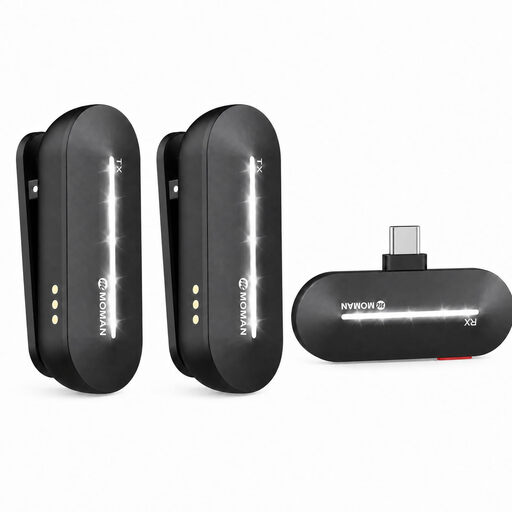
Moman wireless lavalier microphone, USB-C, 2TX+1RX

Moman wireless lavalier microphone, USB-C, 2TX+1RX

A wireless lavalier option for speech recording; check that USB-C is compatible with your recording device.

View at Joybuy

USB condenser microphone with cardioid pattern

USB condenser microphone with cardioid pattern

The product name specifies a cardioid pattern; check that the connection and positioning suit your practice setup.

View at Joybuy

Razer Seiren V3 Mini Quartz USB microphone with tap-to-mute

Razer Seiren V3 Mini Quartz USB microphone with tap-to-mute

A compact USB microphone for desk use; the product name mentions a tap-to-mute function.

View at Joybuy
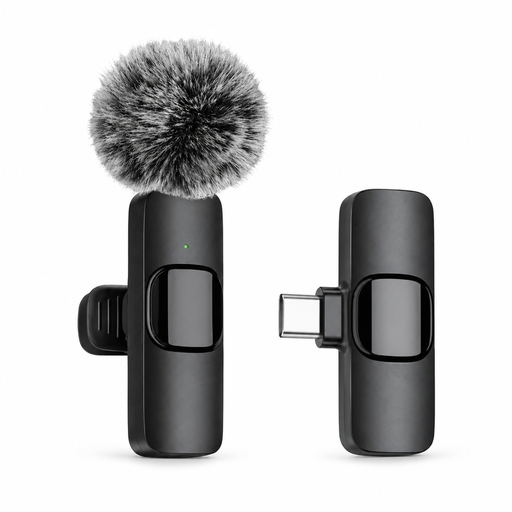
Verbex K9-Black wireless mini lavalier microphone with Type-C

Verbex K9-Black wireless mini lavalier microphone with Type-C

A wireless lavalier option for speech recording; check that Type-C is compatible with the device you’re recording on.

View at Joybuy

Frequently asked questions

How should I position a microphone when recording my pronunciation while seated?

Point the pickup side towards your mouth and make a short test recording from your usual seat. For the dynamic PodMic USB specifically, RØDE recommends a distance of around 5–10 cm; don’t assume the same distance applies to another model.

Can one microphone also record the person I’m speaking to?

It depends on the seating positions and pickup pattern. According to Logitech, as well as a focused setting, the Yeti Nano has an omnidirectional setting that picks up sound from several directions. Try recording both voices with your table setup and listen back.

What extra parts should I check before buying?

Check that your device’s USB port is compatible with the supplied cable, and see whether a table stand or boom arm is included. Audio-Technica lists two types of USB cable and a table stand for the ATR2100x-USB; Sennheiser’s Profile sets differ in whether they include a table stand or boom arm.

What are my rights if a microphone I buy online isn’t suitable?

According to the Dutch government, when you buy from a business remotely, you generally have a 14-day cooling-off period; check the terms and any exceptions that apply to your purchase. In the Netherlands, products are also covered by a legal guarantee, but there is no single statutory guarantee period for all products.

Can I record a conversation practice session with someone else and share it?

Whether you can record or share a session depends on the circumstances and how you use the recording. The Dutch Data Protection Authority says that purely personal or household use falls outside the GDPR, but publishing other people’s personal data requires a legal basis under the GDPR. Discuss recording and sharing with the person you’re speaking to beforehand.
