If you’re recording from a fixed position in a noisy or echoey room, focus on whether you can position the microphone close to your mouth and point it towards your voice. A directional pickup pattern won’t make background noise inaudible. A compact USB condenser microphone may suit a fixed desk set-up, but make a test recording and check that the connection and headphone features work for the way you record.
Who is this choice relevant to?
Speaker in a noisy classroom
You’re recording a meditation while noise or echo from the classroom may be picked up, and you can speak close to a directional microphone. Samson describes the Q2U as having a cardioid pickup pattern. RØDE points out that when a microphone is further from the speaker, the voice can sound more distant, while echo and background noise can become more noticeable.
Teacher with a fixed recording spot
You want to record on a computer without an audio interface and place the microphone on a table. RØDE describes the NT-USB Mini as coming with a USB-C-to-USB-A cable and a detachable stand.
Speaker who wants to monitor their recording
You want to check your voice during a test recording and perhaps hear your computer audio through your headphones too. Samson and Audio-Technica describe direct headphone monitoring on the Q2U and AT2020USB-X respectively; according to Audio-Technica, the AT2020USB-X also has a mix control.
What should you look for when choosing?
| What to consider |
What should you check? |
Who is this important for? |
| Clarity when there is classroom noise |
Check the pickup pattern and how close you can position the microphone to your mouth. Listen back to a test recording made in the classroom. |
If I’m recording in an echoey or noisy classroom, I want to keep my voice close to the microphone and be able to assess the recording afterwards. Around 36% of consumers say clear speech despite classroom noise is their main purchasing priority. |
| Connecting and positioning |
Compare your computer’s ports with the cable supplied, and check whether a stand or tripod is included. |
I want to be able to record from a fixed spot at a table without first having to work out which cable or support I need. For around 29% of consumers, easy connection and a practical set-up are the main purchasing priorities. |
| Monitoring while recording |
Check whether the exact model has a headphone output, and whether you want to hear just your voice or your computer audio as well. |
When I’m recording a meditation, I want to be able to check my voice during a test recording and spot any issues before carrying on. Around 21% of consumers prioritise monitoring their recording. |
| Compact controls |
Check how the microphone will fit into your workspace and where the mute control is, then test the sound in the intended location. |
At a shared or small table, I want to take up as little space as possible and be able to mute the microphone quickly. For around 14% of consumers, compact controls are the main purchasing priority. |
Things to consider before buying and recording
-
Assuming a directional pickup pattern removes all noise
A cardioid or supercardioid microphone won’t automatically make echo and classroom noise inaudible. The distance from your voice and the microphone’s position also affect what gets picked up in the recording.
Make a test recording in the classroom where you plan to speak. Point the microphone towards your voice, keep it close and listen back before recording a full meditation.
-
Assuming the supplied cable will fit every computer
Your computer’s connection and the cable in the box need to be compatible. RØDE lists a USB-C-to-USB-A cable for the NT-USB Mini; if your computer only has USB-C ports, you may need a different cable.
Check your computer’s ports and what’s included in the box before ordering. Also make sure your computer has selected the microphone as its audio input.
-
Confusing a model without the USB suffix with a USB version
Features of the Audio-Technica AT2020USB-X don’t automatically apply to another model called AT2020.
Check the full model name and the connections on the version you want to buy.
-
Treating a recording with identifiable pupils as a private voice note
An audio recording in which someone can be identified may contain personal data. According to the Dutch Data Protection Authority, schools have obligations to protect personal data.
Agree the purpose of the recording and how it will be shared with the school before recording pupils in a way that identifies them or sharing the recording.
Relevant brands to consider
Samson
The Q2U is a dynamic USB/XLR microphone for anyone who can speak close to the microphone.
- Samson lists a cardioid pattern, direct headphone monitoring, and a desk stand, windscreen and cables included in the box.
- You’ll need to speak close to the microphone; a directional pickup pattern won’t completely block out classroom noise.
RØDE
The NT-USB Mini is a compact USB condenser microphone for a fixed desk set-up.
- RØDE lists a detachable stand, built-in pop filter and headphone output. For voice-overs with this model, the brand recommends a distance of around 10–15 cm from your mouth.
- A sensitive microphone won’t silence an echoey room; also check that the supplied cable fits your computer.
Audio-Technica
The AT2020USB-X is designed for USB recording when you want to monitor your voice directly and mix computer audio into your headphones.
- Audio-Technica lists a headphone output, mix control and mute control for the AT2020USB-X.
- Check the full model name: the AT2020USB-X specifications don’t automatically apply to the AT2020 without USB-X.
Shure
The MV7+ is a dynamic microphone with USB-C and XLR for anyone who may want to use a different recording set-up later.
- Shure lists direct headphone monitoring and settings via an app.
- Shure lists specific system requirements for the MOTIV Mix desktop app, so check these before relying on the app. A claim about voice isolation doesn’t mean classroom noise will disappear completely.
Razer
The Seiren V3 Mini is a compact USB condenser microphone with a mute control.
- For this model, Razer lists a supercardioid pattern and tap-to-mute.
- These specifications don’t show how a recording will sound in a particular classroom; make a test recording in the intended location.
USB microphones at Joybuy
This selection of Joybuy products is suited to USB recording from a fixed speaking position, with options for direct monitoring or compact controls.
 No image available
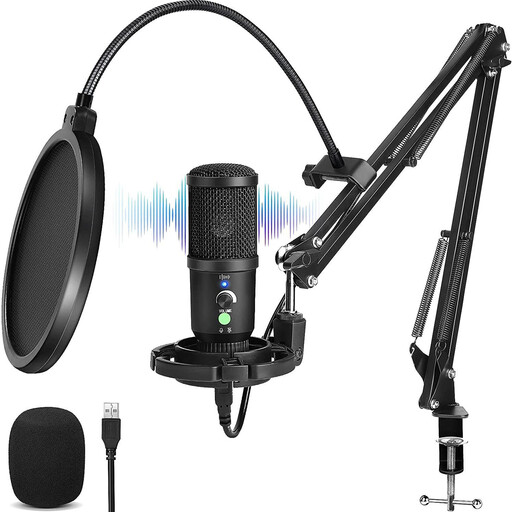
USB condenser microphone with cardioid pattern
The listed zero-latency monitoring feature suits a fixed speaking position where you want to listen as you make a test recording.
The product name lists a cardioid pattern and zero-latency monitoring. A directional pickup pattern doesn’t provide complete sound isolation, so keep the microphone close to your voice and assess a test recording in the classroom.
View at Joybuy
 No image available
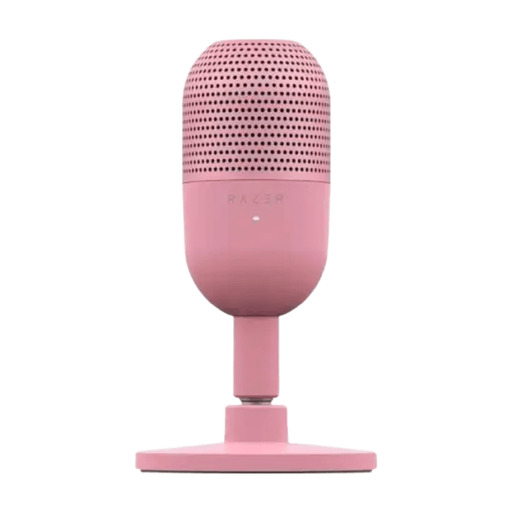
Razer Seiren V3 Mini Quartz
The compact design with tap-to-mute may suit you if space is limited and you want to mute the microphone quickly while recording.
The product name describes an ultra-compact USB microphone with tap-to-mute. These features alone don’t tell you how well it will sound in an echoey classroom; test the model in the intended location.
View at Joybuy
Frequently asked questions
How should you position a microphone for a clear voice recording?
Start by making a test recording where you’ll actually be speaking, and position the microphone close to your voice. Follow the instructions for the exact model; for voice-overs with the NT-USB Mini, RØDE recommends a distance of around 10–15 cm. Listen back to check whether you can hear echo or other background noise.
Can you connect the RØDE NT-USB Mini directly to any laptop with USB-C?
Not with the supplied cable alone: RØDE lists a USB-C-to-USB-A cable and says that a separate USB-C-to-USB-C cable is needed for a device with USB-C ports only. Also check that your computer has selected the microphone as its audio input.
Who should you contact about a faulty microphone?
According to the Dutch government, when a product bought is faulty, the seller—not the manufacturer—is responsible for putting things right. Check who the seller is and what additional terms apply when you buy.
Can you record a meditation if pupils can be identified by their voices?
An audio recording in which someone can be identified may contain personal data. The Dutch Data Protection Authority explains that schools have obligations to protect personal data. Whether a particular recording or publication is permitted depends on its purpose and how the data is processed, so agree the arrangements with the school before recording or sharing.


