Who is this choice relevant to?

Interviewers recording one speaker

You mainly want to hear the speaker clearly and can position the microphone close to them. Check the pickup pattern and choose a quiet spot; Shure explains how polar patterns determine which sounds a microphone picks up from different directions.

Facilitators leading a table discussion

You want to record several voices from different directions. Test whether the room is quiet enough and whether everyone can be heard clearly from their intended seat.

Teachers supervising pupil recordings

You want to connect the microphone to the recording device available and check the recording beforehand. For identifiable recordings, the school’s privacy process also matters; the Dutch Data Protection Authority outlines schools’ responsibility to protect pupils’ data.

What should you look for?

What to consider What should you check? Who is this important for?
Hearing one speaker clearly Check the pickup pattern and make a test recording of the speaker in front of the microphone. Shure explains that a cardioid pattern picks up less sound from the sides and rear. If I’m recording one speaker in a noisy classroom, I want to position the microphone close to them and limit background noise. Around 40% of consumers prioritise hearing one speaker clearly.
Recording several voices Check whether the exact model has an omnidirectional mode and test from every seat. Shure points out that an omnidirectional microphone also picks up sound from other directions. If several people are speaking around a table, I want to record voices from different directions while checking that the classroom is quiet enough. Around 30% of consumers prioritise capturing several voices.
Connection and setup Compare the recording device’s port with the cable or adapter required. RØDE lists different connection options for the NT-USB Mini, depending on the device. If I want to connect the microphone to the device already available, I want to know in advance which cable I’ll need. Around 20% of consumers give connection and a simple setup top priority.
Checking the recording Check whether the microphone has a headphone output and listen back to a test recording before the interview. The Library of Congress recommends testing recording equipment and settings in advance. If I want to avoid finding out afterwards that a voice is inaudible, I want to be able to check the recording during preparation. Around 10% of consumers prioritise monitoring the recording.

Common pitfalls

  • Choosing an omnidirectional microphone because you assume everyone will sound clear

    A wide pickup pattern can capture voices from several directions, but it also picks up classroom noise. The mode alone doesn’t guarantee that every participant will be equally easy to hear.

    Use omnidirectional mode only if the seating arrangement and a test recording show it’s suitable. For one speaker, a directional setup is usually a better choice.

  • Looking only at USB and forgetting to check the recording device’s connection

    The available port and the cable supplied can affect whether you can connect the microphone to the device you intend to use.

    Compare the ports with the device manual and check which cable or adapter you’ll need.

    Some connections may require a separate cable or adapter.

  • Assuming that a working connection means the recording has been checked

    The microphone may be connected, but a participant sitting in the chosen position could still be difficult to hear.

    Before the interview, make a short recording from every planned speaking position and listen back to it.

Brands to consider

Audio-Technica

The ATR2100x-USB is a handheld dynamic microphone with USB-C and XLR outputs, designed for a setup where one speaker sits close to the microphone.

  • Audio-Technica lists a cardioid pattern and a headphone output for direct monitoring.
  • The speaker needs to be in front of the sensitive side; someone sitting further away won’t automatically be recorded as clearly.

Logitech G / Blue

According to Logitech, the Yeti Nano has cardioid and omnidirectional modes, giving you the choice between a focused setup and capturing sound from several directions.

  • Its pickup patterns give you a choice of setup for one speaker or a small table discussion.
  • Omnidirectional mode also picks up sound from other directions, so test the microphone in the room where the conversation will take place.

RØDE

The NT-USB Mini is a compact USB desktop microphone for a fixed interview setup at a computer.

  • RØDE lists a headphone output and a USB-C to USB-A cable in the box.
  • Some other devices may need a different cable or adapter; check the device’s connection.

Joybuy microphones for voice recordings

Joybuy microphones for voice recordings and interviews, with options for desk-based or wearable setups.
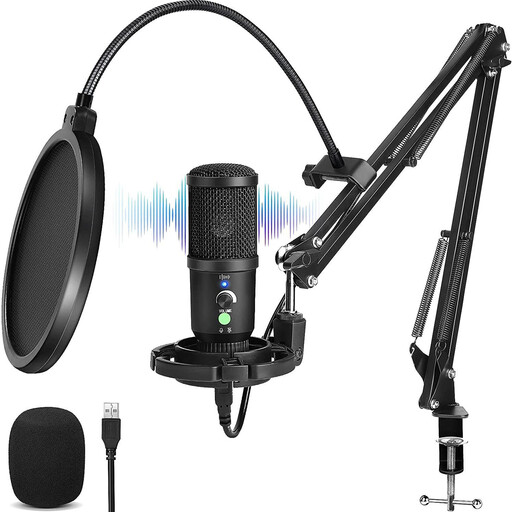
USB condenser microphone with noise cancellation, cardioid pattern and latency-free monitoring for streaming, gaming and podcasts

USB condenser microphone with cardioid pickup pattern

For a setup with one speaker in front of the microphone; the product details list a cardioid pickup pattern and a headphone output.

The description also mentions gain control and a mute function.

Joybuy
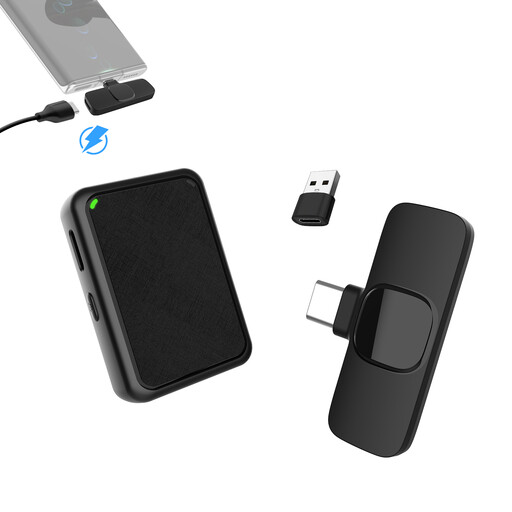
Moman MB1C clip-on microphone for iPhone 18/17/16, 1TX+1RX, USB-C

Moman MB1C clip-on microphone for iPhone 18/17/16, 1TX+1RX, USB-C

A clip-on setup is an option for interviews where the microphone is attached to the speaker.

The title lists 1TX+1RX, USB-C and compatibility with iPhone 18/17/16; check that these match the device you’re using.

Joybuy
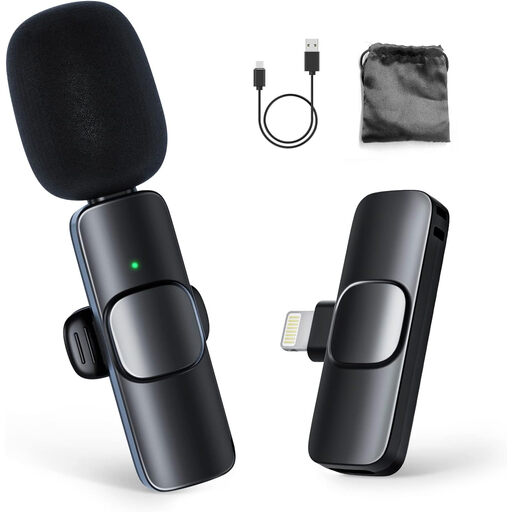
Moman CP1A wireless lavalier microphone, 1TX&1RX, clip-on for video and interviews

Moman CP1A wireless lavalier microphone, 1TX&1RX

A clip-on option for an interview where the microphone is attached to the speaker.

The product details list an omnidirectional pickup pattern and use with iPhone; bear in mind that sound from different directions may be picked up.

Joybuy
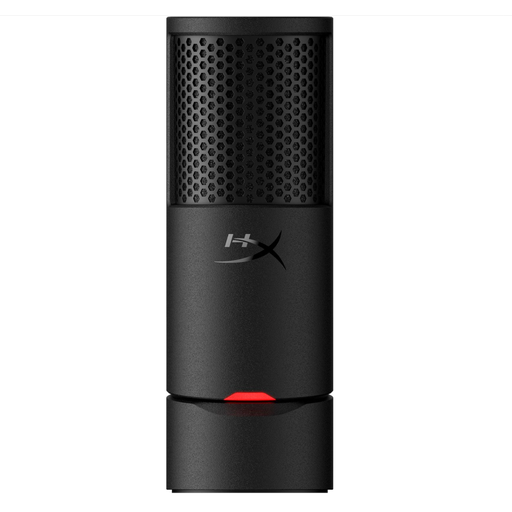
HyperX SoloCast 2 USB gaming microphone, plug and play, cardioid, black

HyperX SoloCast 2 USB gaming microphone, cardioid, black

For a focused setup with one speaker in front of the microphone; the product details list a cardioid pickup pattern.

The description mentions a USB-C to USB-A cable, a pop filter and a shock mount.

Joybuy
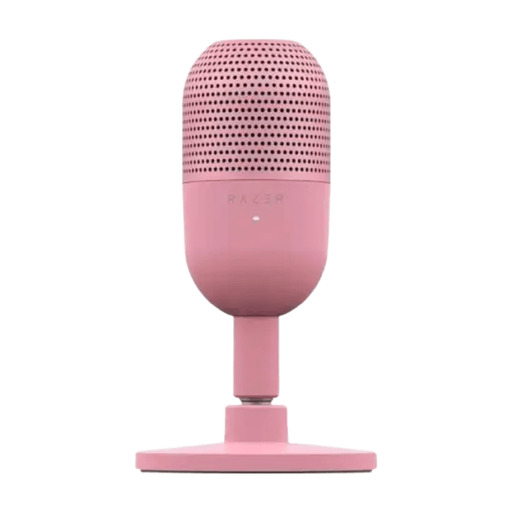
Razer SEIRÉN V3 MINI Quartz compact USB microphone with tap-to-mute control

Razer SEIRÉN V3 MINI Quartz USB microphone

For a focused recording of one speaker; the product details list a supercardioid pickup pattern.

The description mentions a USB connection, compatibility with PC and Mac, and tap-to-mute control.

Joybuy

Frequently asked questions

Can you record both one speaker and a small group with one microphone?

It may depend on the positioning and pickup pattern. According to Logitech, the Yeti Nano has cardioid and omnidirectional modes. Test whether everyone can be heard clearly, as omnidirectional mode also picks up classroom noise.

What should you do just before the interview?

Test the equipment and recording settings in the place where you plan to hold the interview. The Library of Congress recommends testing recording equipment in advance as a practical guideline for oral history interviews.

Will a USB microphone automatically work with your tablet?

No. Check the exact device and the cable or adapter required. RØDE describes different connection options for the NT-USB Mini; that doesn’t mean the microphone will work with every tablet.

How long can identifiable interviews be kept?

According to the Dutch Data Protection Authority, personal data must not be kept for longer than necessary for its purpose. The GDPR doesn’t specify a general, fixed retention period; for the school project, define the purpose and an appropriate retention period.

Can a school simply publish an identifiable interview online?

Don’t assume that it can be published without further checks. According to the Dutch Data Protection Authority, consent is needed in most cases to publish personal data online; the school must also assess the applicable GDPR legal basis for processing. The assessment depends on who can be identified and how the recording is used.
